This page is an English translation of the original Italian article. The original publication date and historical context have been preserved.
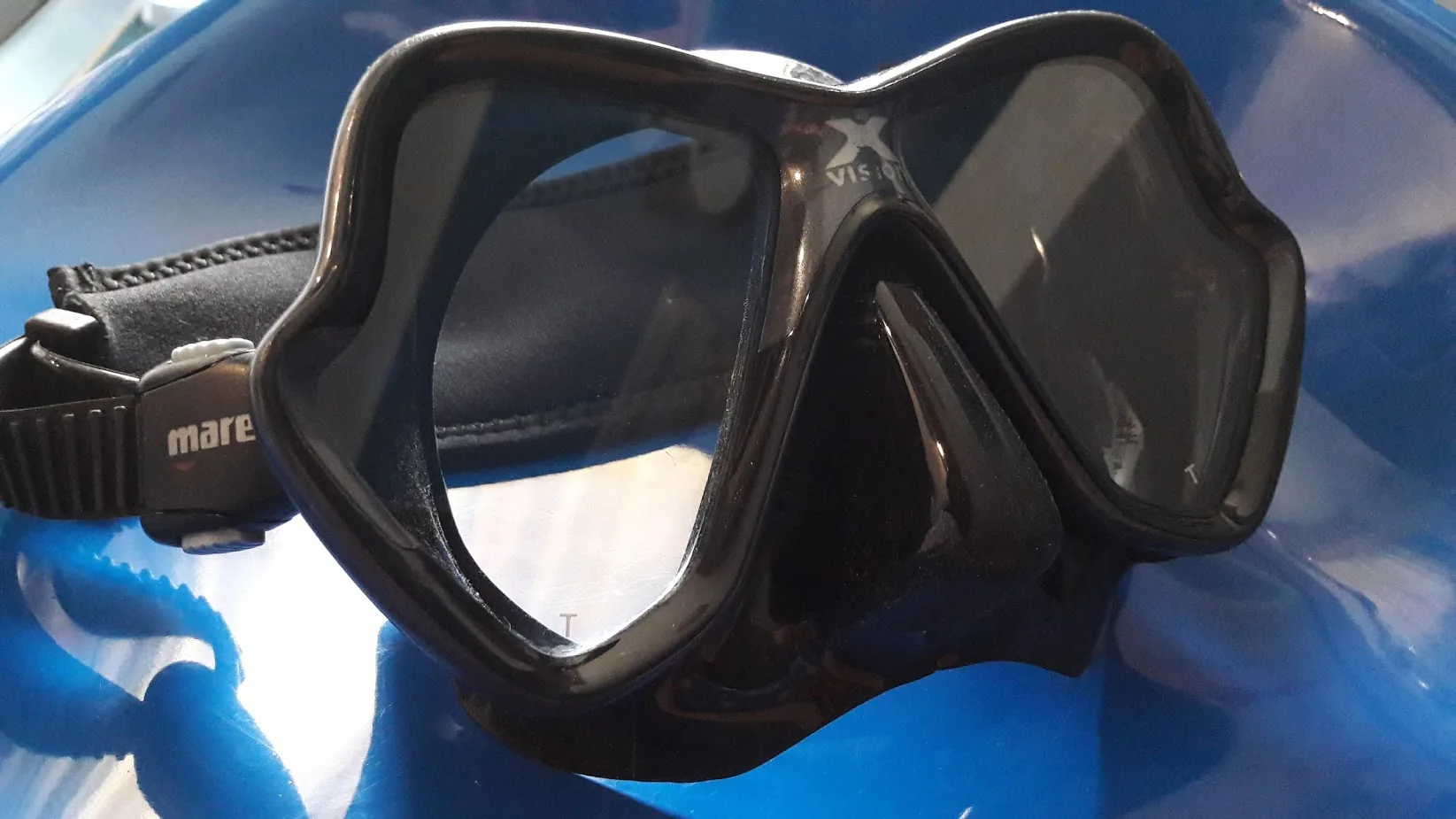
“This is my mask. There are many like it, but this one is mine.”
And few things are more annoying than a mask—especially a new one—that keeps fogging. Here are the practical principles behind a clear lens.
Why does a mask fog?
Fogging is caused mainly by moisture condensing on a cooler lens. Warm skin and the air trapped inside the mask release water vapour. When that vapour touches glass cooled by the surrounding water, it condenses.
Condensation alone does not always produce an opaque lens. On a very clean surface, moisture can form a thin, relatively transparent film. Oils, manufacturing residue and dirt encourage droplets to form, scatter light and obstruct vision.
Why are new masks particularly troublesome?
New masks may retain residues from manufacturing, including release agents used around the silicone skirt and glass. These deposits can make even a high-quality mask fog repeatedly until the lens has been thoroughly cleaned.
Preparing a new mask
A strong grease-cutting washing-up liquid or a non-gel toothpaste can help remove residue. Clean the inside of the lens carefully, rinse it well and repeat if necessary.
Some divers use a flame on tempered-glass lenses to burn away silicone residue. This requires great caution: it must never be used on plastic lenses, coated lenses or near the silicone skirt, and it can damage a mask if done incorrectly. Follow the manufacturer’s instructions or ask a competent dive professional.
Before the dive
Apply a commercial defogging solution—or saliva, the traditional free alternative—to the inside of the lens, spread it evenly and rinse lightly before putting the mask on. Wetting the face can also reduce the initial temperature difference.
Once prepared, avoid touching the inner lens with your fingers. Skin oils can undo the cleaning and encourage fogging.
During and after the dive
If the mask fogs underwater, a small amount of water can be allowed in and used to rinse the lens before clearing the mask. After the dive, rinse it thoroughly in fresh water and let it dry away from direct sunlight.
Avoid extreme cleaning methods such as washing machines or dishwashers. Heat and strong detergents may damage or discolour the silicone.
A properly prepared and maintained mask should allow the view—not the fog—to remain the focus of the dive.
Enjoyed this article? If you'd like to help keep the BusaBoy Archive online, you can support the archive via PayPal.