
This page is an English translation of the original Italian article. The original publication date and historical context have been preserved.
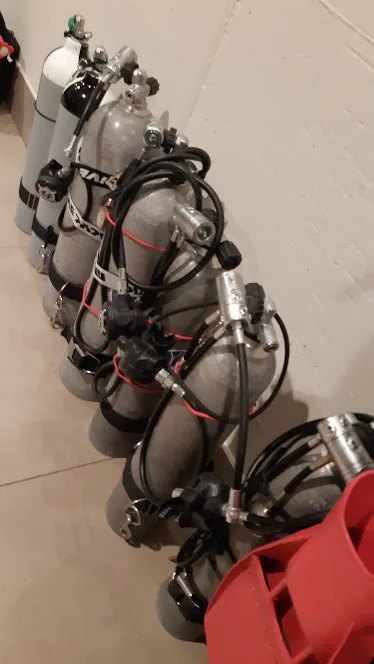
Among the many accessories and pieces of equipment used in scuba diving, the cylinder is the most fundamental. It allows us to carry compressed breathing gas underwater.
Cylinders come in different capacities, dimensions, weights and materials. The two materials divers hear about most often are aluminium and steel.
What are the main characteristics?
Aluminium cylinders were not widely adopted at first because aluminium and its manufacturing process were expensive. They are formed and extruded from a metal billet. Their shape and construction often allow them to stand without a separate boot, and the material does not need paint to resist rust in the same way as steel. Aluminium naturally develops a thin oxide layer that protects the metal beneath it.
Steel cylinders are more common in many European diving environments. They carry permanent markings that vary according to national rules and are normally painted or otherwise protected against corrosion.
The original article contrasted the bases and coatings of the two types. The important practical point is that steel must be protected from rust, while aluminium does not rust in the same way, although it can still corrode and requires proper inspection and care.
Aluminium versus steel
The most noticeable difference underwater is buoyancy. An empty aluminium cylinder may become positively buoyant or close to neutral, while a comparable steel cylinder normally remains negative.
That does not mean an aluminium cylinder is automatically lighter to carry. Its walls are generally thicker, so an aluminium cylinder can be surprisingly heavy out of the water. A diver may also need additional ballast to compensate for its buoyancy and for the loss of gas weight as the cylinder is used.
When choosing a cylinder, ask what kind of diving it will be used for, whether the water is fresh or salt, how the cylinder will affect trim and weighting, and how it will be transported. Do not assume that aluminium automatically means lighter or better. The right choice depends on the complete configuration.