Why its blade design feels particularly good when I use a scooter.
Why its blade design feels particularly good when I use a scooter. Fins affect propulsion, trim, foot position and even how easy the diver is to move on land, so I treat them as tools rather than fashion.
What the fin changes
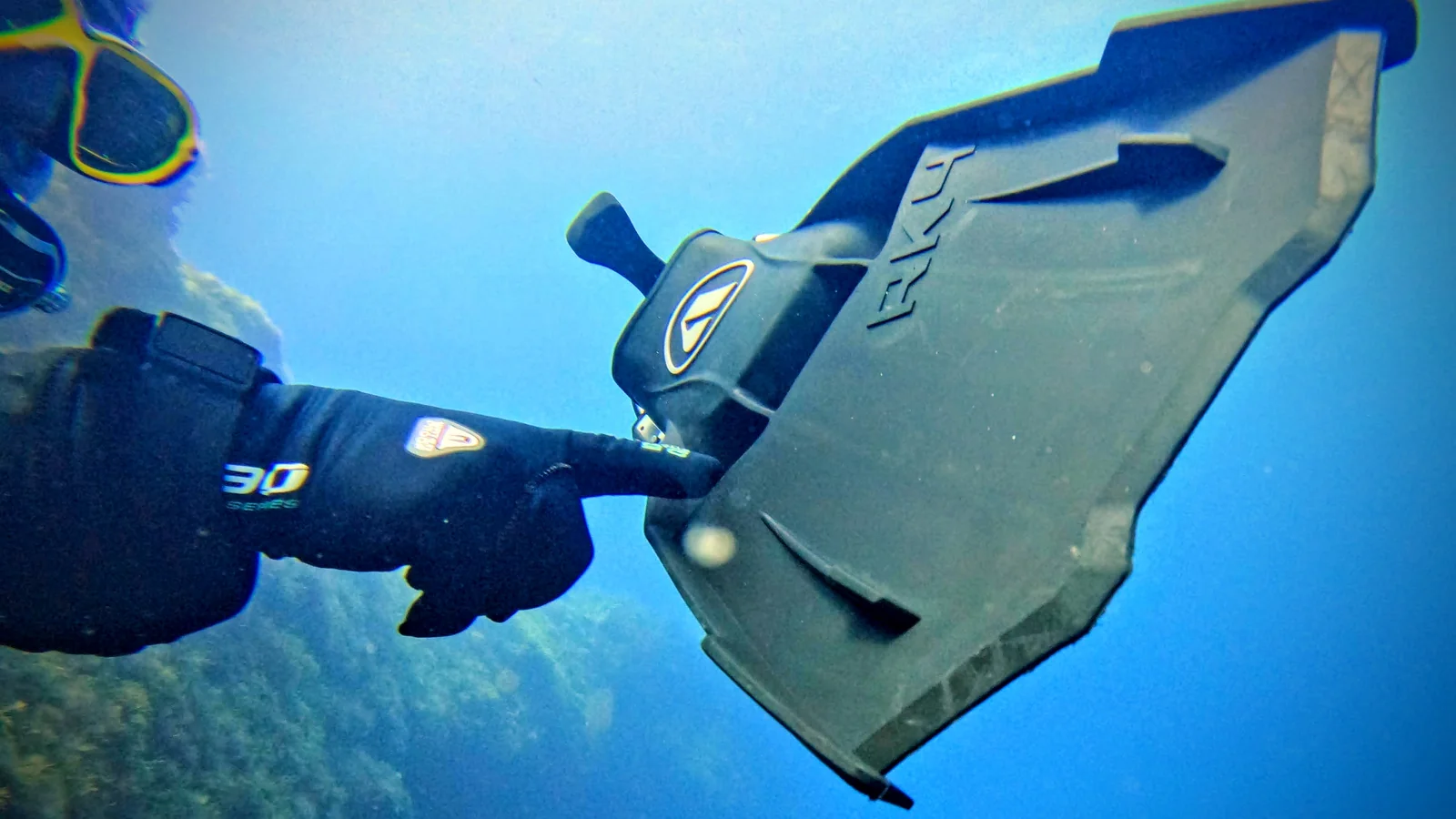
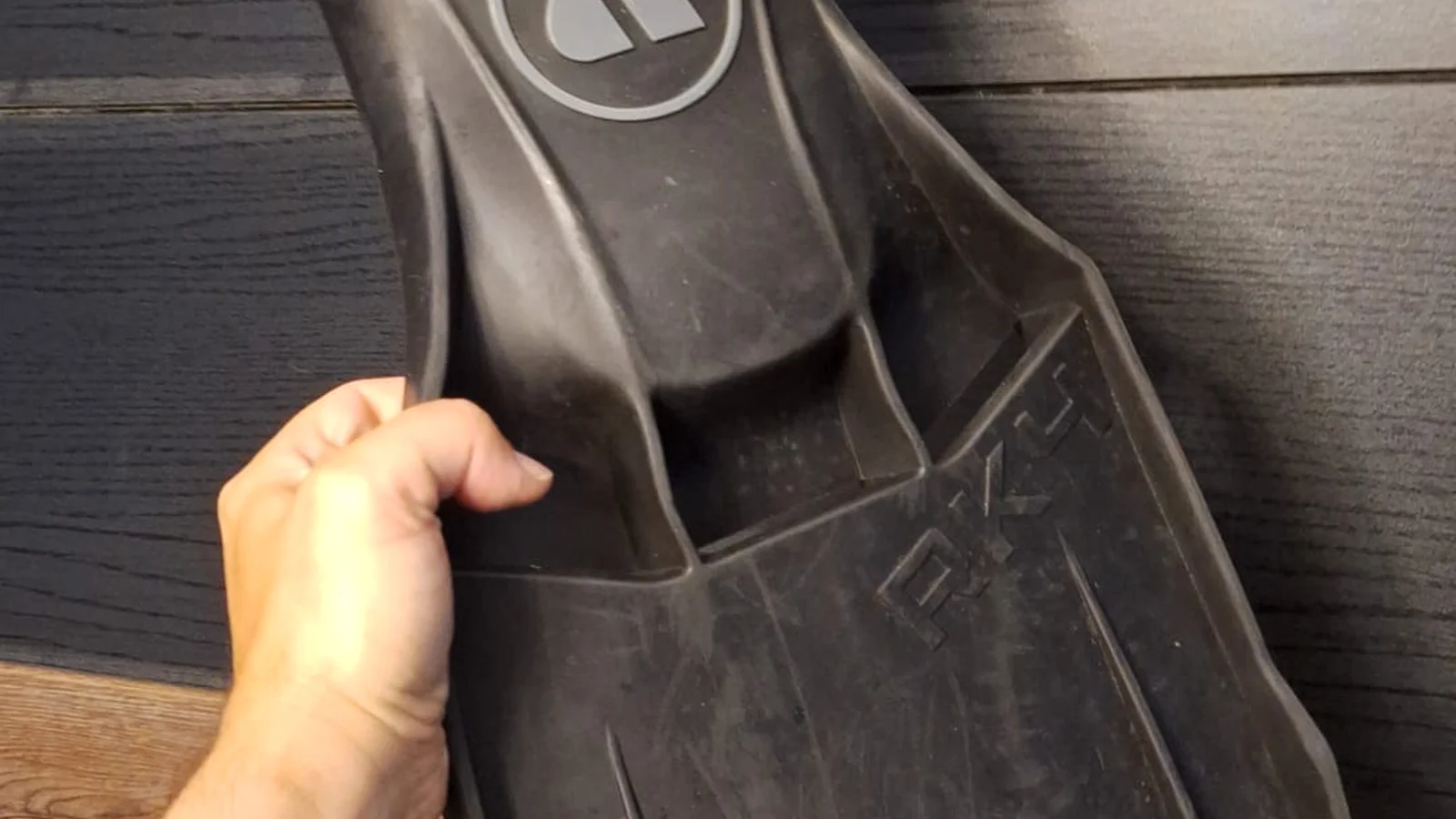
The TUSA Tri-Force immediately reminded me of the modern compact technical-fin idea I like in the RK4, at a lower price point. What interested me most were the channels and geometry in the blade.
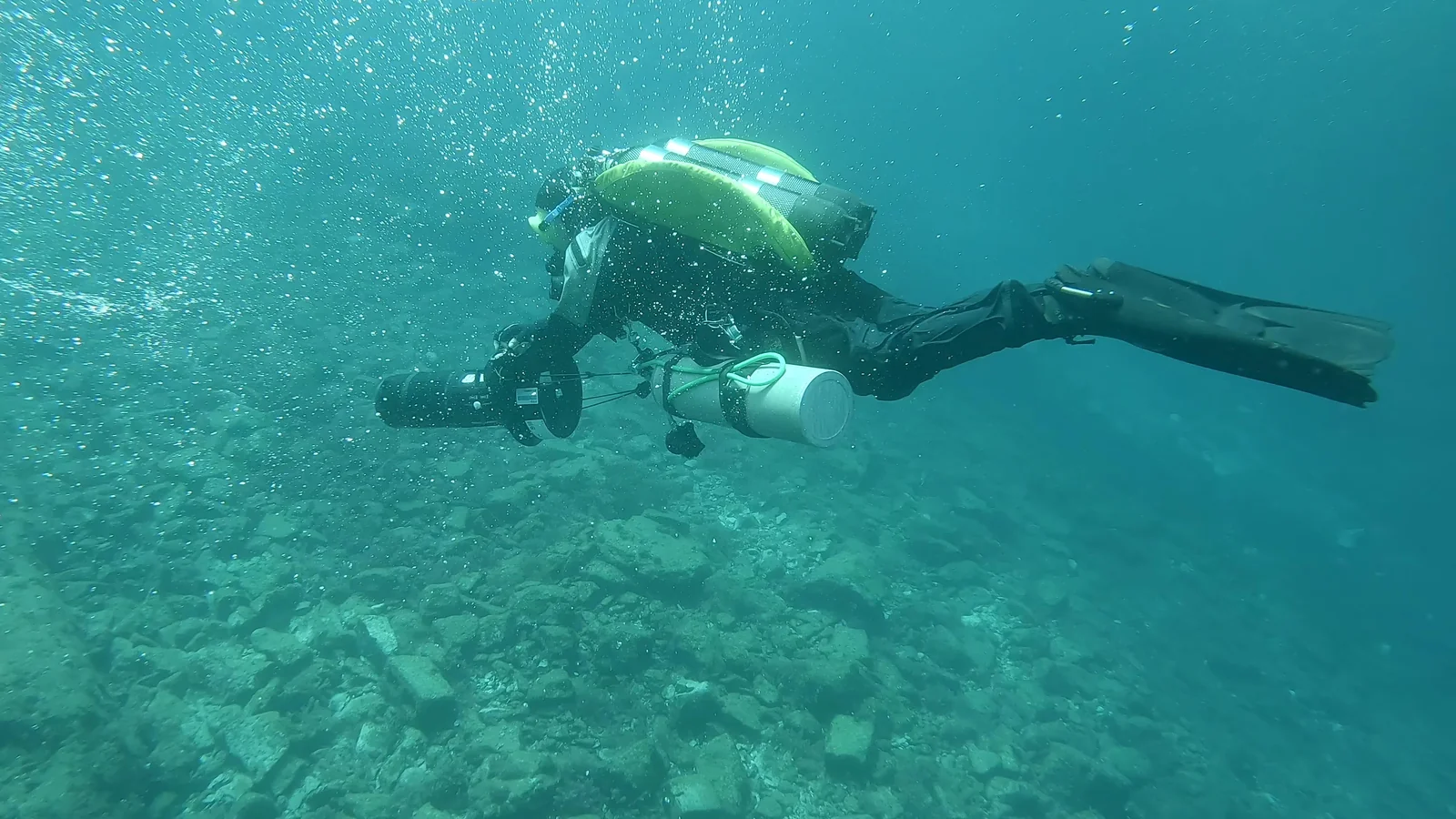
With a DPV I find that the fin sits in the water cleanly and does not feel as if it is fighting the flow around my legs. That is an experiential observation rather than a laboratory claim, but it is strong enough that the Tri-Force has become one of my favourite DPV combinations.
The practical point
The right fin is the one that makes the complete diver easier to control, not the one that wins an argument online.
The Tri-Force surprised me most behind a scooter
I originally noticed that the TUSA Tri-Force blade has some visual/functional similarities to the kind of short modern fin I already liked. TUSA’s current design uses a compact HyFlex blade with three vents and vortex-generating features. What made it memorable for me was how pleasant it felt when using a DPV, where the water flow around the legs and blade is different from normal propulsion.
I cannot turn that into a universal hydrodynamic conclusion from personal diving. I can say that it became an unexpectedly convincing general-purpose fin in my own kit and a particularly interesting DPV pairing.
Fins are propulsion, trim and ballast at the same time
The blade produces thrust, but the fin also changes the mass and buoyancy at the end of the legs. That affects trim. A fin that feels wonderful with a thin wetsuit can make another diver excessively feet-heavy in a drysuit, while a deliberately heavy fin can be useful when a drysuit configuration tends to make the feet float. This is why I own several pairs instead of expecting one design to dominate every dive.
My Apeks RK4 is the everyday sidemount choice. I like the technical-style short blade, the near-neutral behaviour I experience in the water and especially the large spring-strap geometry: with sidemount cylinders beside me, reaching the heel can be less convenient, so a strap that is easy to grab matters. For demanding technical diving I may deliberately choose the much heavier, negatively buoyant Hollis F1—the “Batman fins.”
Technique matters more than catalogue language
Frog kick, modified frog, back kick, helicopter turns and careful positioning near a silty bottom ask different things from a fin than straight-line flutter kicking. A stiff, compact blade can translate small ankle movements into controlled thrust, but stiffness also costs muscular effort. The useful question is whether the fin works with the diver’s technique, suit and mission.
DPV use introduces another interaction
When a DPV is pulling the diver, the fins are still in the flow and still influence body position and drag. I have found the TUSA Tri-Force particularly pleasant in that context. That is a personal observation, not a laboratory measurement, but it is exactly the kind of detail I care about: not just how the product feels on a shop floor, but how it behaves inside the complete system underwater.
The fin test I care about
I want to hover, frog kick, back kick, turn and stop without the fin fighting my ankles or changing my trim in an unwanted way. I also want to be able to put it on and remove it in the real configuration, with cylinders or a drysuit limiting reach. That is why a strap handle can matter to me as much as a blade feature.
Current manufacturer context
TUSA identifies the Tri-Force SF-0112 as a compact HyFlex fin using three blade vents and vortex-generator features. I do not claim those features scientifically prove why I like it with a DPV; they provide useful design context for a personal underwater observation.
Explore related topics
This article stands on its own, but these pages go deeper into the parts that connect directly with it: