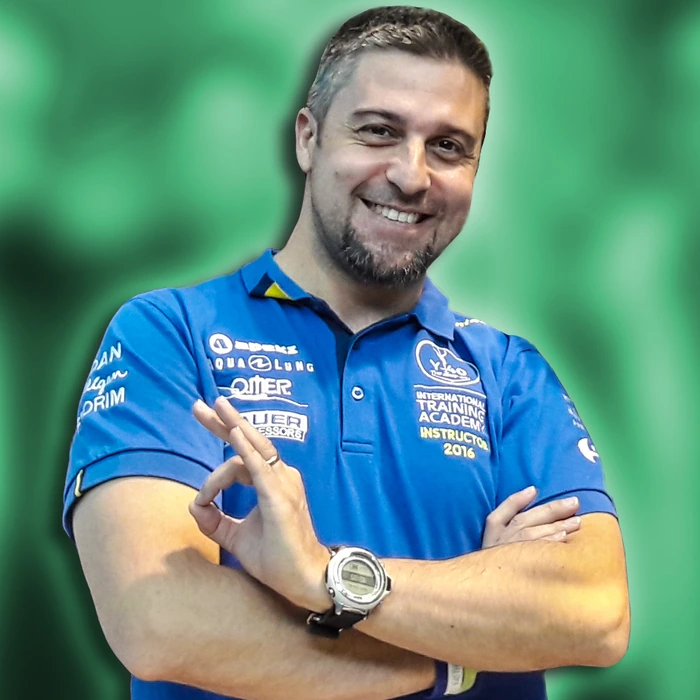
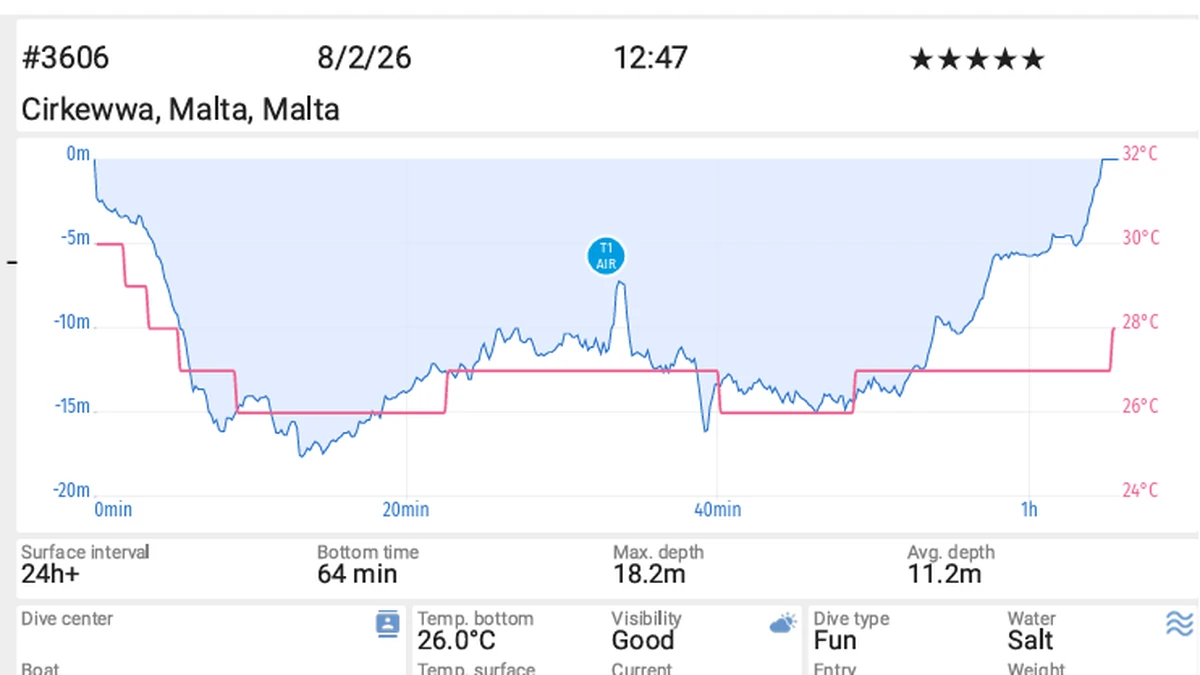
Reaching 3,600 logged dives is not simply about reaching a large number. It represents years of observation, repetition, mistakes, improvement and time spent watching how people, equipment and the underwater environment behave.
The word logged matters to me. These are not dives reconstructed from memory or estimated from seasons worked in a dive centre. They were recorded one by one, each with its own depth, duration, conditions, people and story. The real total is certainly higher, but I prefer to speak only about the dives that are documented.
A number on its own does not make anyone a better diver. What matters is whether those dives changed the way we prepare, observe, decide and respond. Looking back through my logbook, the most valuable lessons are not dramatic. They are the habits and judgements that become clearer only after being tested repeatedly underwater.
Diving can never be completely risk-free
Scuba diving is never entirely free of risk. Experience does not remove that reality; it changes how risks are recognised and managed. With time, safety becomes less like a separate procedure and more like a continuous way of thinking.
It begins before entering the water: checking the weather and sea conditions, considering the site, looking honestly at physical and mental readiness, confirming that the equipment suits the dive, and making sure the plan is realistic for the whole team. Underwater, it continues through awareness of depth, time, gas, buoyancy, breathing, current, visibility and the people around us. After the dive, it includes an honest debrief and responsibility for anything that should be improved.
One habit that has remained with me is the PADI reminder to be a SAFE Diver: Slowly Ascend From Every Dive. A slow, controlled ascent and a precautionary stop—commonly around five metres for three minutes when conditions and gas supply allow—should feel normal rather than optional.
Many incidents do not begin as one enormous failure. They begin as a small change that was ignored: increasing breathing rate, an uncomfortable diver, poor positioning, a loose item, reduced visibility, a current becoming stronger or a plan quietly becoming less realistic. Experience is useful when it helps us notice those changes early enough to act without drama.
Repetition creates reliability
Training introduces a skill. Repetition makes it available when it is genuinely needed.
It is one thing to perform a skill when it is expected, demonstrated and practised in controlled conditions. It is another to perform it calmly when visibility is poor, equipment feels unfamiliar or another problem is already demanding attention. Repetition reduces unnecessary movement, hesitation and task loading. It creates space to think.
That does not mean mastery is permanent. Skills deteriorate when they are not used. Equipment changes, physical condition changes and every environment presents different demands. A certification records that a standard was achieved at a particular time; it does not prove that every skill will remain sharp forever.
The best divers I know continue practising. They repeat basic procedures, check their configuration, question inefficient habits and remain willing to return to fundamentals. Reliability is not produced by doing something correctly once. It is produced by doing it correctly, comfortably and repeatedly—and by recognising when more practice is needed.
You begin to see the ocean differently
At the beginning, many divers look for the obvious attractions: a wreck, a large fish, an octopus or an impressive rock formation. With time, the smaller details become equally interesting. You notice changes in animal behaviour, the movement of sand after bad weather, fishing lines that were not there before, a new patch of marine growth or an animal occupying the same shelter on repeated visits.
A detailed logbook reinforces this change. Memory may say that the visibility was good or the water felt warm. A record can show how conditions changed, what configuration was used, what worked, what did not and whether an impression was part of a repeated pattern. The log turns isolated dives into a longer story.
You stop behaving like a tourist passing through and begin feeling responsible for the place. The PADI Professional’s Creed connects professional diving with revealing the beauty of nature and accepting an obligation to protect it. That idea becomes more meaningful when you have watched the same environment change over many years.
A diver does not protect the sea only by participating in organised clean-ups. Protection is also expressed through excellent buoyancy, responsible positioning, careful finning, refusing to touch or chase animals and helping other divers understand why these habits matter.
Experience should make you humbler
Thousands of dives do not teach you that nothing can happen to you. They teach you how many variables exist and how easily confidence can become complacency.
The most dangerous sentence in diving may be: “I have done this hundreds of times.” Familiarity can improve performance, but it can also make warning signs easier to dismiss. Experience is valuable only while it remains connected to awareness.
Before a dive, I still need to ask simple questions: Am I rested? Am I comfortable with the conditions? Is the equipment appropriate? Is the team prepared? Is the plan realistic? The answers should be based on the situation in front of me, not on the number written in my logbook.
There is no shame in changing a plan or cancelling a dive. The sea will still be there. A high dive count should reduce the need to prove something, not increase it. The divers I respect most are calm, attentive and honest about their limits.
Thinking like a diver
Thinking like a diver is more than remembering a list of rules. It is situational awareness, management of task loading, good habits and personal responsibility. It means understanding the plan while remaining ready to respond when the real dive does not follow it exactly.
Before the dive, it means preparing properly rather than relying on experience to compensate for poor preparation. During the dive, it means comparing what is happening with what was expected: the gas used, the time, the current, the team’s position and the behaviour of each diver. Afterwards, it means recording the dive, discussing what happened and carrying the lesson forward.
My logbook is not a trophy. It is evidence, memory and a tool for reflection. It reminds me that experience is built from ordinary dives as much as exceptional ones, and that progress often comes from noticing one small thing that could be done better next time.
After thousands of dives, I am still learning. That may be the most important lesson of all. The number matters because every one of those dives was recorded and considered, but what matters more is the way they changed how I prepare, observe, decide and respect the underwater world.