My experience with the DivePro L6 green laser, how I used it for low-impact underwater signalling, and why the 2021 safety recall fundamentally changes the recommendation today.
A less intrusive way I point out subjects and attract attention. Underwater lighting is one of the clearest examples of how quickly technology can change what a practical configuration looks like.
What matters underwater
I used a DivePro L6 green laser as a communication tool because the idea itself appealed to me: indicate an area near a subject rather than touching the environment or shining a torch directly into an animal's eyes. The later recall changes how I treat that specific product today.
The communication principle remains interesting to me: a clearly visible pointer can attract attention without banging a tank, shaking metal or creating unnecessary noise. But the safety of the actual device comes first, and a recalled laser is not something I would recommend continuing to use.
Any underwater laser also requires strict judgement and compliance with current product-safety rules. It must never be directed into eyes, at wildlife or toward the surface where the beam could create another hazard.
The practical point
The most useful light is not the one with the loudest specification sheet. It is the one that delivers the beam, runtime and ergonomics the dive actually needs.
The L6 changed my signalling—and then the safety context changed
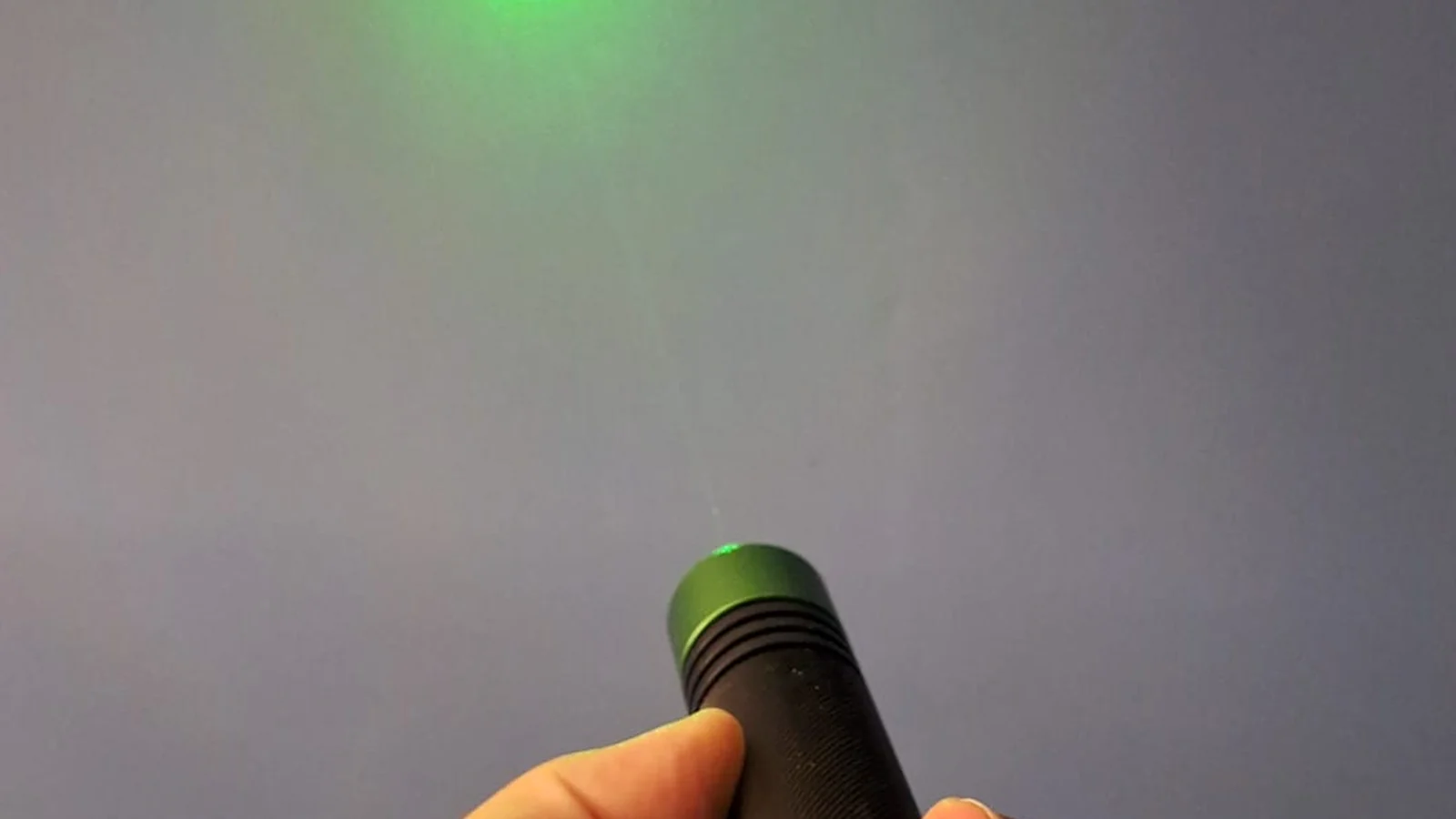
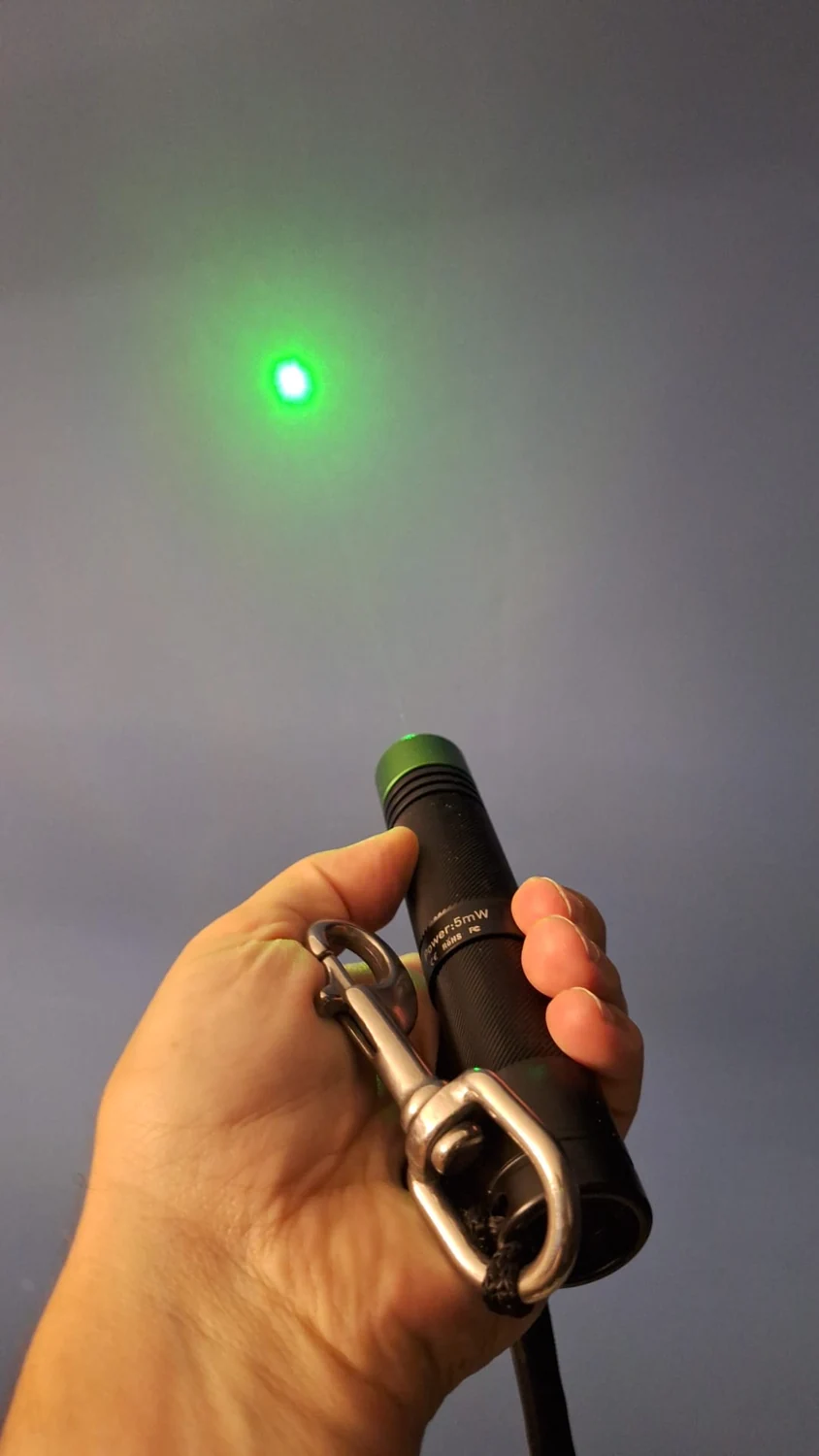
My personal experience with the DivePro L6 was genuinely positive. After two small OrcaTorch laser products disappointed me, the L6 produced the visible green indication I had wanted. I used it to draw attention near an animal without touching it and to make another diver notice a visual signal without banging a cylinder.
This is exactly why equipment opinions have to be updateable. I can truthfully say the L6 changed how I communicated underwater and, at the same time, say that current safety information changes what I would advise today.
Lumens are only the beginning
A torch can advertise a large lumen number and still be the wrong tool. Beam angle, candela/throw, colour, runtime, switch ergonomics, battery state indication, charging method and size all matter. One correction to a preference I have expressed over the years is worth making clearly: light output from multiple emitters can absolutely add together. What I often prefer about a strong single-emitter light is the beam character and apparent punch, not a claim that three emitters cannot sum to the same total lumens.
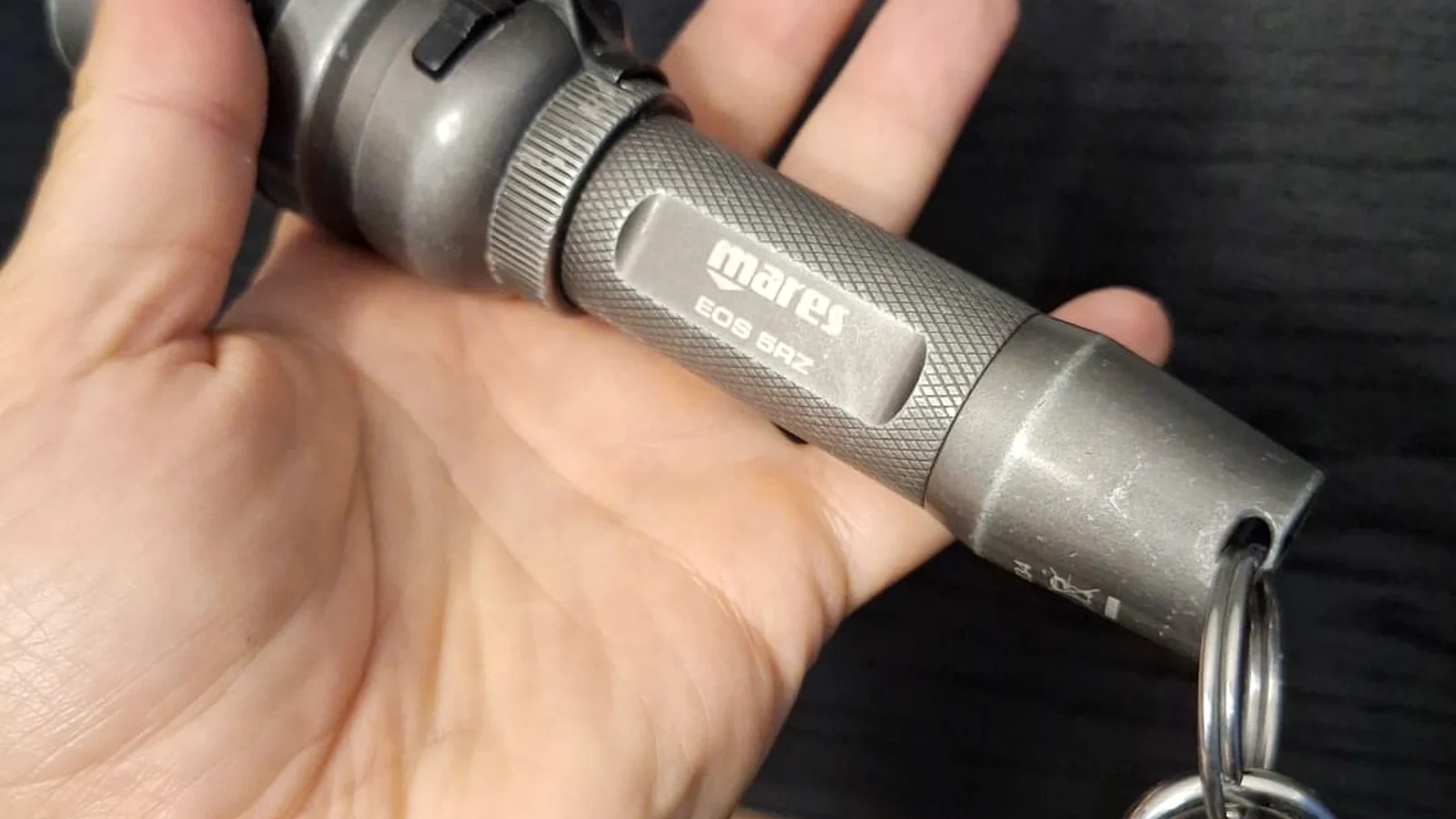
My own path went from modest lights, through Mares EOS models, to a compact Tovatec T3500S that became my favourite general torch. I like having enough maximum output for daylight holes, wreck details and signalling, while being able to run it lower at night. I also value direct charging and a battery indicator because those details remove unnecessary battery handling and guesswork.
Primary and backup lights are mission-dependent
For a simple daylight reef dive I may not carry the same lighting package I would take into an overhead environment. For technical or overhead diving, loss of light can become a serious problem and redundancy has to follow training and the plan. The broader discussion in my technical-diving torch article covers why a “bright torch” and a technical lighting system are not automatically the same thing.
Communication should be deliberate and non-intrusive
I dislike turning the underwater environment into a percussion section. Tank bangers and metal pointers can get attention, but I prefer visual signalling where it is appropriate. A light beam can be excellent. I also experimented with a green laser for pointing near—not at—small subjects and getting another diver’s attention. That experience was useful, but the DivePro L6 now requires an important safety caveat because a model recall changed how I would discuss or recommend it today.
My practical light checklist
I care about beam shape at the actual distance I will use it, switch behaviour with gloves, charge state before entry, realistic runtime at the output I expect to use, attachment and backup strategy. A torch can be extremely bright and still be badly suited to the dive if it is awkward to carry, impossible to read or short-lived at the required power.
Recall source
The French government recall notice for the DivePro L6 reported measured laser output far above the permitted level and warned of serious eye injury. That notice overrides any old assumption that the unit should be treated as an ordinary benign pointer.
RappelConso — DivePro L6 recall notice
Explore related topics
This article stands on its own, but these pages go deeper into the parts that connect directly with it: