This former Blogger draft was fully rewritten, fact-checked and updated in July 2026.
A wetsuit does not warm the water around the diver indefinitely. It reduces heat loss by trapping a thin layer of water and limiting how quickly that warmed water is replaced by colder water.
Fit is therefore as important as thickness. A loose 7 mm suit that flushes can perform worse than a well-fitting thinner suit in suitable conditions.
How neoprene works
Closed-cell neoprene contains gas bubbles that provide insulation and buoyancy. As depth increases, the bubbles compress. The suit becomes thinner, less buoyant and less insulating—one reason weighting and warmth change during the dive.
Common styles
- Shorty: short sleeves and short legs for warm water and limited exposure protection.
- Full suit or steamer: full-length arms and legs in a range of thicknesses.
- Two-piece system: overlapping layers can add insulation around the torso.
- Semi-dry: a wetsuit with improved wrist, ankle and neck seals to reduce flushing; it does not keep the diver completely dry.
Fit before thickness
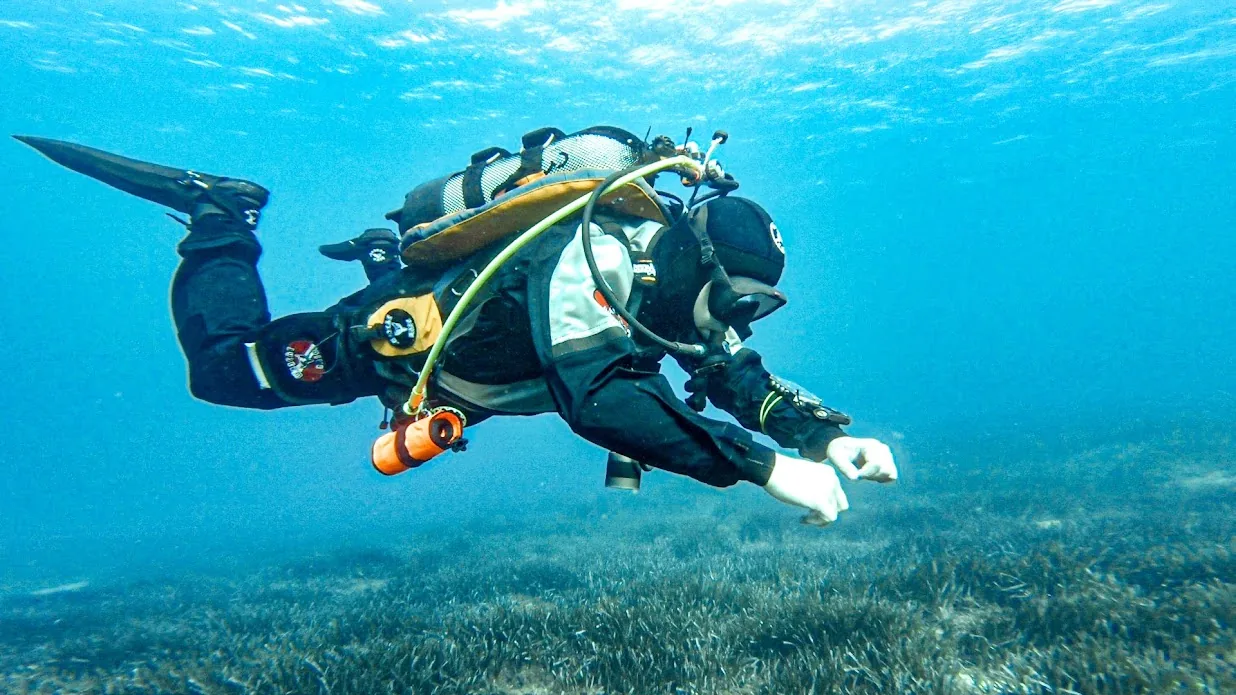
The suit should contact the body without restricting breathing or movement. Large gaps at the lower back, armpits, neck or wrists allow water exchange. A hood, gloves and boots can have as much effect on comfort as increasing torso thickness.
No universal Malta thickness
Malta water changes significantly between winter and late summer, and divers vary in cold tolerance. Duration, repetitive dives, wind and the surface interval also matter. Use local advice as a starting point, then record what worked in your logbook.
Weighting changes
A new thick wetsuit can require more ballast at the surface, yet much of that buoyancy is lost as the neoprene compresses. This can make a diver increasingly negative at depth if overweighted. Perform a proper weight check with the complete configuration.
Care
Rinse in fresh water, dry away from strong sun, store without crushing the neoprene and repair tears before they spread. A suit that has permanently compressed may still fit but provide less warmth and buoyancy than when new.
Sources and further reading
Enjoyed this article? If you'd like to help keep the BusaBoy Archive online, you can support the archive via PayPal.