Why labels matter less than repeated exposure, correction and humility.
Why labels matter less than repeated exposure, correction and humility. Over time I have become less interested in owning more equipment and more interested in understanding why a specific object deserves to be in the water with me.
The question behind the gear
I am uncomfortable with the word 'expert' because it often becomes a badge rather than a description. Only people who never enter the water can guarantee they will never encounter a diving problem.
Frequent diving creates exposure to equipment issues, changing conditions, mistakes, emergency management and constant self-correction. Experience is valuable when it makes a diver more willing to revise a belief, not more certain that nobody can teach them anything.
The practical point
That is the thread running through this entire series: verify, simplify and keep changing your mind when better evidence or better experience gives you a reason.
Experience is exposure plus correction
I do not like using “expert” as a shortcut for authority. What matters more to me is repeated exposure to different dives, people, equipment and problems, followed by reflection and correction. Only if you never enter the water will you never have problems. Spending large periods diving every day gave me many chances to see small issues before they became large ones—and also to discover where my own habits needed changing.
That is why the number of dives is useful context but not a magical qualification. The value of 3,600+ logged dives is the accumulated feedback: what repeated reliably, what failed, what became easier, what turned out to be unnecessary and what I changed afterwards.
The decision comes before the object
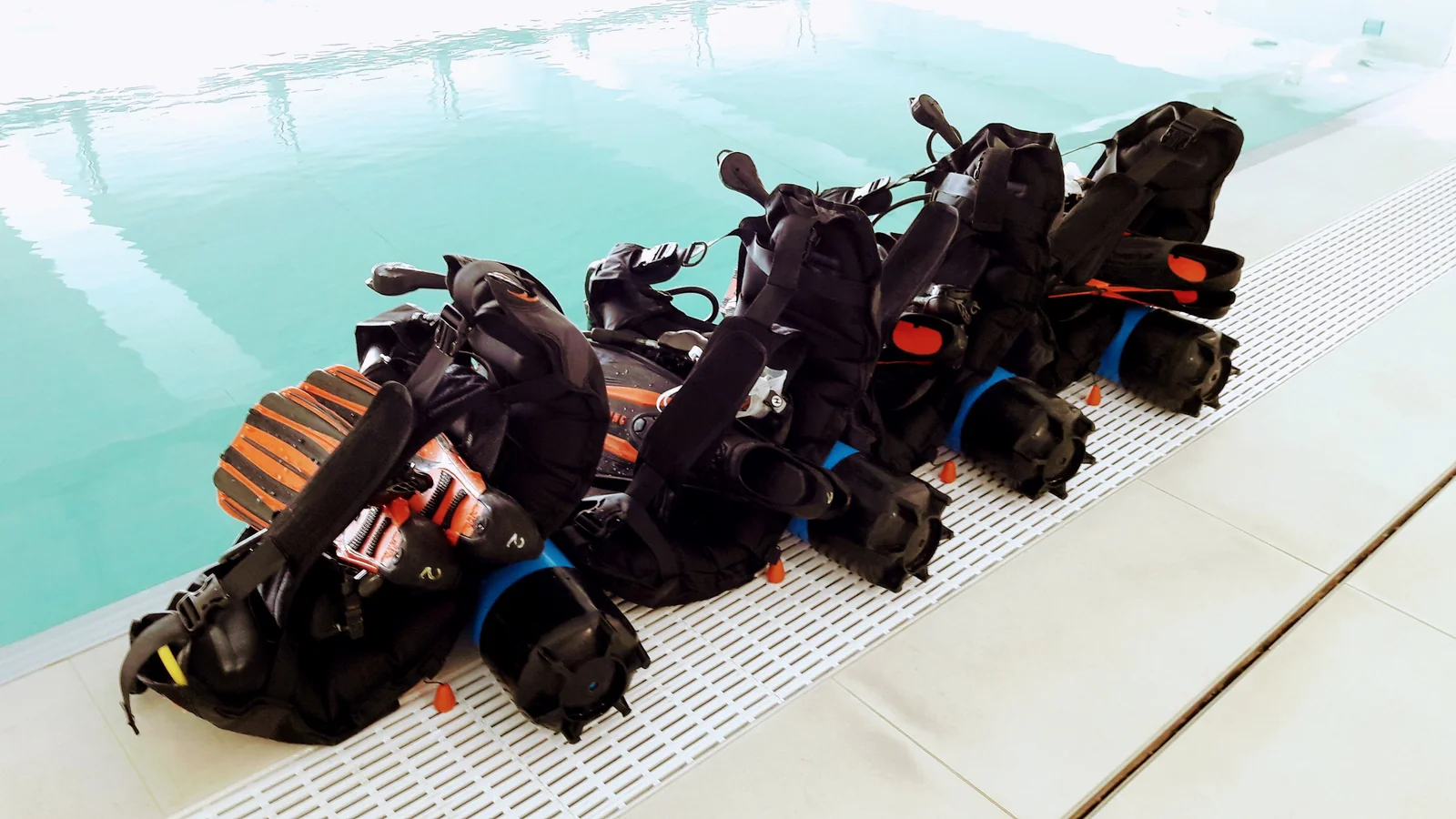
The easiest way to accumulate bad equipment is to start with the product instead of the problem. My order is the opposite: what is the dive, what can realistically go wrong, what information or capability do I need, and only then what item earns a place on the configuration? That is why my equipment changes between a simple recreational shore dive, a teaching day, a sidemount wreck dive and a planned technical dive. The equipment is not my identity; it is a set of tools chosen for a mission.
This is also why I am suspicious of the idea that carrying more automatically means being safer. Every extra item has a cost in drag, snag potential, preparation, maintenance and attention. Redundancy matters, but good redundancy is deliberate. Two independent pressure indications can solve a specific failure. Three random accessories hanging from D-rings do not automatically solve anything.
Experience should make the system simpler
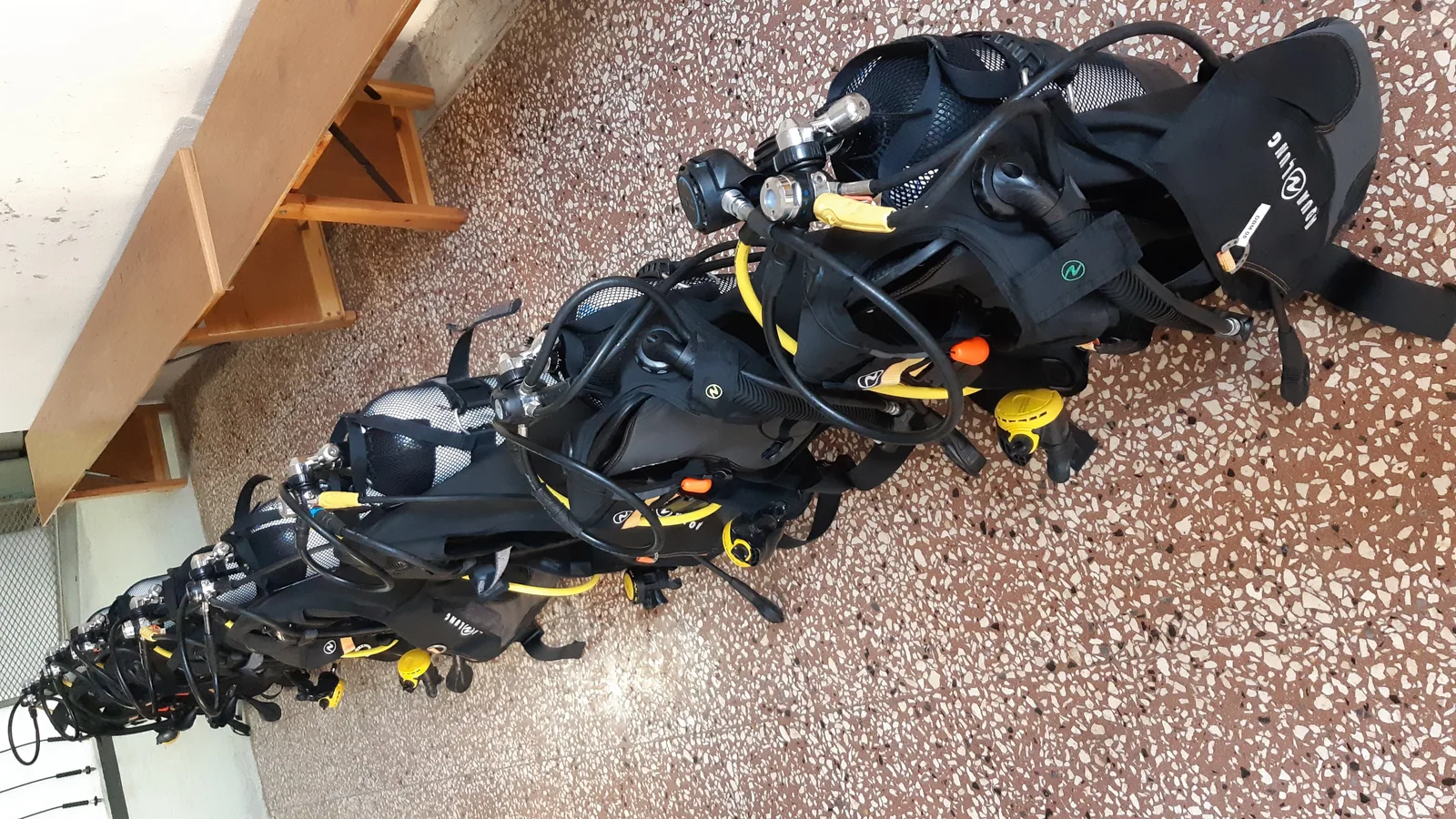
Many of my present choices came from earlier mistakes. I once bought almost a complete set of equipment immediately after Open Water and discovered very quickly that buying before understanding creates expensive lessons. I bought INT/Yoke regulators when DIN would have suited the direction my diving took. I chose masks because they looked good before learning how much fit changes after several dives a day. I bought BCDs that I later disliked. Those mistakes were not wasted money if I remember what they taught me.
After enough repetition, the interesting question becomes less “what can I add?” and more “what can I remove without losing a capability I genuinely need?” That is the principle behind my current sidemount rig, my lighting choices, the way I decide whether a compass or camera comes with me, and even the two plastic boxes I use to transport and rinse equipment.
Evidence, preference and honesty
I am comfortable saying that I love a piece of equipment. I am equally comfortable saying that part of the reason may be completely personal—lime green makes me happy. The important thing is not to turn preference into physics. When a technical claim matters, I want it checked against current manufacturer documentation, training material or good safety evidence. When it is simply my experience, I say so.
The same applies to instruction. I want divers to verify what they are taught rather than treating the instructor as an oracle. Procedures evolve. Equipment evolves. Evidence can overturn old habits. A good diver should be able to explain why a procedure exists and know when the answer comes from a manual, an incident analysis, a manufacturer limitation or personal preference.
A useful test before buying anything
I ask three questions: what problem am I solving, what new failure or maintenance burden does the solution introduce, and will I still want this item after the novelty has disappeared? If I cannot answer those questions, I probably need more dives or more research before I need a credit card. That test has saved me from repeating some of my earliest equipment mistakes.
Explore related topics
This article stands on its own, but these pages go deeper into the parts that connect directly with it: