A detailed tour of the sidemount, backmount, regulators, computers, exposure protection, fins, lights, cameras and practical systems I use—and the reasoning that connects them.
My diving equipment has changed many times, and that is exactly why this page exists. The central map of my current diving setups and the thinking behind them. I do not have one universal setup. I have configurations that change with the dive, the environment, the people I am with and the job I need the equipment to do.
How the system is organised
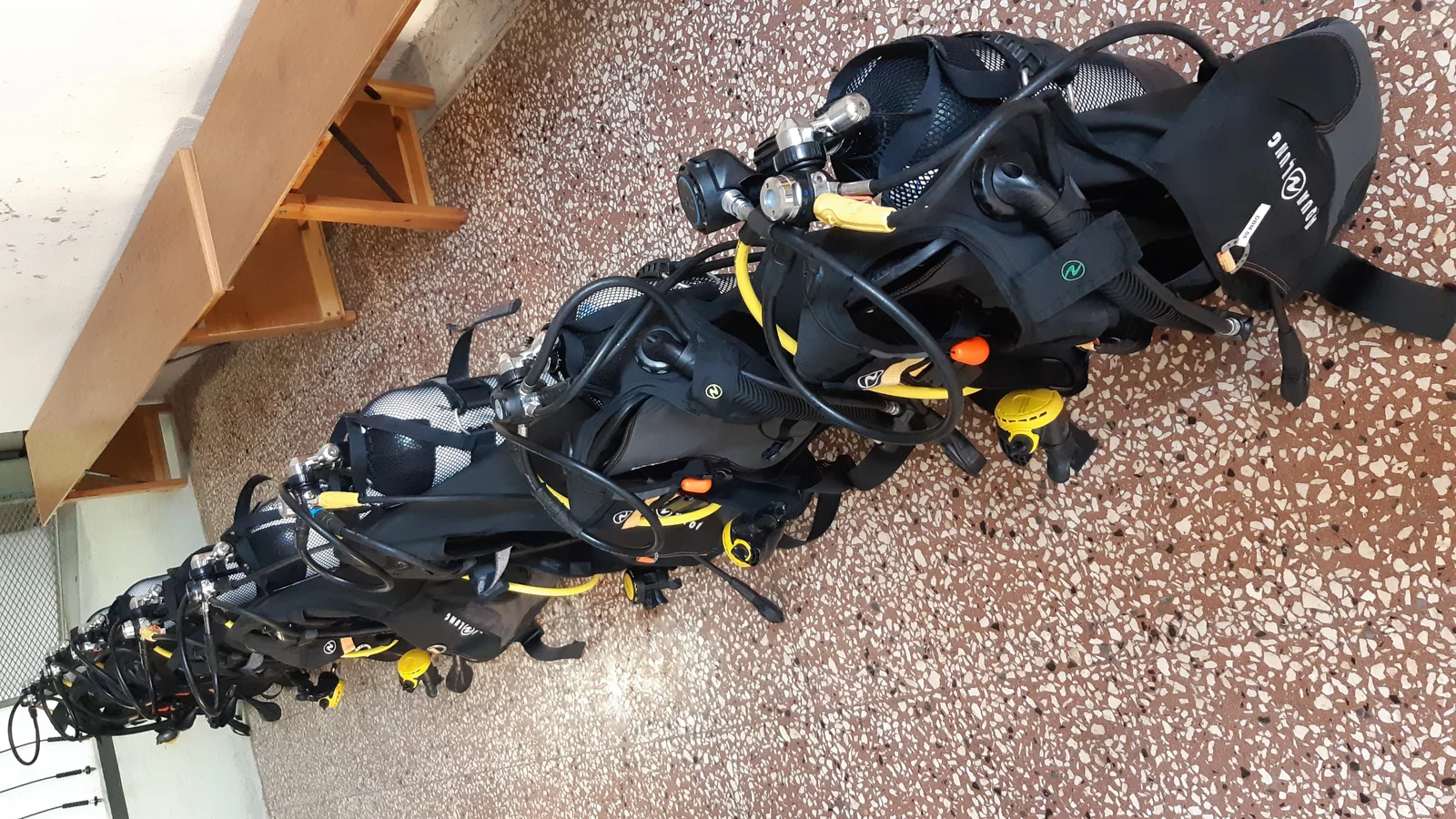
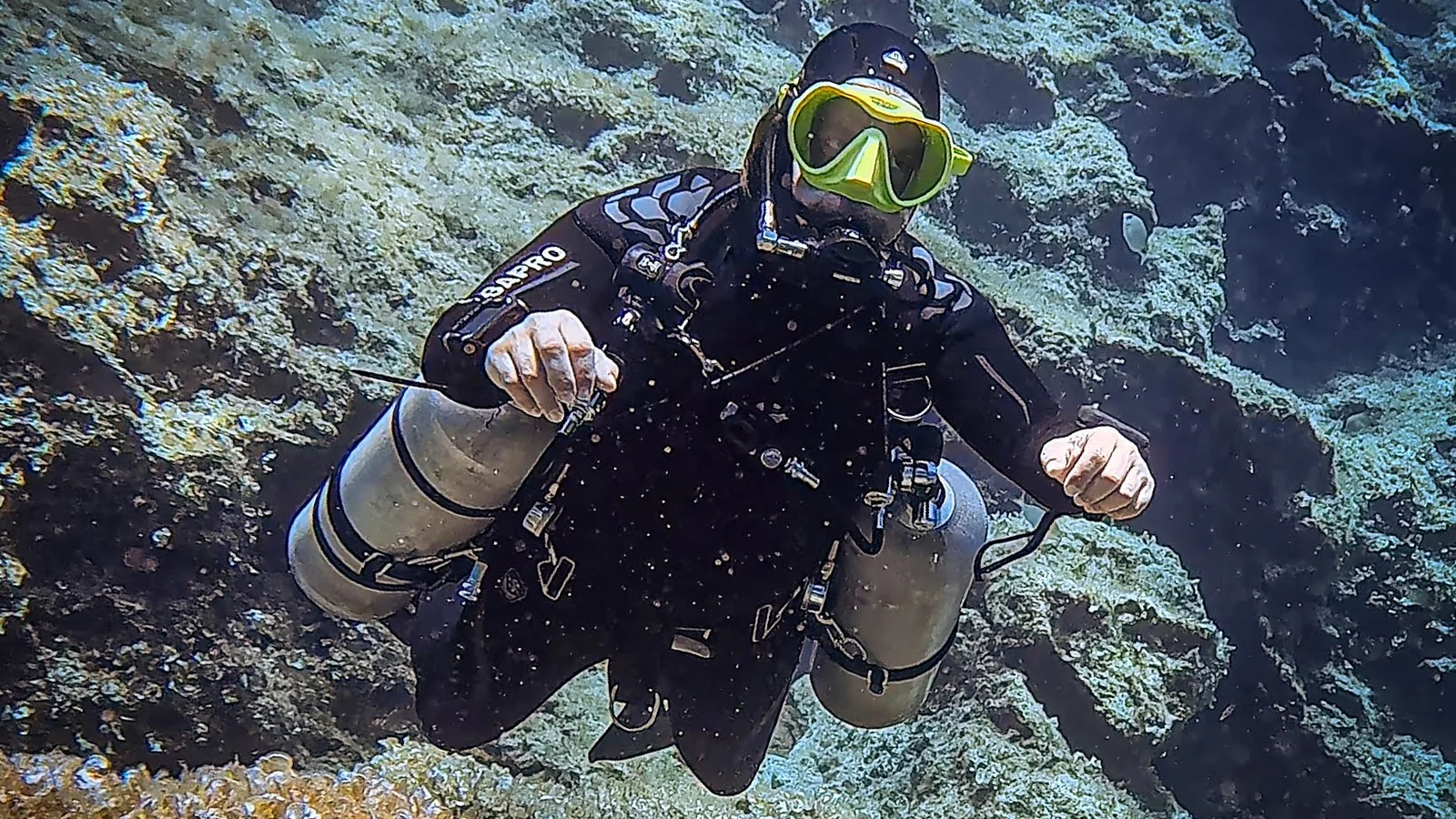
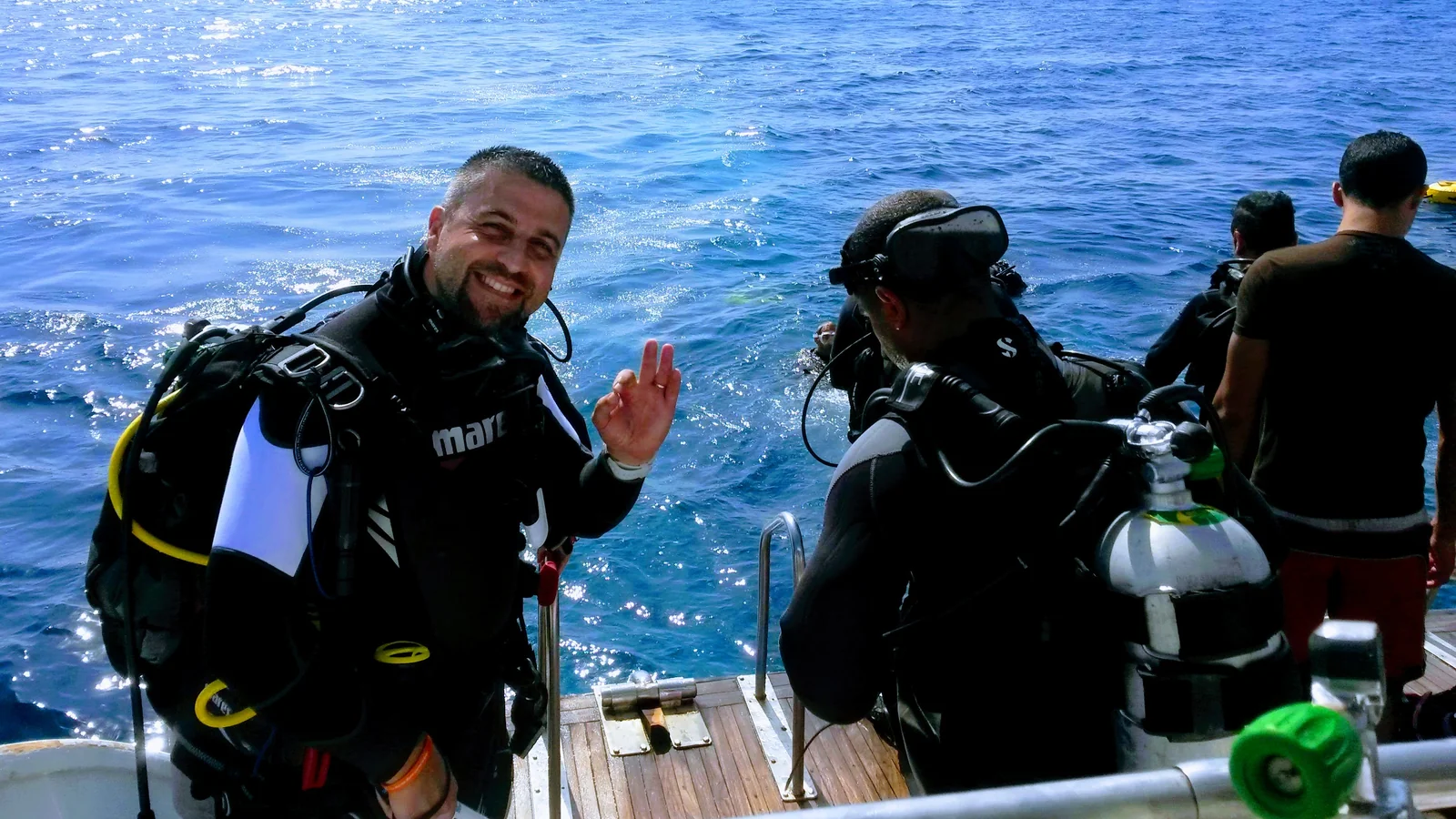
Most of my present-day diving is sidemount; I may use one S80 recreationally or two for more demanding and technical dives. I also keep a modular backmount setup for teaching, guiding and twinset work.

The real theme is not ownership. It is how experience changes the way I select, remove and configure equipment. Every item should justify the task loading, drag, failure points and maintenance it adds.
This page links to detailed, independent articles on the equipment, philosophy, workflow and technology behind each part of the setup.
Use this page as a map
Use the links below as a map, not a shopping list. Every page is designed to stand on its own, while the links let you move deeper whenever a term, product or configuration deserves a fuller explanation.
Explore the equipment archive
The sections below follow the same principle as the equipment itself: start with the mission, then choose the configuration and the tools. You can enter anywhere; there is no required reading order.
Philosophy
- Mission Before Equipment: Why I Never Dive Like a Christmas Tree
- Less Gear, More Intent: My Philosophy of Minimalist Diving
- There Is No Perfect Diving Setup
- The Equipment Mistakes That Made Me a Better Diver
- Don't Believe Your Instructor: Learn to Verify
- What Does 'Experienced Diver' Actually Mean?
Sidemount
- Why Sidemount Became My Main Diving Configuration
- Hollis Katana 2: Why It Became My Sidemount BCD
- XDeep Stealth 2.0 vs Hollis Katana 2: How My Sidemount Preferences Evolved
- Modern Sidemount Cylinder Rigging: Why Simpler Is Better
- Do You Really Need the Neck Clip on a Sidemount Cylinder?
Backmount
- XDeep Zen: My Minimalist Backmount Setup
- From Single Cylinder to Twinset: Why Modularity Matters
- BCD Mistakes I Made Before Finding the Setup I Wanted
Cylinders
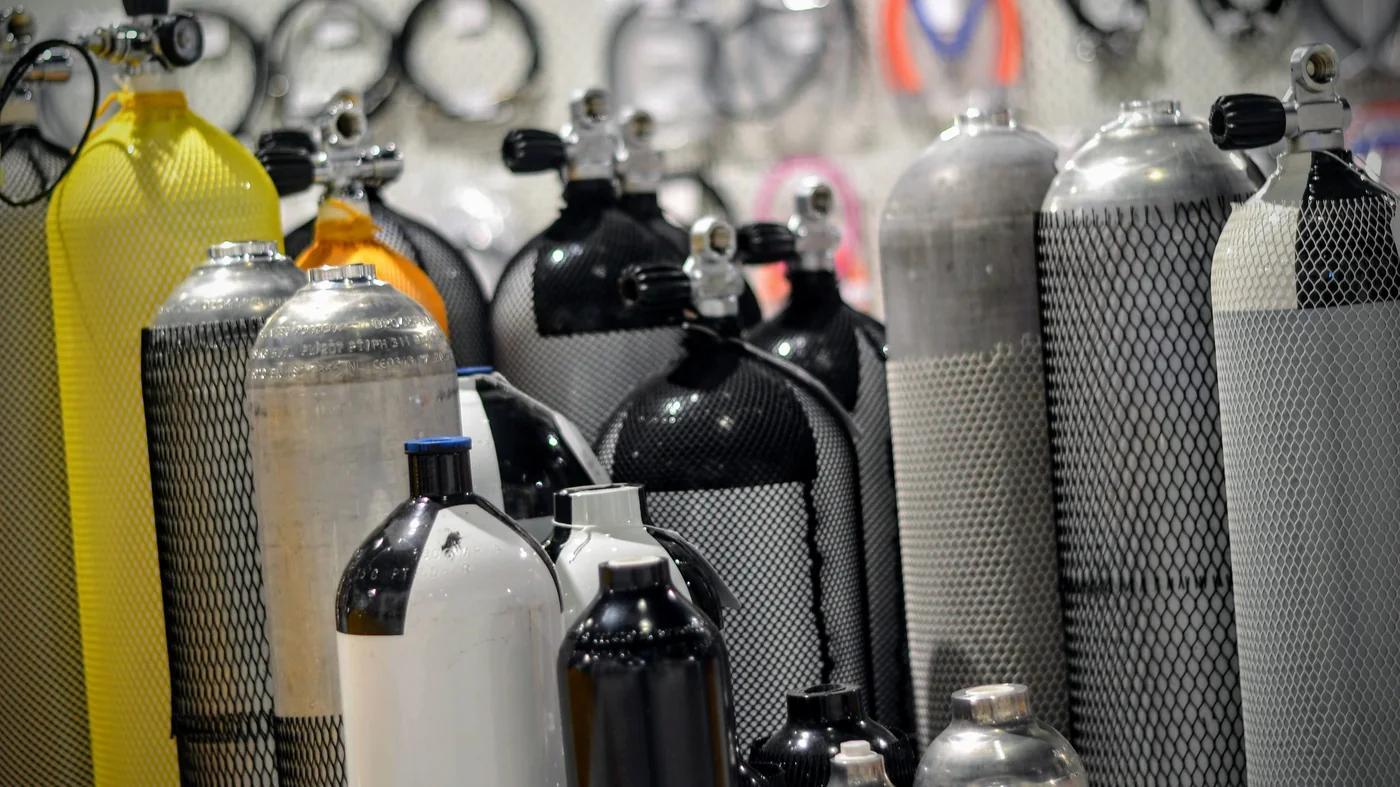
- Why I Use Aluminium S80 Cylinders for Sidemount
- The Strange Behaviour of Aluminium S80s Below About 140 Bar
- Aluminium or Steel Cylinders for Sidemount?
- Cylinder Valves, Gas Analysis and the Small Details of Technical Diving
Regulators
- Why I Use Apeks DST + XTX50 Regulators
- The Best Regulator Story Is the Emergency That Never Happened
- How I Route My Sidemount Regulators
- Transmitters Plus Button Gauges: Why I Use Both
Computers
- Shearwater Perdix 2: The Lamborghini of My Dive Computers
- Mares Quad: The Dive Computer That Refuses to Die
- Why I Dive With Two Computers
- From Mares Matrix to Suunto Vyper to Perdix 2: My Dive Computer Journey
Masks
- The Long Search for the Right Dive Mask
- XDeep Mask: Performance, Fit... and Yes, Lime Green
- One Mask Does Not Do Everything
Exposure
- How I Choose Between 3 mm, 7 mm and a Drysuit
- My Old Scubapro 3 mm: Why I Still Haven't Replaced It
- Waterproof W1 7 mm: Why Front-Zip Matters When You Dive Alone
- Bare HD2: The Drysuit That Finally Ended My Drysuit Problems
- Why I Sometimes Dive a Drysuit in Summer
- Cold-Water Accessories: Hood, Gloves and Boots
Fins
- Why I Own Five Different Pairs of Fins
- Apeks RK4: My Everyday Sidemount Fin
- Hollis F1: The Batman Fins I Use When I Want Zero Compromise
- TUSA Tri-Force: An Unexpectedly Good DPV Fin
- Scubapro Go Sport: The Fins I Used to Love but Rarely Use Now
- Fin Choice Is About Trim, Exposure Protection and Mission
Lights
- My Dive Light Evolution: From 700 Lumens to 3,500
- Tovatec T3500S: The Best Dive Light I've Owned So Far
- Why I Prefer Single-Emitter Dive Lights
- Could Modern Dive Lights Eventually Kill the Canister Light?
- The Best Equipment Is Sometimes the Equipment That Lets You Remove Equipment
- DivePro L6: Why a Green Laser Changed How I Communicate Underwater
- Stop Banging Your Tank: Less Intrusive Ways to Get a Diver's Attention
Cameras
- Why I Never Take Two Cameras on the Same Dive
- Insta360 X4 Underwater: Capture Everything, Decide Later
- Insta360 Ace Pro Underwater: When Image Quality Matters More
- 360 Camera or Action Camera for Diving?
- My Underwater Video Rig for Higher-Quality Shoots
Navigation
- Why My Compass Sometimes Stays on the Boat
- The Small Diving Accessories That Actually Earn Their Place
Logistics
- My Two-Box Dive Gear System
- My Dive Box Is Also My Rinse Tank
- How I Wash and Store My Diving Equipment
- How I Transport S80 Cylinders Without Letting Them Roll Around the Car
Technical
- What's Inside My Technical Diving Spares Box?
- Preparing Technical Diving Equipment Before Leaving Home
Future
- Technology Is Changing What a Minimalist Diver Can Carry
- Don't Upgrade Equipment Just Because Something New Exists
- Buy Once, Cry Once? Sometimes.
- What I Would Buy Again Today - and What I Wouldn't
- If I Lost All My Dive Gear Tomorrow: The First Things I Would Buy Again
My equipment is a map of the diving I actually do
I do not have one “BusaBoy setup.” Most of my present diving points towards sidemount: a Hollis Katana 2, one aluminium S80 for simple recreational dives or two for more demanding and technical work, Apeks DST/XTX50 regulators, transmitters feeding my Shearwater Perdix 2 and small mechanical gauges in reserve. Backmount still matters: my XDEEP ZEN is the clean platform I use when teaching or when a single cylinder, twinset and stages make more sense. Around those core systems sit different masks, exposure suits, fins, lights and cameras chosen according to the job.
The articles linked from this page are deliberately independent. I want a diver searching for the Perdix 2, RK4, S80, W1, Katana 2 or even a small accessory to be able to land on that page and understand the item without reading a numbered series first. This page is the map; the individual pages are the deep dives.

The decision comes before the object
The easiest way to accumulate bad equipment is to start with the product instead of the problem. My order is the opposite: what is the dive, what can realistically go wrong, what information or capability do I need, and only then what item earns a place on the configuration? That is why my equipment changes between a simple recreational shore dive, a teaching day, a sidemount wreck dive and a planned technical dive. The equipment is not my identity; it is a set of tools chosen for a mission.
This is also why I am suspicious of the idea that carrying more automatically means being safer. Every extra item has a cost in drag, snag potential, preparation, maintenance and attention. Redundancy matters, but good redundancy is deliberate. Two independent pressure indications can solve a specific failure. Three random accessories hanging from D-rings do not automatically solve anything.
Experience should make the system simpler
Many of my present choices came from earlier mistakes. I once bought almost a complete set of equipment immediately after Open Water and discovered very quickly that buying before understanding creates expensive lessons. I bought INT/Yoke regulators when DIN would have suited the direction my diving took. I chose masks because they looked good before learning how much fit changes after several dives a day. I bought BCDs that I later disliked. Those mistakes were not wasted money if I remember what they taught me.
After enough repetition, the interesting question becomes less “what can I add?” and more “what can I remove without losing a capability I genuinely need?” That is the principle behind my current sidemount rig, my lighting choices, the way I decide whether a compass or camera comes with me, and even the two plastic boxes I use to transport and rinse equipment.
Evidence, preference and honesty
I am comfortable saying that I love a piece of equipment. I am equally comfortable saying that part of the reason may be completely personal—lime green makes me happy. The important thing is not to turn preference into physics. When a technical claim matters, I want it checked against current manufacturer documentation, training material or good safety evidence. When it is simply my experience, I say so.
The same applies to instruction. I want divers to verify what they are taught rather than treating the instructor as an oracle. Procedures evolve. Equipment evolves. Evidence can overturn old habits. A good diver should be able to explain why a procedure exists and know when the answer comes from a manual, an incident analysis, a manufacturer limitation or personal preference.
A useful test before buying anything
I ask three questions: what problem am I solving, what new failure or maintenance burden does the solution introduce, and will I still want this item after the novelty has disappeared? If I cannot answer those questions, I probably need more dives or more research before I need a credit card. That test has saved me from repeating some of my earliest equipment mistakes.
My current configurations, piece by piece
For sidemount, start with why sidemount became my main configuration, then the Hollis Katana 2, minimalist cylinder rigging and my aluminium S80 cylinders. The regulators are Apeks DST + XTX50, with routing built around the turret and wireless transmitters backed by small mechanical gauges.
My main computer is the Shearwater Perdix 2; the Mares Quad remains the workhorse backup. Their roles change between recreational and technical redundancy. If terms such as no-decompression limit (NDL), Bühlmann ZHL-16C or gradient factors are unfamiliar, the links lead to the deeper science articles rather than forcing this equipment overview to become a decompression textbook.
For backmount I use the XDEEP ZEN because I want a minimalist plate/wing system that can grow through single-cylinder, twinset and stage configurations. My BCD history was not direct; the mistakes before reaching these systems are part of why I now care so much about modularity.
Exposure protection is a configuration choice
In warm conditions I still use an old Scubapro 3 mm. When I want serious wet protection, the Waterproof W1 7 mm front-zip takes over. For winter and technical dives I use the made-to-measure BARE HD2 drysuit, sometimes even in summer for reasons explained in why a drysuit can be part of technical redundancy. Hood, gloves and boots are covered separately because small thermal interfaces can affect dexterity and fin fit.
Fins are mission-specific
I own several because they do different jobs. The Apeks RK4 is my everyday sidemount fin. The heavy Hollis F1 comes out when I deliberately want negative weight and a robust technical fin. The TUSA Tri-Force surprised me especially when using a DPV. My older Scubapro Go Sport is a useful example of equipment that served me well but gradually lost its role. The broader logic is in fin choice, trim, exposure protection and mission.
Light only when light has a job
My lighting path runs from older Mares EOS 7ZR/10RZ units through the Tovatec T3500S. The interesting subject is not simply lumen inflation: beam geometry and why I personally favour strong single-emitter lights matter, and compact lights versus canister systems is a good example of technology potentially reducing equipment. My historic use of the DivePro L6 green laser is preserved honestly, including the current recall warning that changes how I discuss it today. For signalling philosophy, see less intrusive ways to get a diver’s attention.
Cameras: one mission, one camera
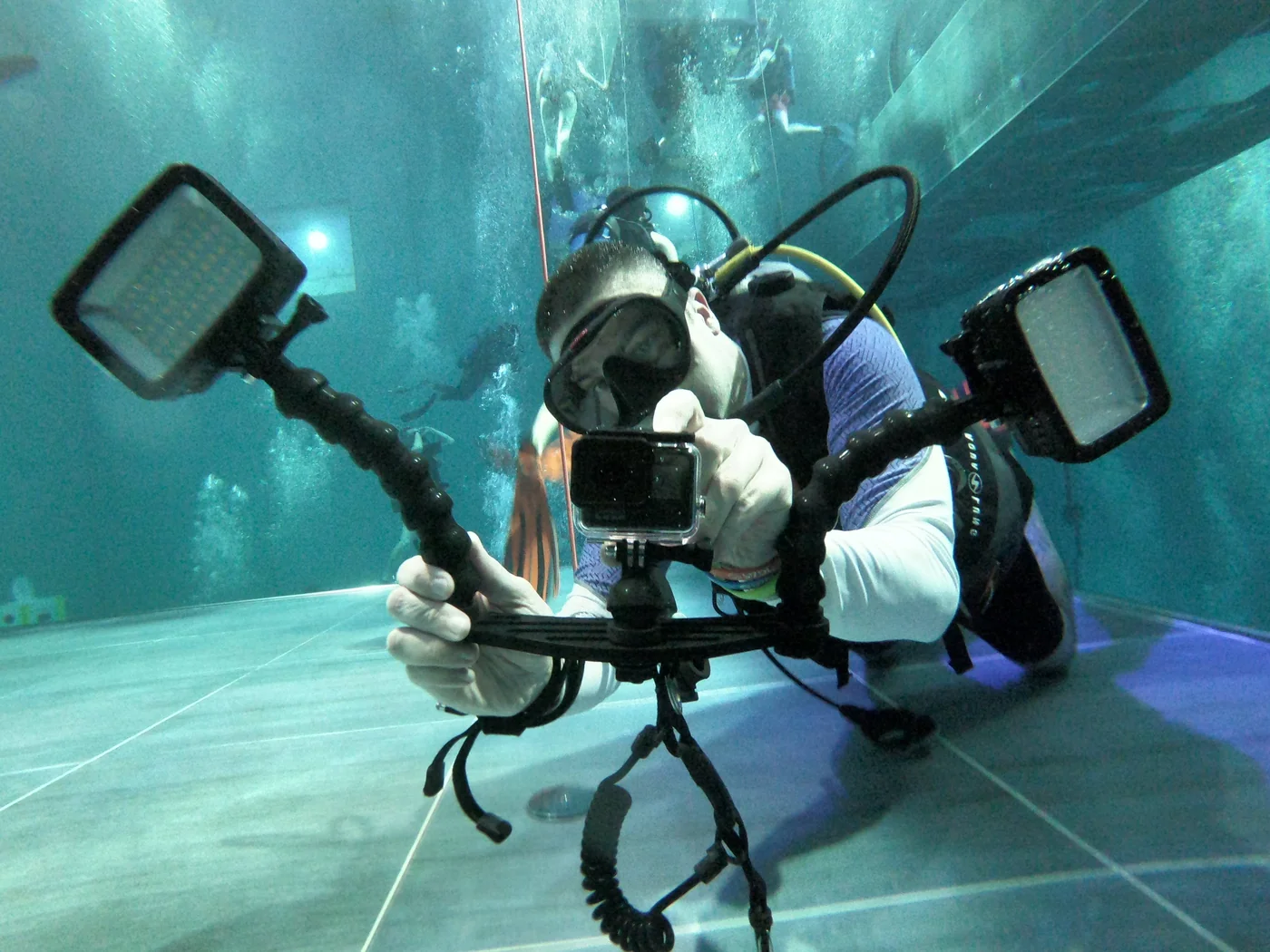
The Insta360 X4 is my capture-everything tool when I want the freedom to reframe after the dive. The Insta360 Ace Pro is the deliberate choice when conventional image quality matters more. 360 versus action camera explains the trade-off, while my larger dual-light rig shows the point at which I willingly accept more task loading because producing better footage is actually the dive objective.
The unglamorous equipment may save the most time
My compass sometimes stays out of the water because navigation needs determine whether it comes. Small accessories covers spools, wetnotes, clips, retainers, mechanical gauges and the Aquatec key case. On land, my two-box transport system and the box that doubles as a rinse tank reduce friction after every dive. I even made 3D-printed supports for the S80s in my car because a cylinder rolling around a vehicle is a problem worth solving.
Technical preparation gets its own treatment in the small spares box and what I prepare before leaving home. The point of this whole map is not that another diver should reproduce it. It is that every item has a story, a role, a limitation and a reason to be present—or absent.
Explore related topics
This article stands on its own, but these pages go deeper into the parts that connect directly with it: