This former Blogger draft was fully rewritten, fact-checked and updated in July 2026.
For a diver living in Malta, shark conservation is not an abstract issue taking place in a distant ocean. Sharks and rays are part of the Mediterranean ecosystem, and local fishing, markets, research and public understanding all influence their future.
Sharklab-Malta combines field observations, education and practical research. The most distinctive project documented on its official science pages is the recovery of viable egg cases from sharks landed at the fish market.
Recovering life from landed sharks
Small-spotted and greater-spotted catsharks are oviparous: they reproduce through egg cases. Sharklab-Malta researchers have recovered viable egg cases from dead females landed by fisheries, monitored the embryos, reared pups after hatching and released them into Maltese waters. This does not replace fisheries management, but it turns otherwise lost embryos into research and conservation opportunities.
What the published work recorded
The organisation’s science page reports 689 egg cases collected from January 2012 in the study period, with 186 shark pups released between January 2014 and March 2016. The programme continued beyond the original publication. These figures are specific to that documented work and should not be converted into unsupported claims about total Mediterranean populations.
Research and public education
Market monitoring reveals which species are being landed and creates biological records that divers alone cannot provide. Public talks, school activities and releases help people see sharks and rays as living parts of the ecosystem rather than anonymous products or movie villains.
Why this matters to divers
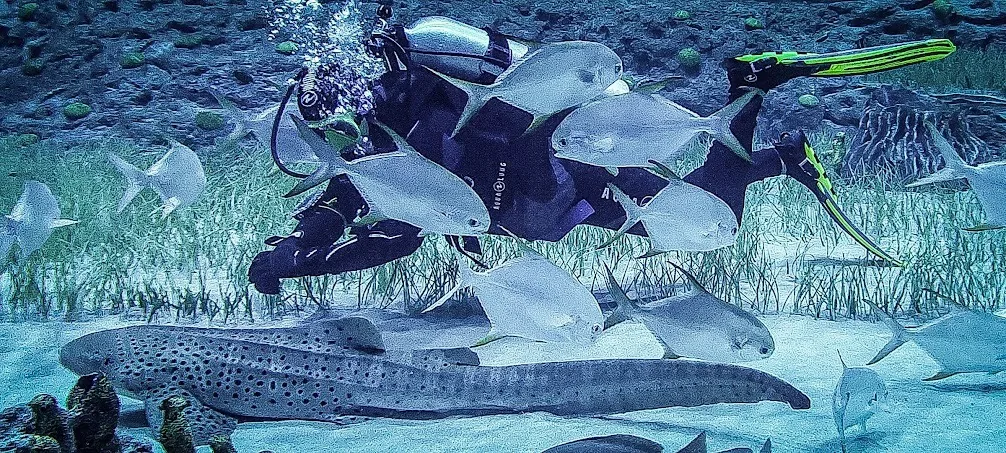
Divers are witnesses to changes underwater, but sightings are only useful when recorded responsibly. Photographs, location, date and an accurate species identification can support awareness. Chasing, handling or staging an encounter for content does the opposite.
Local conservation is cumulative
No single release or presentation solves the pressure facing Mediterranean elasmobranchs. The value is in consistent data, collaboration, public understanding and the creation of better decisions over time.
Sources and further reading
Enjoyed this article? If you'd like to help keep the BusaBoy Archive online, you can support the archive via PayPal.