My long-term Shearwater Perdix 2 experience: Bühlmann, gradient factors, GF99, SurfGF, NDL, TTS, air integration, SAC, GTR, sidemount gas tracking, batteries, strengths and limitations.
Why the Perdix 2 became my primary technical computer. Dive computers are useful only when the diver understands what role each one has in the plan.
What I want from the display
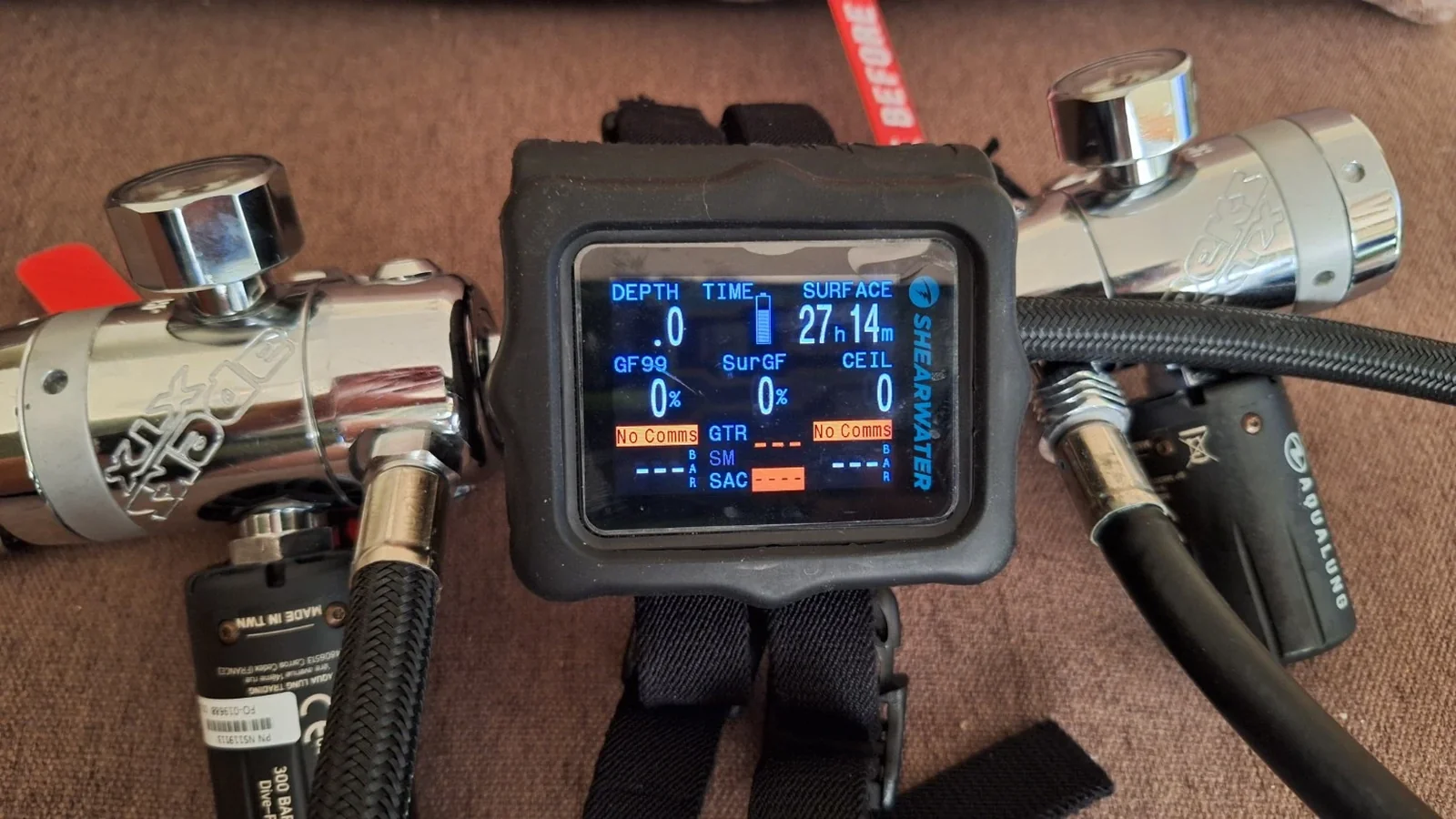
I describe the Perdix 2 as the Lamborghini of my dive computers because it gives me the level of capability I now need without making the interface feel obscure. It handles my two sidemount transmitters independently and supports the decompression framework and gradient-factor information I want to see. The current Perdix 2 specification supports air integration with up to four Shearwater transmitters, so my two-transmitter sidemount setup sits comfortably inside that design. I explain the experience behind that choice in Why I Finally Trust Wireless Air Integration in Sidemount Diving.
GF99, SurfGF and configurable displays make it particularly useful when I want more context than a simple no-decompression display. I also place real value on reliability and post-sale support because a technical computer is not an object I want to distrust underwater.
The practical point
The screen is useful, but the real safety feature is still the diver who understands the information and has a plan for losing it.
Why I call it the Lamborghini
The nickname is affectionate rather than technical. I have owned many computers, but the Perdix 2 is the first one that feels as if I can keep growing into it rather than working around it. The large colour display, configurable layouts, Bühlmann/GF information, multiple gases, compass and air integration all fit the technical diving I do now.
Current Shearwater documentation supports up to four transmitters and sidemount gas tracking, which means my two-cylinder configuration is not a workaround. The user-replaceable AA battery is another design choice I value because power management remains simple even when travelling.
A computer gives information; the diver still makes decisions
I like powerful dive computers, but I do not want them to become black boxes. Terms such as no-decompression limit (NDL), TTS, GF99 and SurfGF should mean something to the diver. My Perdix 2 uses Bühlmann ZHL-16C with configurable gradient factors in the modes I use, but a configurable algorithm is useful only if I understand what I am changing and why.
NDL and Time To Surface are predictive outputs. They are calculated from the computer’s model, current profile and assumptions; they are not promises about biology. TTS can include predicted ascent and required decompression based on enabled gases and the programmed ascent behaviour. This is why I use the screen as a decision tool rather than an authority detached from the dive plan.
Air integration adds context, not permission
With transmitters, pressure can be related to recent consumption and depth. Shearwater can calculate SAC and Gas Time Remaining, and its current sidemount support can track multiple cylinders and provide switch prompts. GTR is useful but it does not replace technical gas planning: Shearwater’s own documentation explains that it is based on a direct ascent with reserve assumptions, does not include safety or decompression stops, and is unavailable once required decompression is present. That is exactly why I describe it as additional information.
Redundancy changes with the type of dive
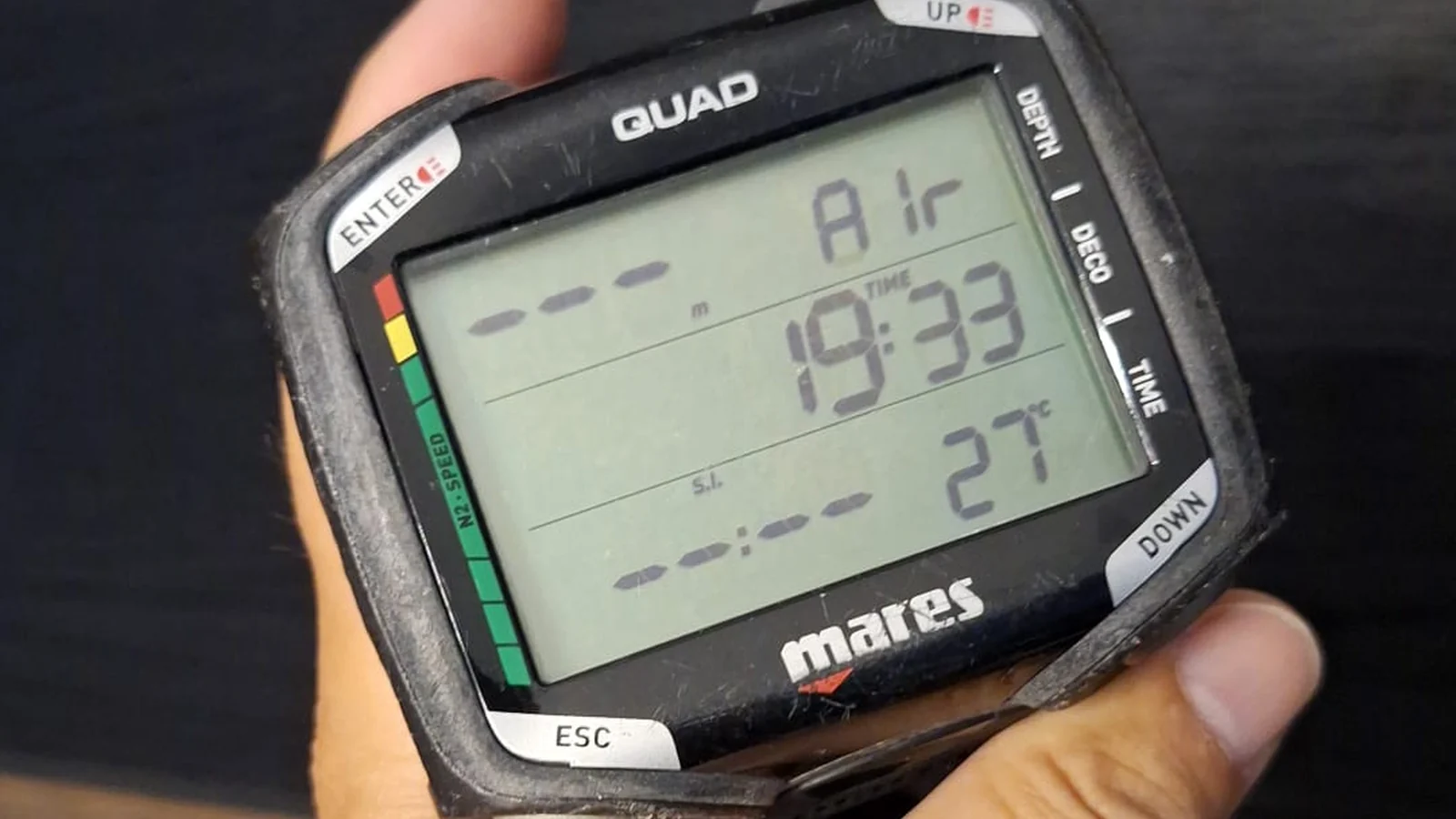
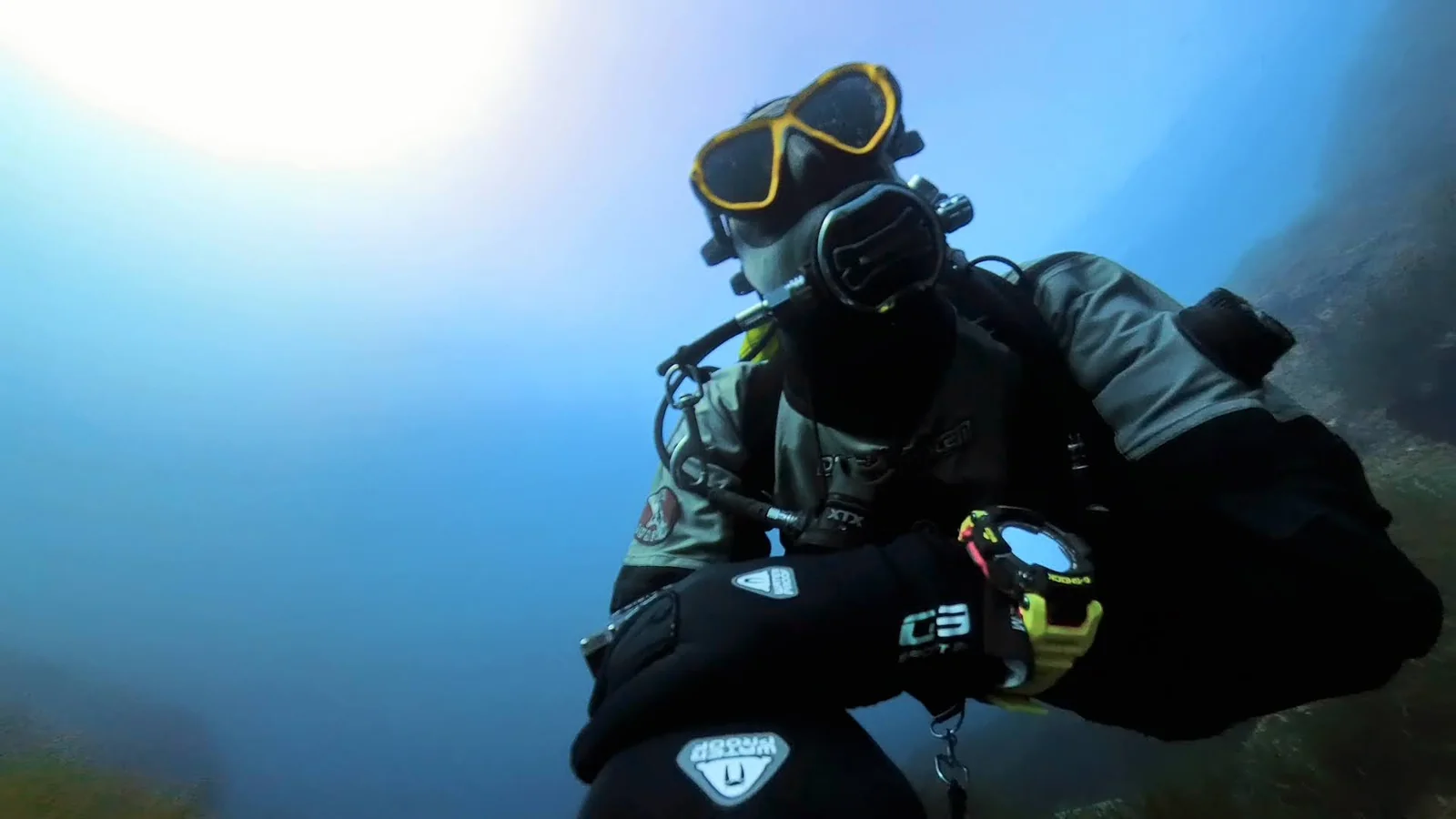
On recreational dives I normally let two computers run independently because I dive frequently and want both to carry their own tissue/loading history. On technical dives the Perdix 2 is the primary decompression computer and the Mares Quad can be used in gauge mode together with written backup tables/wetnotes. Those are different redundancy strategies because the dives are different.
What I want the diver to understand before the display
A beautiful screen is useful only if the diver knows what the numbers are telling them. I want to know which algorithm is running, which gases are enabled, what reserve assumptions affect gas calculations, how ascent-rate warnings work and what happens if the computer is lost. That understanding is what turns an expensive instrument into a tool rather than a source of false confidence.
What the Perdix 2 actually gives me
Shearwater’s current Perdix 2 documentation describes Bühlmann ZHL-16C decompression with configurable gradient factors, multiple-gas technical modes, digital compass, user-replaceable AA power and support for up to four compatible transmitters. Its air-integration tools can calculate SAC and GTR and support sidemount cylinder tracking/switch prompts. Those are precisely the features that let the unit act as my information centre without physically controlling the regulators.
Shearwater — Perdix 2
Shearwater — Perdix 2 technical manual
Explore related topics
This article stands on its own, but these pages go deeper into the parts that connect directly with it: