How my computer needs changed as my diving changed.
How my computer needs changed as my diving changed. Dive computers are useful only when the diver understands what role each one has in the plan.
What I want from the display
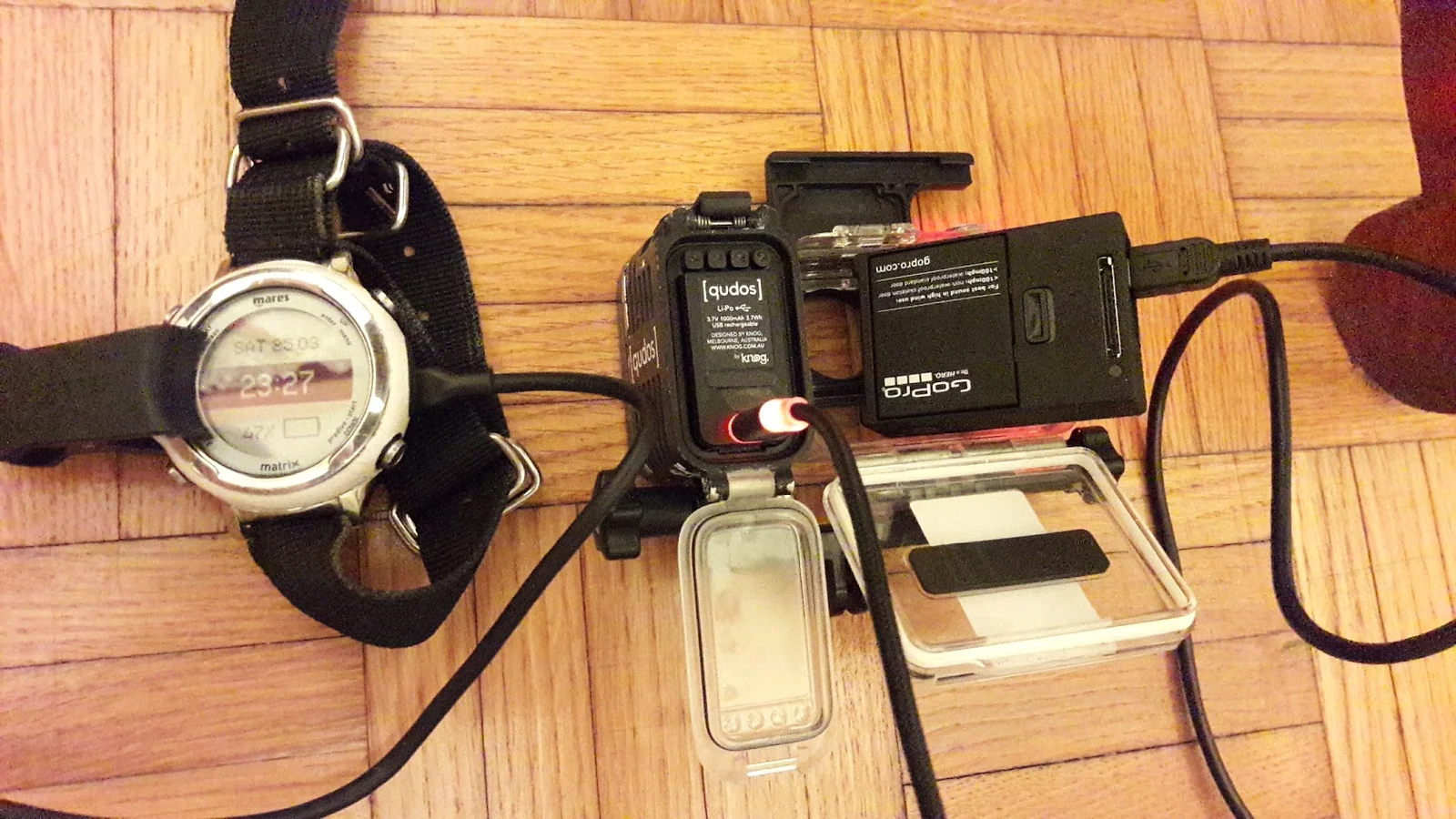
I started with smaller, simpler computers that were perfectly adequate for the dives I was doing. I remember the Mares Matrix fondly as an everyday watch-style computer that also attracted attention outside diving.
I then spent around 450 dives with a Suunto Vyper before eventually moving into the level of control and information I wanted from the Perdix 2. The lesson is not that every diver should buy the most advanced computer first. It is that a computer should match the diving you actually do.
The practical point
The screen is useful, but the real safety feature is still the diver who understands the information and has a plan for losing it.
Computers grew with my diving
I remember the Mares Matrix fondly because it was a watch I could wear every day and it suited the diving I was doing. I put around 450 dives on a Suunto Vyper and learned what I valued in a larger dedicated screen. I also had a Ratio computer switch off underwater, a useful reminder that even a technically impressive device can become irrelevant in one instant if it stops working.
The Perdix 2 is therefore not “better because expensive.” It is the result of requirements accumulating: technical modes, clearer decompression context, multiple transmitters, customisation and support. The journey explains the choice better than the price tag.
A computer gives information; the diver still makes decisions
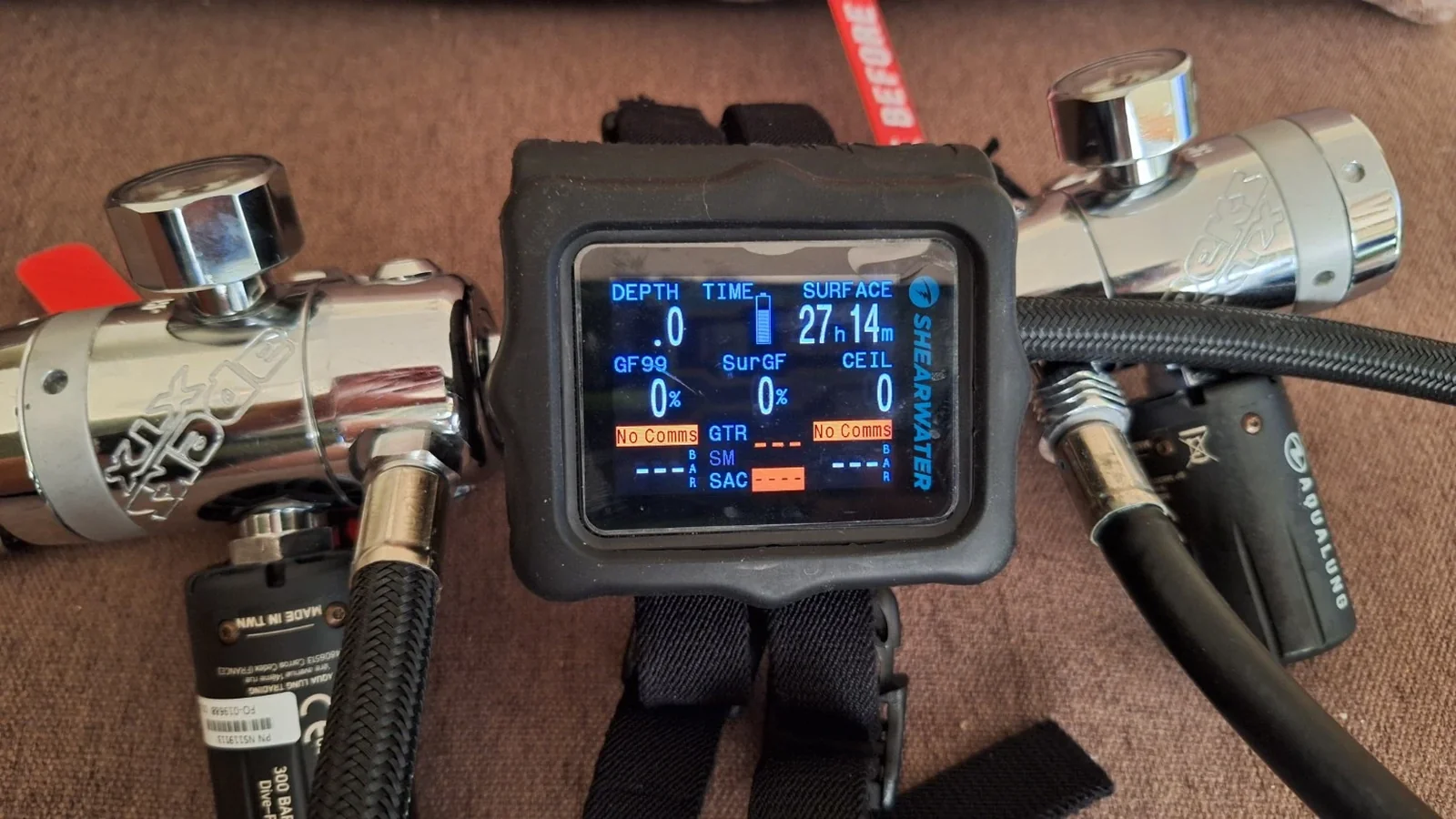
I like powerful dive computers, but I do not want them to become black boxes. Terms such as no-decompression limit (NDL), TTS, GF99 and SurfGF should mean something to the diver. My Perdix 2 uses Bühlmann ZHL-16C with configurable gradient factors in the modes I use, but a configurable algorithm is useful only if I understand what I am changing and why.
NDL and Time To Surface are predictive outputs. They are calculated from the computer’s model, current profile and assumptions; they are not promises about biology. TTS can include predicted ascent and required decompression based on enabled gases and the programmed ascent behaviour. This is why I use the screen as a decision tool rather than an authority detached from the dive plan.
Air integration adds context, not permission
With transmitters, pressure can be related to recent consumption and depth. Shearwater can calculate SAC and Gas Time Remaining, and its current sidemount support can track multiple cylinders and provide switch prompts. GTR is useful but it does not replace technical gas planning: Shearwater’s own documentation explains that it is based on a direct ascent with reserve assumptions, does not include safety or decompression stops, and is unavailable once required decompression is present. That is exactly why I describe it as additional information.
Redundancy changes with the type of dive
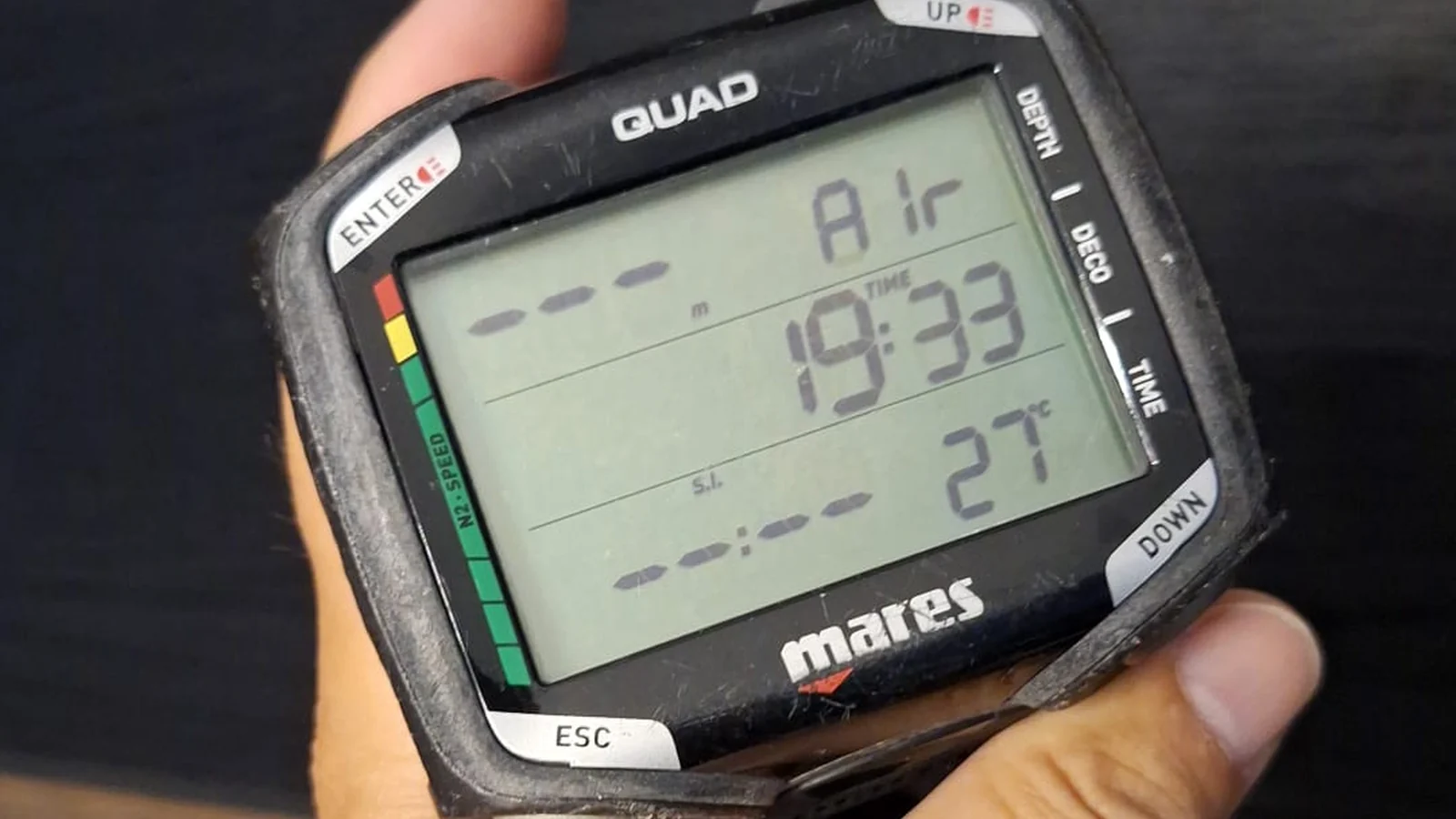
On recreational dives I normally let two computers run independently because I dive frequently and want both to carry their own tissue/loading history. On technical dives the Perdix 2 is the primary decompression computer and the Mares Quad can be used in gauge mode together with written backup tables/wetnotes. Those are different redundancy strategies because the dives are different.
What I want the diver to understand before the display
A beautiful screen is useful only if the diver knows what the numbers are telling them. I want to know which algorithm is running, which gases are enabled, what reserve assumptions affect gas calculations, how ascent-rate warnings work and what happens if the computer is lost. That understanding is what turns an expensive instrument into a tool rather than a source of false confidence.
Explore related topics
This article stands on its own, but these pages go deeper into the parts that connect directly with it: