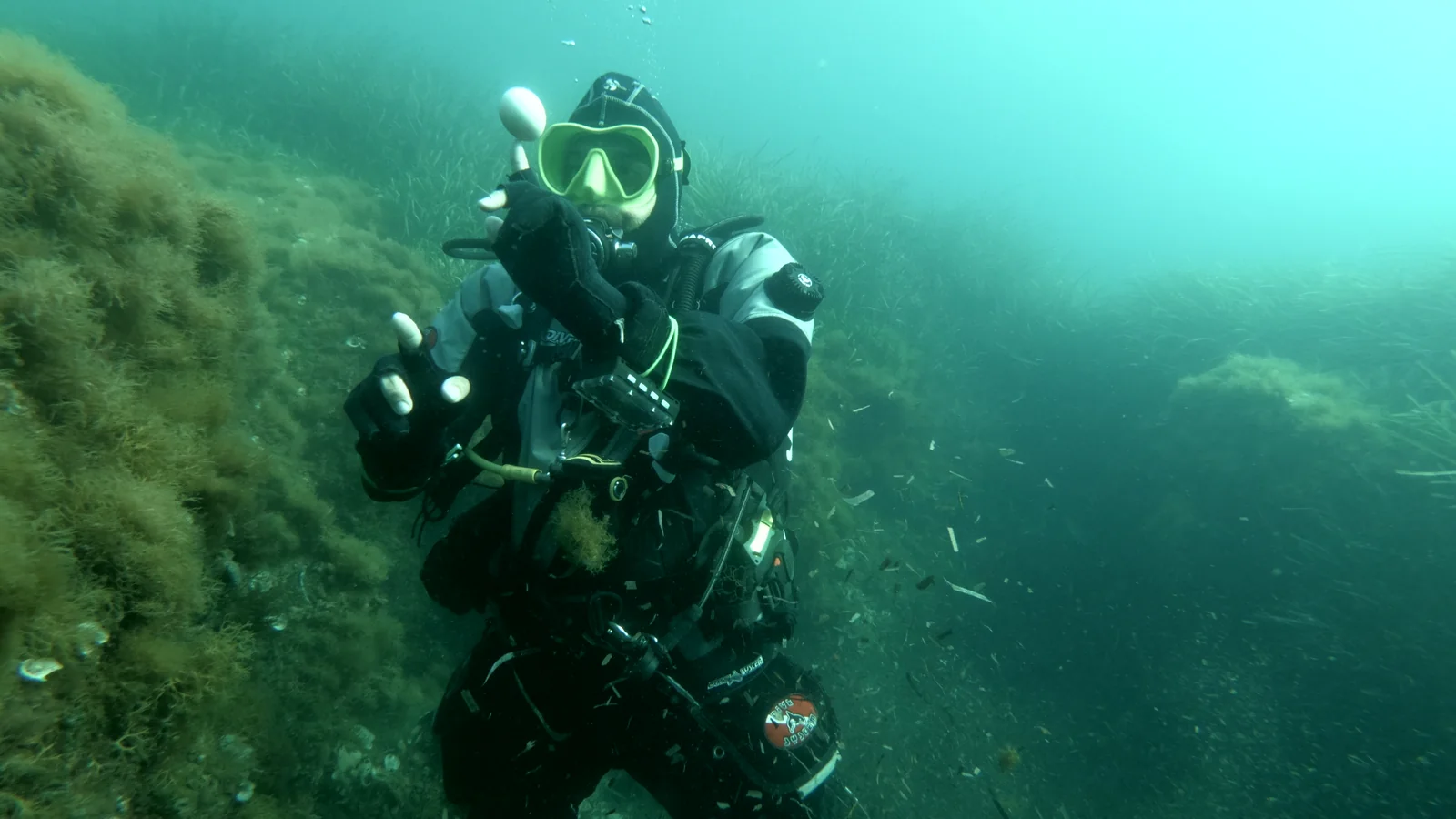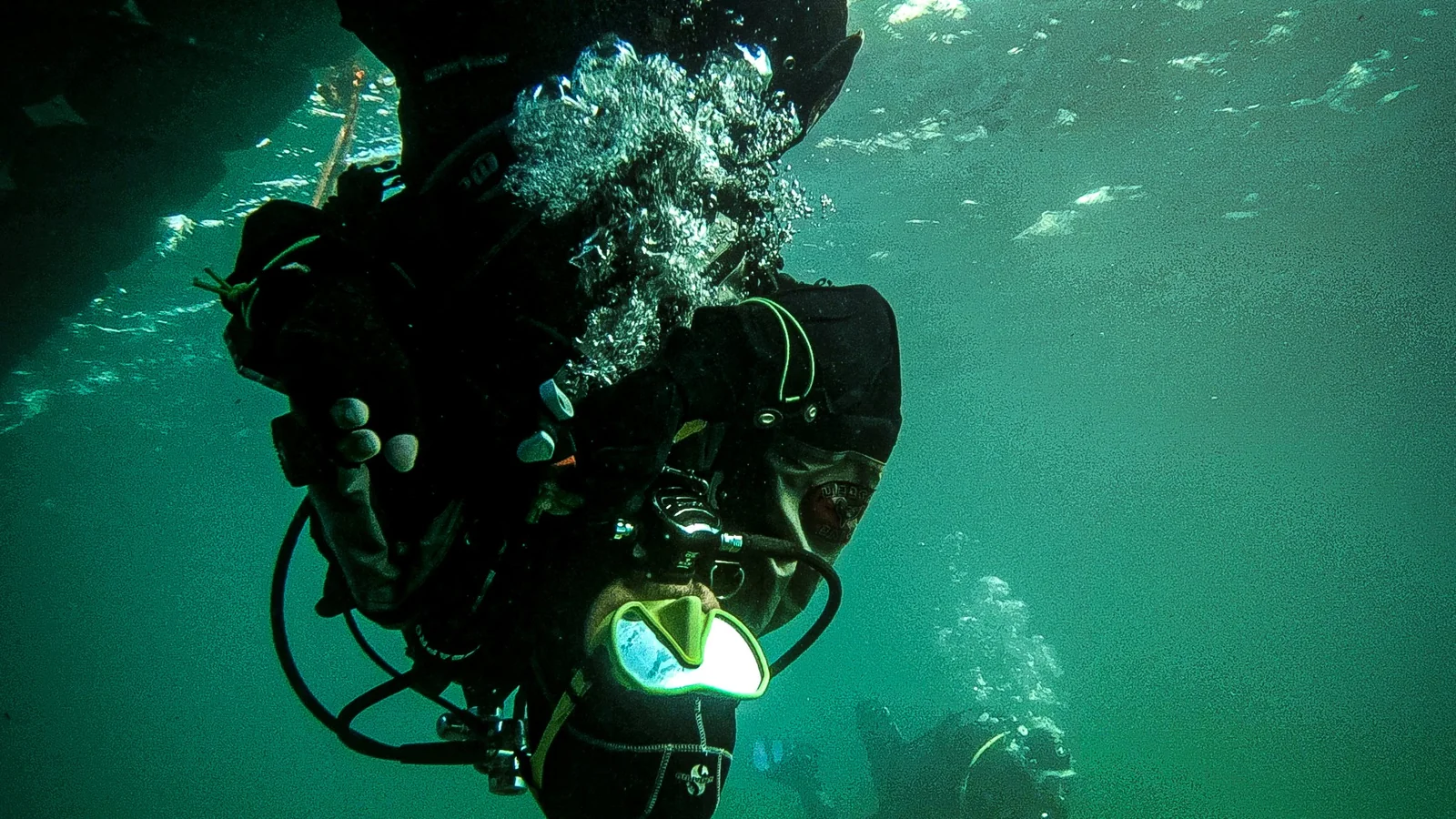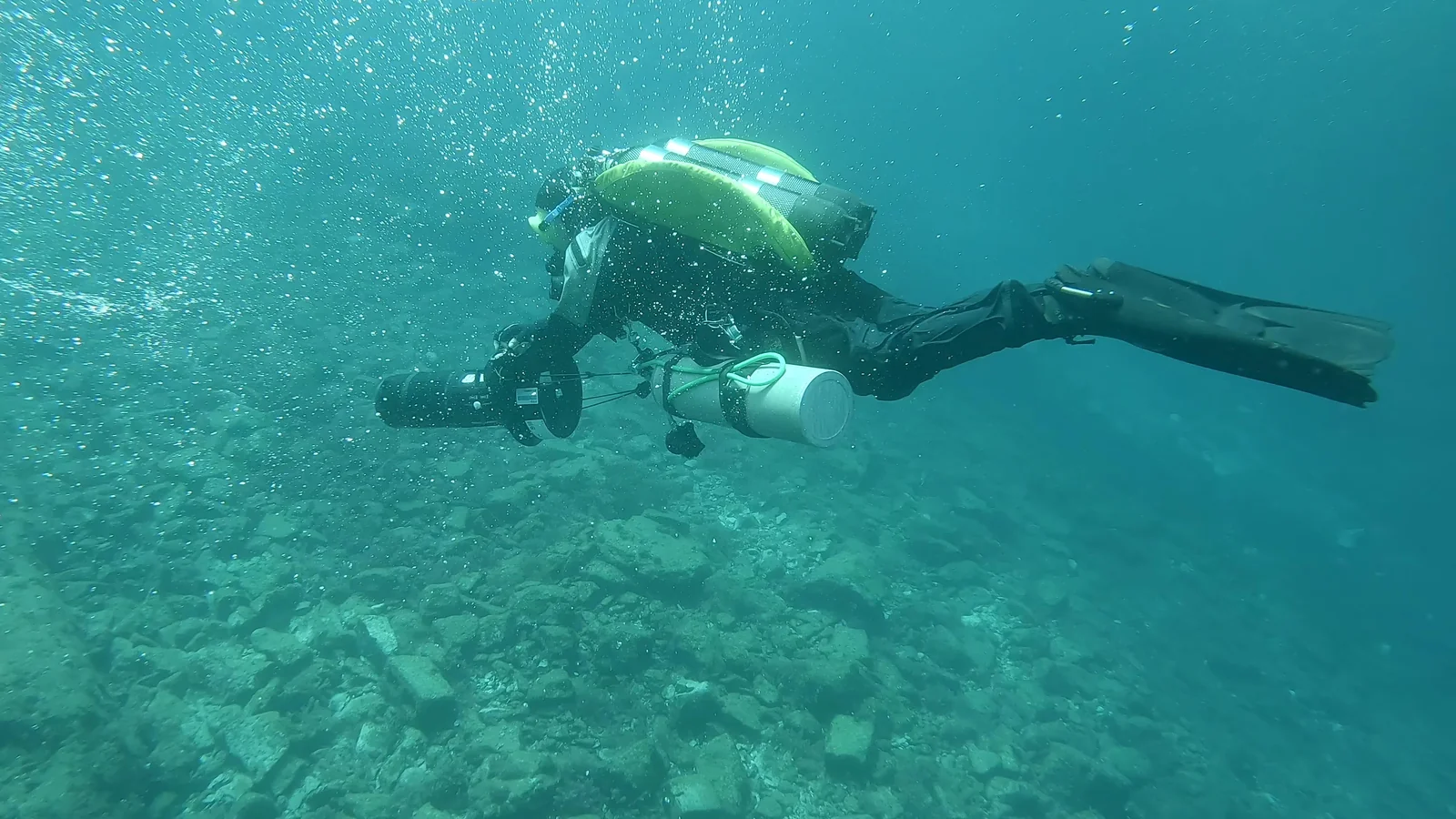
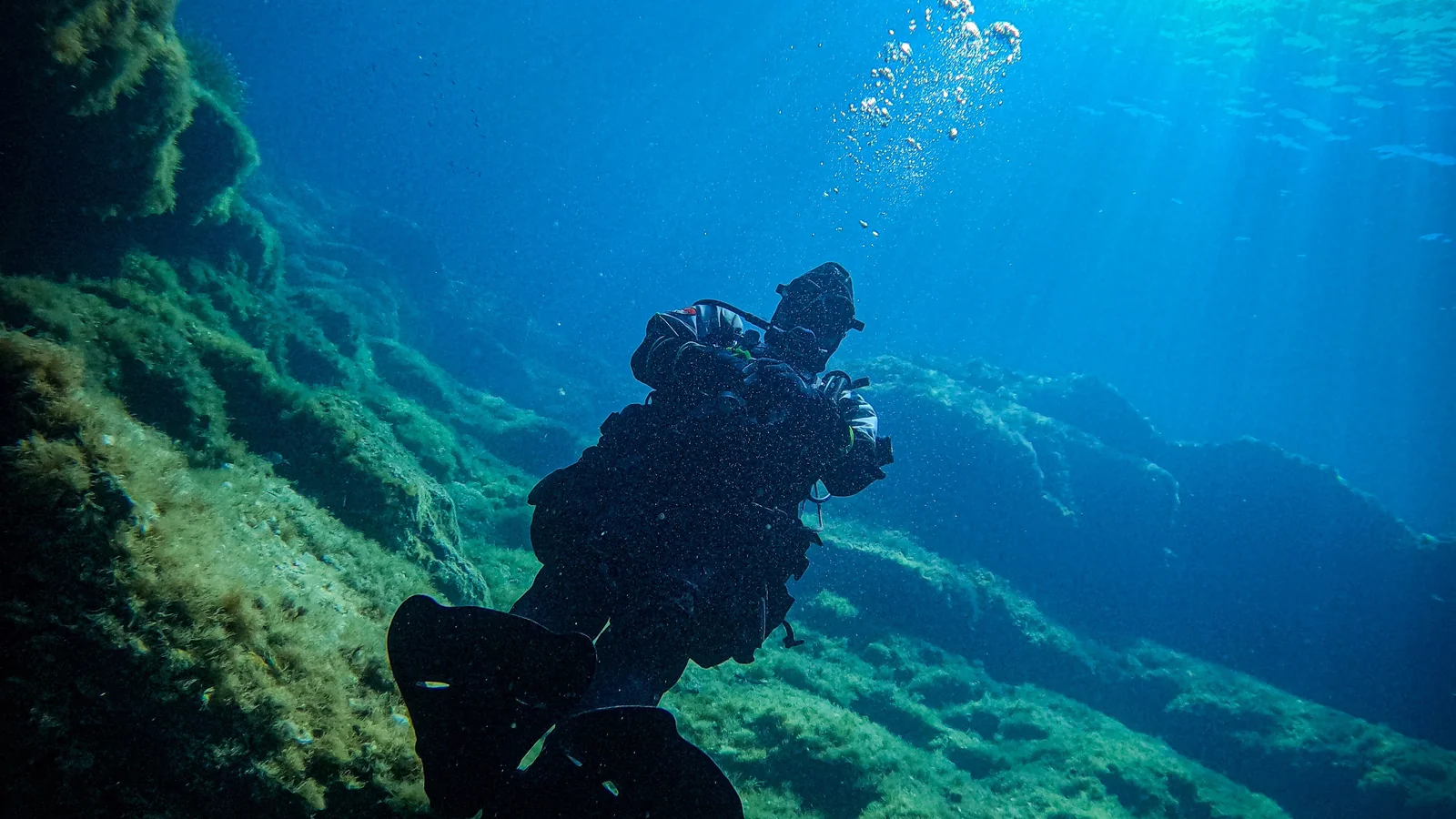
The drysuit as part of a technical system, not just thermal clothing.
The drysuit as part of a technical system, not just thermal clothing. Exposure protection is part comfort, part performance and, in some configurations, part of the overall buoyancy strategy.
What changes the choice
There are summer dives where I use the drysuit even though the water temperature alone would not demand it. In my technical sidemount configuration with a single-bladder wing, the drysuit can be part of the planned response to a buoyancy-system problem.
It also changes the surface experience when wind and long preparation times make staying dry useful. This is a trained technical configuration choice, not a universal recommendation for recreational divers.
The practical point
The best exposure system is the one that keeps the diver functional for the whole dive, including the time spent before and after the water.
Summer does not automatically mean wetsuit
On a simple warm recreational dive, wearing a drysuit in summer could be unnecessary. On a technical dive the decision includes more than temperature. Longer runtime, decompression, surface exposure, the possibility of becoming chilled while stationary and, in my single-bladder sidemount configuration, the value of a separate buoyancy space can change the answer.
That is why exposure protection is part of the dive system. I am not recommending that every technical diver wear a drysuit in warm water; I am explaining why mine sometimes earns a place even when insulation alone would not force the choice.
Thermal protection changes the entire configuration
A suit is not just clothing. Its thickness and buoyancy alter weighting, trim, mobility and gas use, and a drysuit adds a separate buoyancy space that must be managed. That is why I do not ask which suit is “best” in isolation. I ask what water temperature, surface weather, duration, workload and dive type I expect. The fundamentals are covered in my articles on how wetsuits provide thermal protection and how a drysuit changes thermal protection and buoyancy management.
In Malta, my practical ladder is simple. A soft old Scubapro 3 mm remains my summer suit while it still does its job. When I want substantially more wet protection I use the Waterproof W1 7 mm, and the front zip matters because I can close it myself. When cold, surface wind, long technical exposure or the need for an independent buoyancy space justify it, I use my made-to-measure BARE HD2 trilaminate drysuit.
Convenience is not trivial
Being able to dress without depending on someone else is valuable when I am teaching, guiding or simply arriving at a site with no helper standing beside me. The same is true of gloves, hood and boots: if they make valve work, finning or equipment handling awkward, warmth has been bought by sacrificing another part of the system. My choices try to keep enough dexterity for the dive I am actually doing.
Redundancy must be described accurately
On selected technical sidemount dives with a single-bladder wing, I value the drysuit as a separate source of buoyancy. That does not turn every drysuit dive into a technical procedure and it does not remove the need for appropriate training. It simply shows again that one component can have more than one system-level function.
Comfort is part of safety, but so is mobility
Being warm enough can improve concentration and gas use, but an exposure system that prevents me from reaching valves, clips or fins creates another problem. I therefore test the complete combination: suit, undergarments if any, hood, gloves, boots, fins and weighting. Thermal protection is a system, not a thickness number printed on neoprene.
Explore related topics
This article stands on its own, but these pages go deeper into the parts that connect directly with it: