Why carrying more imaging equipment can make the dive worse.
Why carrying more imaging equipment can make the dive worse. A camera changes the dive the moment it enters the water, so I choose it with the same discipline I apply to the rest of my equipment.
What I trade for the shot
I own two action-camera systems with different strengths, but I do not take both simply because I can. A camera adds task loading, attachment points, battery management and a reason to look at a screen instead of the dive.
Before entering the water I decide whether I want broad memory capture or more deliberate image quality, and I take the tool for that job.
The practical point
If the camera makes the dive worse, the footage was probably too expensive in task loading.
Owning two cameras is not a reason to carry two cameras
The X4 and Ace Pro solve different problems. If I brought both every time, I would add mounts, handling, battery checks and task loading while still having only two hands. Instead I decide what the dive is for. Exploration/memory favours 360 capture; deliberate visual quality favours the Ace Pro.
That choice also lets me remain a diver first. A camera should not make me forget depth, gas, team position or the route.
The mission decides which camera comes with me
I own more than one underwater camera, but I normally take one. Carrying both because I own both would contradict the rest of my equipment philosophy. If I am entering an unfamiliar environment and want to preserve everything around me, a 360 camera makes sense. If I know the shot I want and image quality matters more than complete coverage, I prefer the action-camera approach.
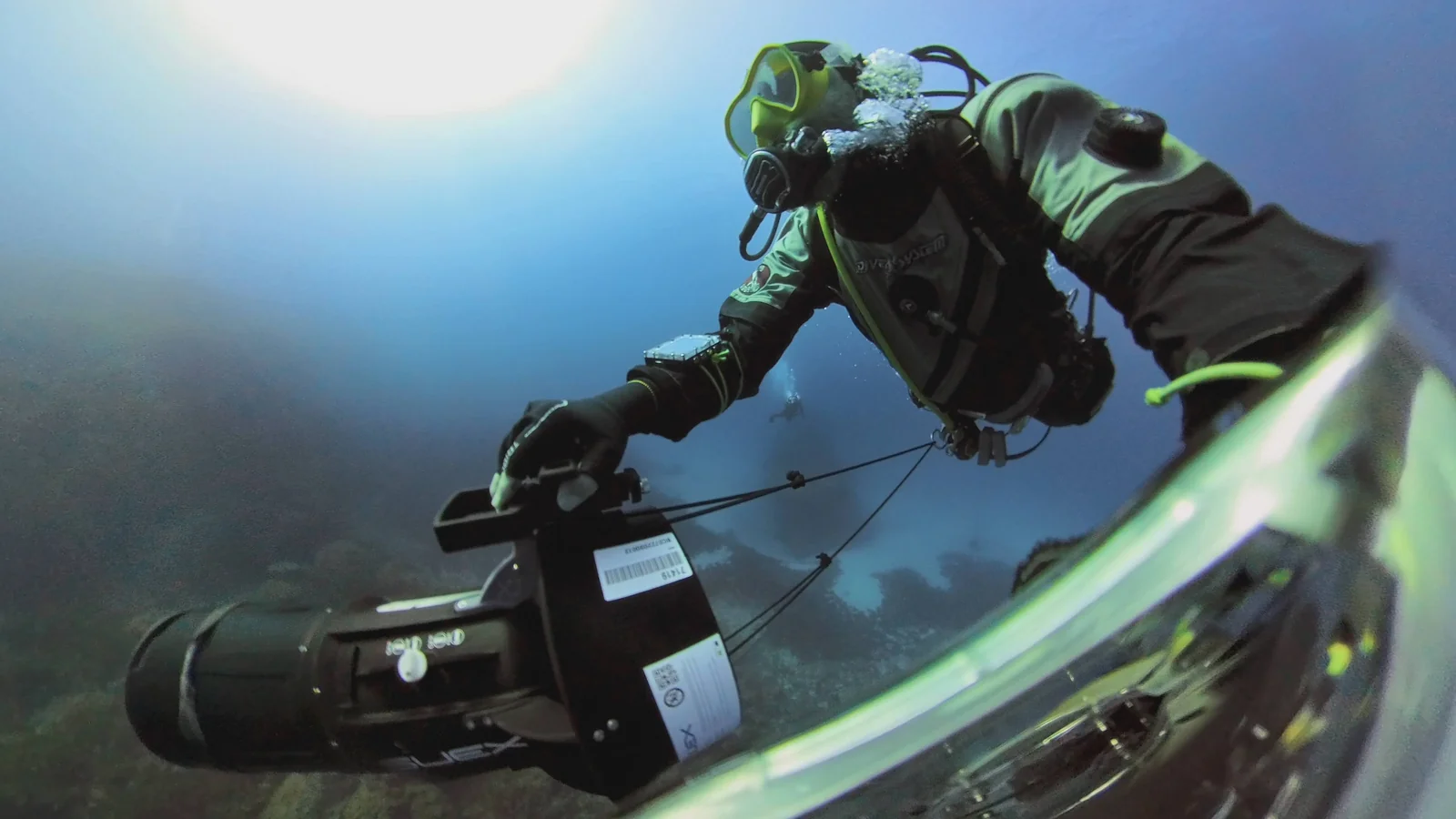
The Insta360 X4 gives me the ability to record the full sphere and choose framing later. That is powerful for memories, exploration and DPV footage where interesting things can happen outside a conventional camera’s field of view. The trade-off is that reframing a portion of a 360 capture uses only part of the available pixels. I accept that when coverage matters more than the cleanest possible final frame.
Housing and mounting are part of the camera system
Underwater depth ratings apply to the complete configuration, not merely the camera name. Insta360 documents the X4 Invisible Dive Case to 50 m; Ace Pro documentation distinguishes the camera body’s shallower waterproof rating from the dedicated dive case, which is rated much deeper. I treat seals, doors, O-rings, mounting hardware and battery preparation as part of the pre-dive check, not as photographic accessories.
Stable footage often beats more resolution
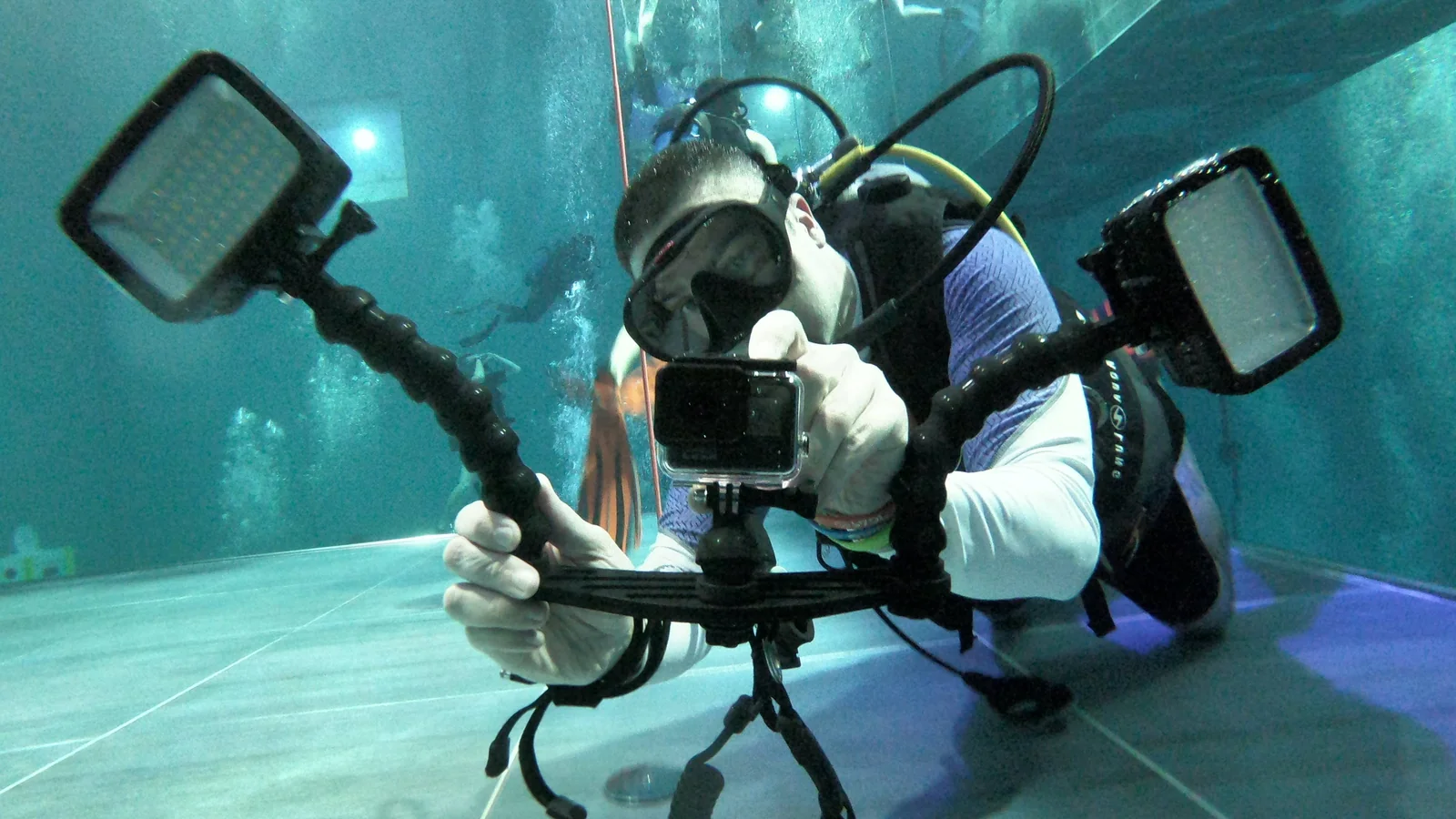
My Ace Pro can be used on a compact handle that extends and can stand as a small tripod. Being able to place the camera and let it remain still can improve the perceived quality of a shot more than endlessly chasing resolution numbers. When I want a more serious production setup, I use a larger tray/rig with two video lights. That rig earns its extra bulk only on dives where the footage is the mission.
The camera never gets priority over the dive
Before filming, I still need stable buoyancy, awareness of the team and enough spare attention to operate the camera without damaging the environment. If the dive becomes demanding, the shot is the first thing I am willing to abandon. That rule has more value than any resolution, sensor or stabilisation specification.
Explore related topics
This article stands on its own, but these pages go deeper into the parts that connect directly with it: