This page is an English translation of the original Italian article. The original publication date and historical context have been preserved.
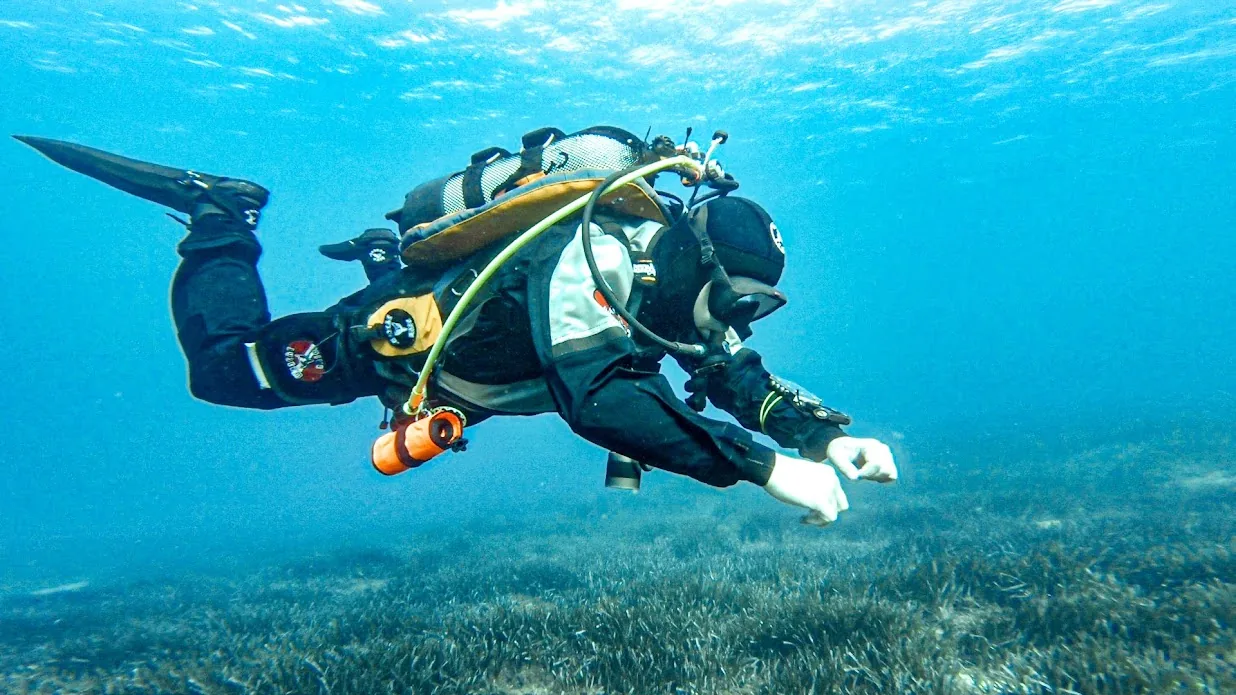
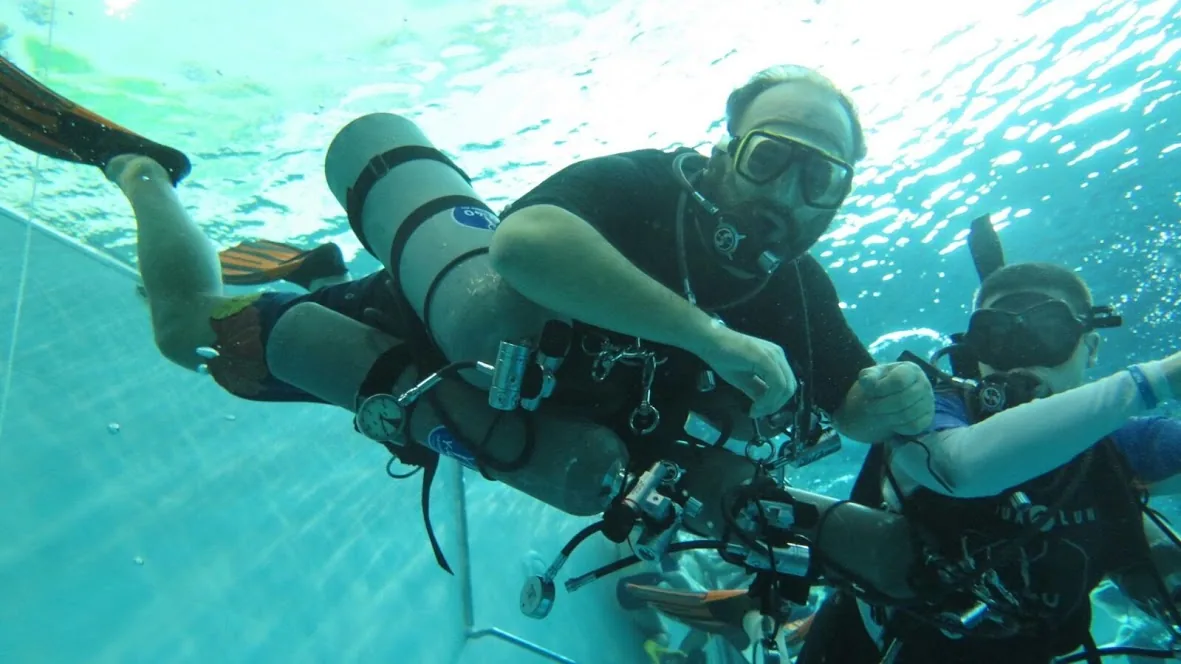
Sidemount is a configuration in which the primary gas cylinders are carried along the diver’s sides rather than mounted together on the back. When properly fitted and trained, it can offer excellent trim and a very adaptable equipment arrangement.
The configuration developed from cave-diving practices in the mid-twentieth century. Explorers needed equipment that could pass through restrictions and be transported across dry sections between flooded passages. Early systems were homemade and tailored to individual needs; commercial recreational and technical systems arrived much later.
Sidemount now acts as a bridge between recreational and technical diving. Five commonly cited benefits are:
1. Independent gas supplies
Two independent cylinders can provide additional gas and genuine redundancy, provided the diver is trained to manage regulators, valves and gas switching correctly.
The planner does not model left/right sidemount balancing, but it can calculate cylinder volume, expected consumption, team minimum gas and reserve for the planned profile. Check the gas requirement →
2. Highly adjustable fit and trim
The harness, cylinder attachment points and ballast can be positioned with great precision. A well-adjusted system can produce stable horizontal trim in many positions.
3. Easier cylinder handling
Instead of carrying a heavy twinset on the back, the diver can transport smaller cylinders separately and attach them in or near the water. This can make shore entries, ladders and long approaches easier.
4. A streamlined profile
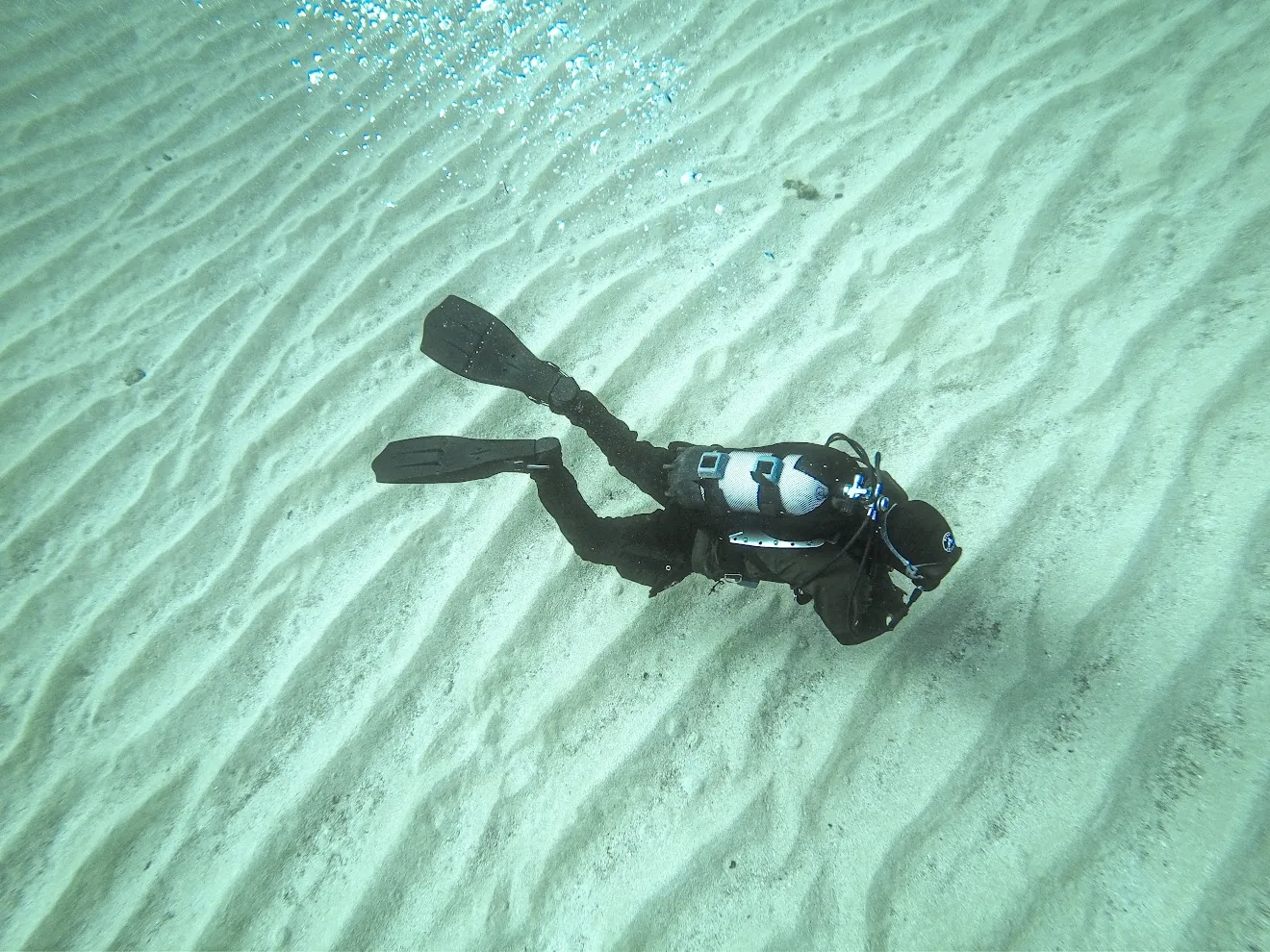
Cylinders kept close to the body can reduce drag, improve efficiency and lower gas consumption. Better control also reduces accidental contact with the environment.
5. Direct access to valves and regulators
The valves, first stages, regulators and pressure gauges remain in front of the diver and can be seen or reached directly. That accessibility is valuable only when supported by proper training and disciplined procedures.
Sidemount is not automatically simpler than backmount. It demands careful configuration, practice and an appropriate course. For divers who enjoy its advantages, however, it can become a remarkably comfortable and capable way to dive.
Enjoyed this article? If you'd like to help keep the BusaBoy Archive online, you can support the archive via PayPal.