Created in July 2026 as part of the decompression-model companion series.
Divers often ask whether Bühlmann or RGBM is “safer.” That question assumes the model name alone determines the risk. In reality, the implementation, personal settings, gas, ascent behaviour and dive profile can matter as much as the family name printed in the manual.
Both systems estimate decompression stress from measured depth, time and selected gas. Neither measures the diver’s actual bubbles, circulation, workload or susceptibility.
The basic difference in emphasis
Bühlmann ZHL-16C is a dissolved-gas compartment model built around half-times and M-values, often modified with user-visible gradient factors. RGBM implementations describe management of dissolved gas together with free-gas or microbubble considerations and may apply adjustments for particular repetitive or ascent patterns.
Transparency and control
Bühlmann with gradient factors is openly described, making the effect of settings easier to study and compare. Suunto-style RGBM is more manufacturer-specific; the user may choose personal levels, but the internal adjustments are not normally exposed as a pair of numbers equivalent to gradient factors.
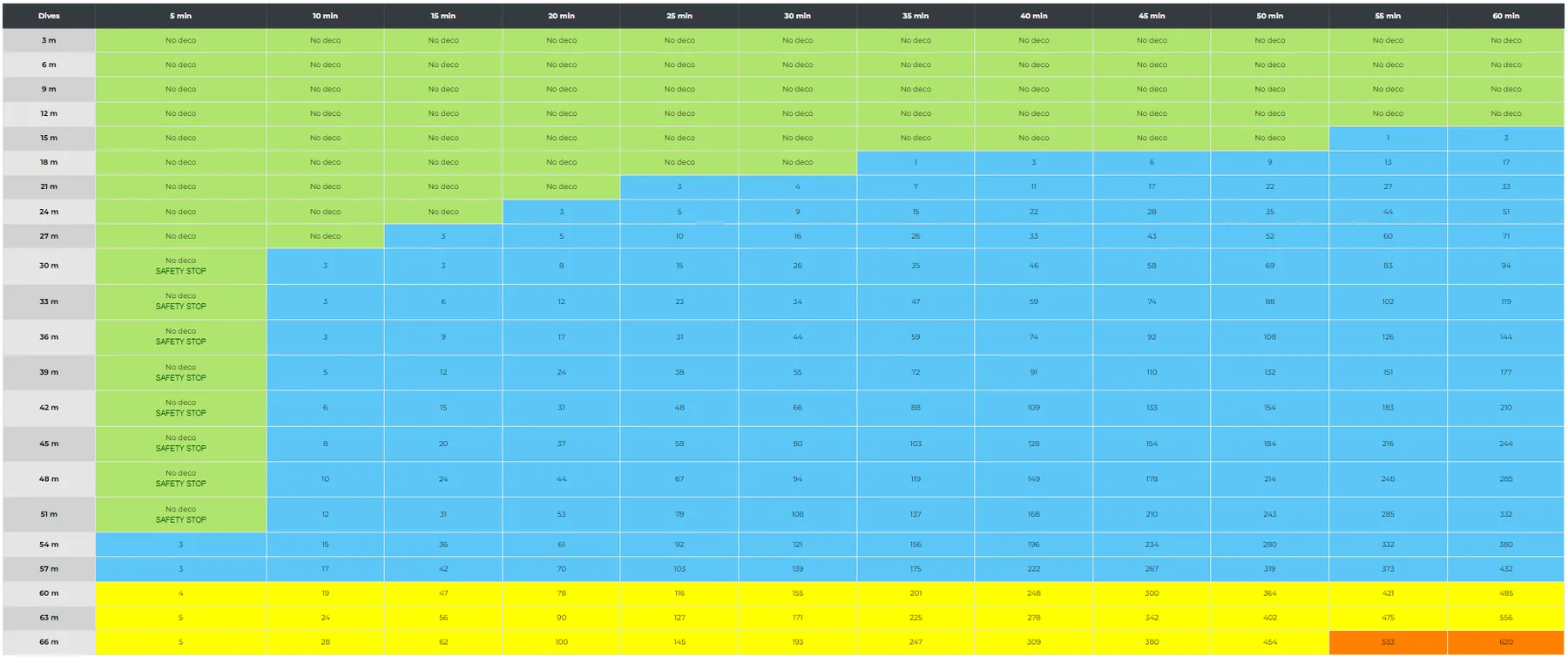
The BusaBoy Dive Planner uses Bühlmann ZHL-16C with Gradient Factors, so you can change the settings and see how the profile changes. It is not an RGBM simulator and should not be used to imitate proprietary RGBM implementations. Experiment with a profile in the Dive Planner →
Conservatism is profile-dependent
One computer may show less no-stop time on a repetitive series while another becomes more restrictive after a rapid ascent or a deeper-than-previous profile. It is therefore inaccurate to say that one entire model family is always more conservative. The result depends on the exact implementation and the dive.
Do not create a computer argument underwater
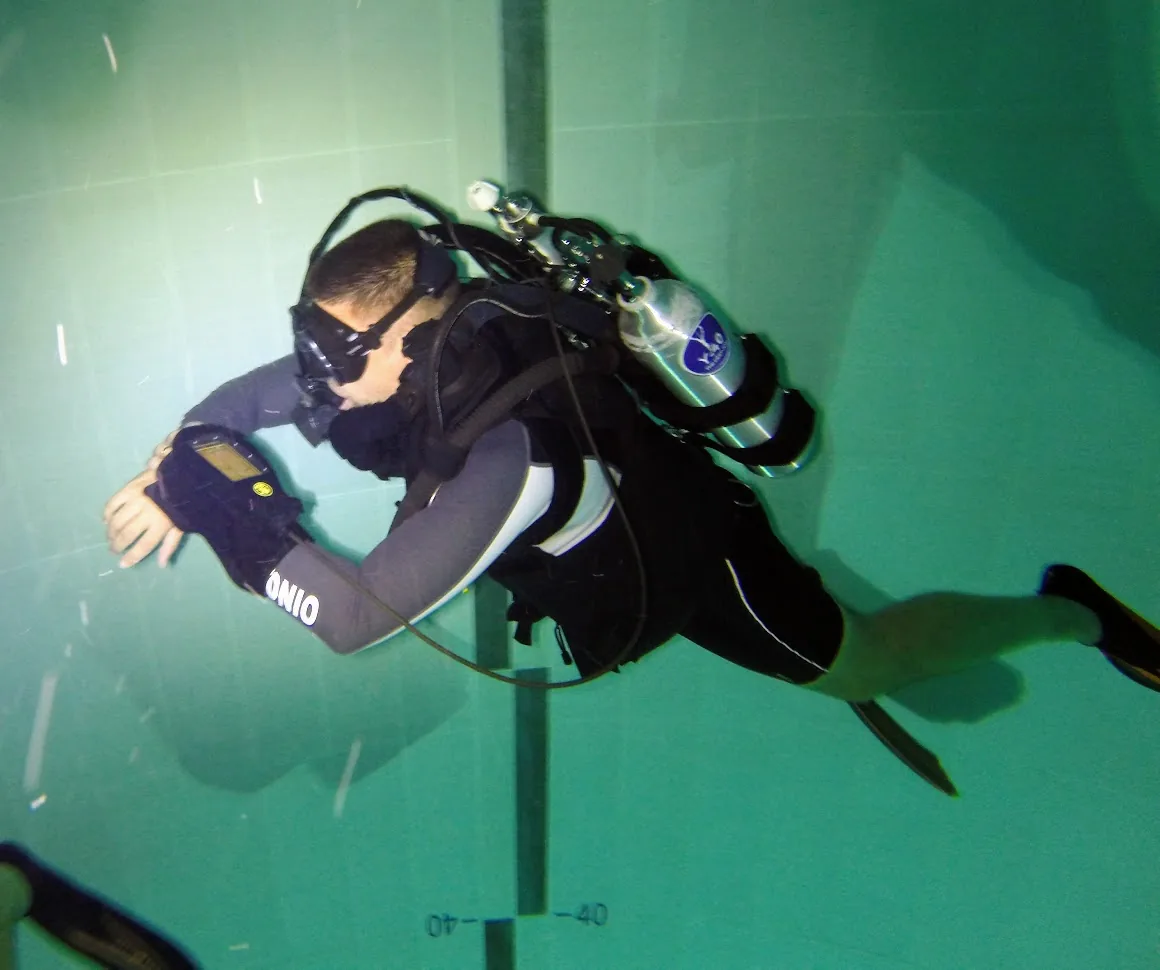
If buddies use substantially different computers, agree before the dive how the team will respond. Each diver must respect their own ceiling and gas plan. The team should not split because one display offers more time, and no one should be pressured to violate a computer because another model is less restrictive.
Switching models mid-series
Changing computers or algorithms during repetitive diving creates a history problem. The new device did not record the earlier exposure and may calculate from different assumptions. The responsible approach is to remain with one system through the series or wait until sufficiently off-gassed according to recognised guidance.
Which one should a diver choose?
- Choose a computer whose display, alarms and manual you understand.
- Know the algorithm and default personal settings.
- For technical planning, understand how the schedule is generated and carried as backup.
- Do not buy only on the promise that a model is “safer” or “less conservative.”
- Use the model as guidance inside a broader risk-management plan.
The honest conclusion
Bühlmann offers transparency and explicit gradient-factor control. RGBM offers manufacturer-designed responses to dive patterns and free-gas concepts. Neither can identify the unique diver wearing the computer. Knowledge, consistency and conservative decisions remain more important than winning an algorithm debate.
Sources and further reading
- Suunto RGBM technical paper
- Shearwater — Flexible control of decompression stress
- DAN — Effective use of your dive computer
Compare model assumptions using the Free Bühlmann ZHL-16C Dive Planner, then use the Dive Planner User Manual to interpret profiles, gas demand and decompression results. Independently verify every real dive plan.
Enjoyed this article? If you'd like to help keep the BusaBoy Archive online, you can support the archive via PayPal.