There is a strange contradiction in diving that I have seen many times.
A diver decides to improve some part of their safety equipment. Maybe they are looking at an emergency locator, a PLB, an AIS device, redundant gas, a backup light or another cutting tool. They start researching, comparing specifications, reading reviews and asking other divers what they use.
There is absolutely nothing wrong with that. I do exactly the same thing. I like equipment, I like understanding how it works, and particularly when safety is involved I want to know what I am buying rather than simply choosing whatever somebody recommends.
The problem starts when the research stops helping us make a decision.
One locator has satellite coverage but costs considerably more. Another communicates directly with nearby AIS-equipped vessels. One needs a pressure canister for diving, another does not. One requires a subscription, another does not. One is smaller, another has more features. Then somebody on a forum mentions another model, somebody else says the one you were considering is obsolete, and suddenly you are back at the beginning.
Six months later you may know considerably more about emergency locators than when you started.
But you are still diving without one.
For me, that is the point where sensible research has started working against its original purpose.
Sometimes the real comparison is not A versus B
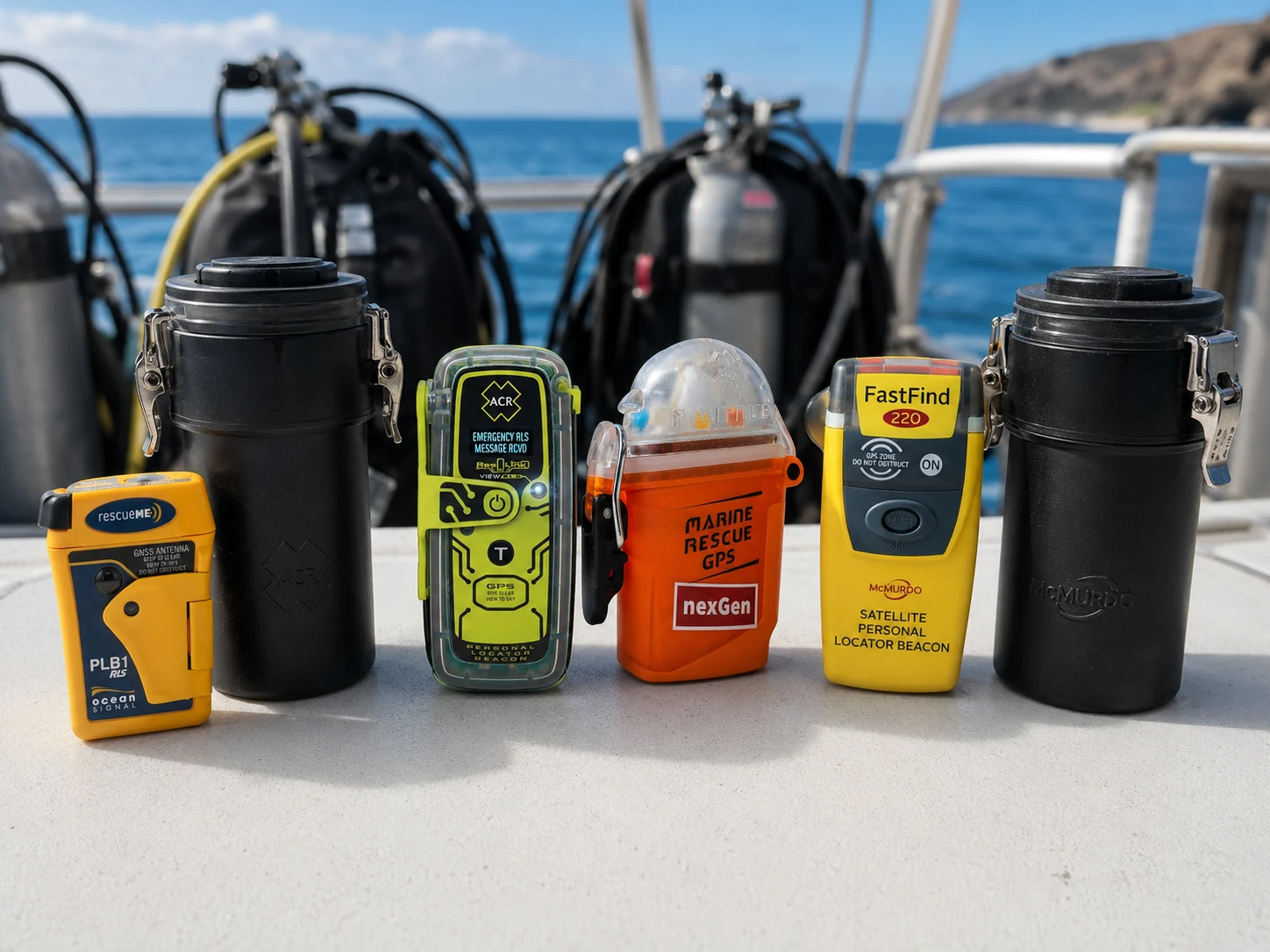
When we compare equipment, we naturally put products against each other. Is a Garmin inReach Mini 2 better than an ACR ResQLink View? Is an Ocean Signal rescueME PLB3 a better solution than a Nautilus LifeLine Marine Rescue GPS NextGen? Should I prioritise satellite coverage, AIS, size, depth rating, battery life, subscription cost or the complexity of carrying the device underwater?
They are all legitimate questions, but they are also slightly dangerous questions because those products do not necessarily solve the problem in the same way.
A 406 MHz PLB such as the ACR ResQLink or Ocean Signal rescueME PLB3 can reach the international satellite Search and Rescue infrastructure. A Garmin inReach gives you satellite communication and other capabilities. The Nautilus NextGen works differently again, transmitting an AIS man-overboard alert and position to suitably equipped vessels in the area.
There are real technical differences and a diver should understand them.
But sometimes we spend so much time comparing Device A with Device B that we forget the third product in the comparison.
Nothing.
If I am currently carrying no electronic emergency locator at all, then the question is not only whether one device is technically superior to another. I also have to ask whether a suitable device I can afford, integrate easily into my equipment and start carrying now might give me more practical protection than the theoretically better solution I will perhaps buy next year.
Nothing cannot transmit my position. Nothing cannot put an AIS target on a vessel's display. Nothing cannot contact a satellite, flash a strobe or help anybody work out where I am.
That does not automatically make every cheap device a good purchase. It simply means that the equipment I already carry — or do not carry — needs to be part of the comparison.
The Nautilus NextGen is a good example of why I think this matters
This is where I think it is useful to stop talking theoretically and give a real example.
There are technically more capable emergency systems than the Nautilus LifeLine Marine Rescue GPS NextGen. If my requirement were specifically global 406 MHz satellite alerting, I would be looking at products such as the ACR ResQLink range or the Ocean Signal rescueME PLB3. If I wanted two-way satellite communication, tracking and messaging outside diving as well, something such as a Garmin inReach would enter the discussion.
But then I have to consider the entire system, not only the beacon.
Can I actually dive with it? Does it need a separate pressure housing or dive case? How large does the complete package become? How am I going to attach it? What does the complete solution cost? Is there a subscription? And, after adding all of that, am I still likely to carry it on an ordinary dive?
For my type of diving, I think the Nautilus NextGen currently sits in a very attractive position.
It is not the most sophisticated rescue device on the market and I would never pretend that AIS/DSC is the same thing as a 406 MHz satellite PLB. It isn't. AIS depends on receiving vessels being within radio range, while a satellite PLB is designed around a completely different rescue infrastructure.
But the NextGen is small, relatively affordable, designed specifically with divers in mind, depth-rated far beyond normal recreational depths with its dive cap closed, and does not need an additional pressure canister just to come underwater with me. At the surface I can open it, deploy the antenna and transmit my position as an AIS man-overboard alert to compatible vessels in the area.
For me, that makes it perhaps the best compromise between price, quality, simplicity and actual usefulness.
And “compromise” is the important word.
I am not claiming it wins every specification. I am saying it does something useful, it solves the problem I am concerned about, I can take it diving without building another system around it, and its price does not move the decision into a completely different category.
It does the job I am buying it to do.
A current technical note for divers comparing these systems
There is a very practical reason I keep coming back to the complete system rather than the headline technology. Current manufacturer specifications put the Nautilus at 130 metres with the dive cap closed, while the ACR ResQLink View is specified to 5 metres for an hour or 10 metres for ten minutes, the Garmin inReach Mini 2 is IPX7 rather than a dive-depth device, and Ocean Signal specifies the PLB3 for water immersion beyond 10 metres for more than an hour. Those devices can be excellent at what they are designed to do, but their native water ratings are not interchangeable with a depth-rated SCUBA locator. For deeper diving, the PLB or satellite communicator may therefore become only one component of a larger system that includes an appropriate pressure housing.
There is also a regional detail that matters in Europe. Nautilus currently states that European operation is AIS-only; DSC is not permitted there. So for a diver using it in European waters, the relevant rescue mechanism is the AIS alert received by compatible vessels within radio range. That is exactly why understanding what the device actually does matters more than simply recognising the words “GPS” or “emergency locator” on the case.
Could I spend more and obtain additional capabilities? Of course.
Perhaps one day I will decide that I want those capabilities badly enough to upgrade. That does not make the Nautilus useless today.
In fact, refusing to buy it because something more sophisticated exists would reproduce exactly the behaviour this article is about.
“Better than nothing” does not mean “anything will do”
There is an obvious danger in this argument, and I want to make the distinction very clear.
I am not saying that people should buy inappropriate safety equipment simply because it is inexpensive.
Sometimes the wrong piece of equipment can genuinely be worse than carrying nothing because it creates false confidence. A diver who believes an AIS beacon automatically contacts a satellite rescue centre has misunderstood the system. Someone who puts a PLB into a container without understanding how it must be deployed at the surface may also have created a solution that looks safer on paper than it really is.
The same principle applies throughout diving. A tiny emergency cylinder is not automatically a properly planned redundant breathing system. A cheap torch is not automatically an appropriate primary light for a serious overhead dive. A cutting device is useful only if it is appropriate, accessible and the diver can actually use it—exactly the same logic I apply to technical equipment preparation.
So “better than nothing” still has conditions. The equipment needs to be appropriate for the problem, reasonably reliable, understood by the person carrying it and properly maintained.
Once those conditions are satisfied, however, I think perfection becomes much less important.
Research should help you reach that point. It should not keep moving the point further away.
Price is part of safety whether we like it or not
There is sometimes a strange reluctance to discuss price when talking about safety equipment, as though safety automatically makes cost irrelevant.
In the real world, cost matters.
Divers have regulators to service, cylinders to inspect, exposure protection to replace, courses to pay for and trips to finance. Someone may genuinely want an emergency locator but discover that the most technically complete solution, once the beacon, housing, accessories and perhaps subscription are included, costs enough to keep postponing the purchase.
That is why affordability can itself be a useful characteristic.
A €1,000 solution may be technically wonderful, but if the price means I never buy it, its technical superiority has done very little for my current safety. A €200–300 device that is appropriate for what I need and actually becomes part of my normal equipment may have considerably more practical value to me today.
Again, this does not mean cheapest is best.
It means price, size and complexity belong in the same real-world discussion as range, battery life and technology.
The best solution on paper is not necessarily the solution that becomes part of somebody's diving. That is also why I am cautious about the idea that the most expensive equipment must automatically be the best choice.
Safety equipment only works when it becomes part of the setup
Buying the device is not the end of the process either.
Once I own it, I need to work out where it belongs. Can I reach it easily? Can I operate it while wearing the exposure protection I normally use? If it requires opening, extending an antenna or following a particular activation sequence, do I remember how to do that without searching for the manual?
If the device requires registration, has a replaceable battery or needs periodic testing, I need to deal with those things as well. If I alternate between backmount and sidemount, I also need to make sure the locator moves with me rather than remaining attached to the equipment I left at home.
This is where a purchased object becomes safety equipment—and why mission-specific equipment matters more to me than simply owning more gear.
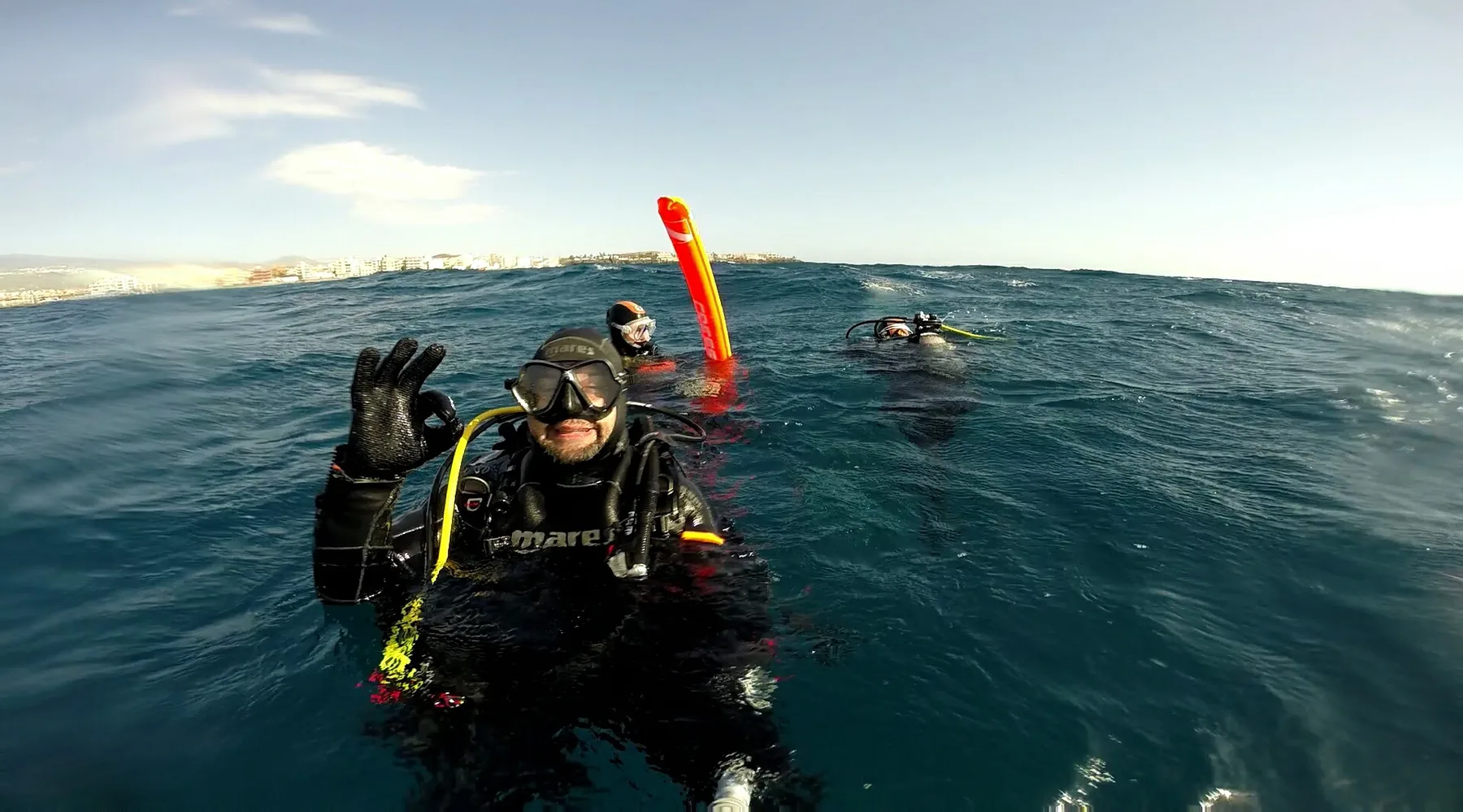
I see exactly the same principle with a DSMB. We can spend an evening arguing about the ideal length, colour, material, inflation method and valve, but the DSMB that matters is the one actually in your pocket when you surface away from the boat.
A beautifully engineered cutting device has limited value if you cannot reach it when entangled. A backup light is no longer much of a backup if nobody checked the battery. Redundant gas only works as redundancy when the diver has planned it, configured it correctly and knows how to use it.
Electronic locators are no different.
They need to become part of the diving routine.
Your first solution does not have to be your last solution
I think this is one of the things that causes unnecessary hesitation.
We sometimes behave as though buying a piece of equipment means committing to it permanently. If I buy the Nautilus today and eventually decide that I want a satellite PLB in a dive canister as well, I have somehow made the wrong decision.
Why?
Diving equipment evolves all the time.
I have changed regulators, computers, BCDs, fins, cylinders, lights and configurations over the years because the diving I was doing changed, because technology changed, or simply because using something taught me what I really wanted from the next version.
Safety equipment can evolve in exactly the same way.
You can start with something sensible and affordable, use it, learn its strengths and limitations and then decide from experience whether you need something more capable.
You may discover that the first solution does everything you require.
Or perhaps after a year you realise that your diving has changed. Maybe you are travelling further offshore, diving in places with less vessel traffic, or you simply decide that satellite alerting would give you a level of redundancy you now want. At that point the more sophisticated purchase is based on an actual requirement rather than on fear that something theoretically better exists.
That is a much healthier way of choosing equipment.
Most dives going well makes procrastination easy
There is another reason we get away with endlessly postponing safety decisions: most dives finish normally.
If I make twenty dives without an emergency locator and nothing happens, it is very easy to conclude that postponing the purchase did not matter.
But that is the nature of safety equipment. We carry many things specifically because we hope never to need them.
I do not launch a DSMB on every dive because I expect to become separated from the boat. I do not plan gas redundancy because I expect a first stage to fail every weekend. I do not carry backup lights because I expect the primary light to die every time I enter an overhead environment.
The event may be unlikely; the consequence may still be serious.
Another month of normal dives therefore tells me almost nothing about whether a locator would matter on the one dive when the boat is no longer where I expected it to be.
That is also why waiting can feel free when it is not. We notice the cost of buying equipment immediately because the money leaves our account. We do not notice the cost of not having the equipment because, most of the time, nothing happens.
Until the day something does.
Know enough, then decide
Divers tend to be technically minded people. I certainly am. I can happily spend a ridiculous amount of time reading specifications, manuals and comparisons because I genuinely enjoy understanding how equipment works.
There is nothing wrong with that.
But eventually I think we need to ask ourselves a fairly simple question:
Do I understand the options well enough to make a sensible decision?
That is different from asking whether we have found a product with no disadvantages.
We probably never will.
A Garmin inReach, ACR ResQLink, Ocean Signal PLB3, Nautilus NextGen or ENOS system can each make sense when viewed against a particular requirement. They do not need to defeat every other product in every category to be useful.
For the problem I am considering here — giving a diver a practical electronic way of making themselves locatable after surfacing away from the boat — I personally think the Nautilus NextGen currently represents a very sensible middle ground. It has limitations, I understand those limitations, and I would rather make a decision based on them than reject the device because a more expensive system can do more.
That, really, is the whole point of this article.
Research the equipment. Understand what it actually does. Be suspicious of marketing claims and do not confuse one rescue technology with another. Decide what problem you are trying to solve and whether the product is appropriate for it.
Then, at some point, stop researching and make the decision.
You can improve the system later.
Because if the day comes when I surface and the boat is nowhere to be seen, the emergency locator that matters is not the one that won the comparison I bookmarked six months ago.
It is the one attached to my equipment.