My test for small tools that are genuinely useful.
My test for small tools that are genuinely useful. Small accessories are where divers can accidentally create the most clutter, because each object seems harmless on its own.
Why I carry it
Small accessories can create enormous clutter because each one appears harmless by itself. The pieces I keep include genuinely useful items such as an Aquatec car-key case, wrist slate, tape for gas identification, simple rubber retainers and selected bolt snaps.
The test is always the same: does this solve a recurring problem with less complication than the alternative? If the answer is no, it belongs in the box or at home, not permanently on the harness.
The practical point
Preparation means having the right tool available; minimalism means not confusing availability with the need to wear it.
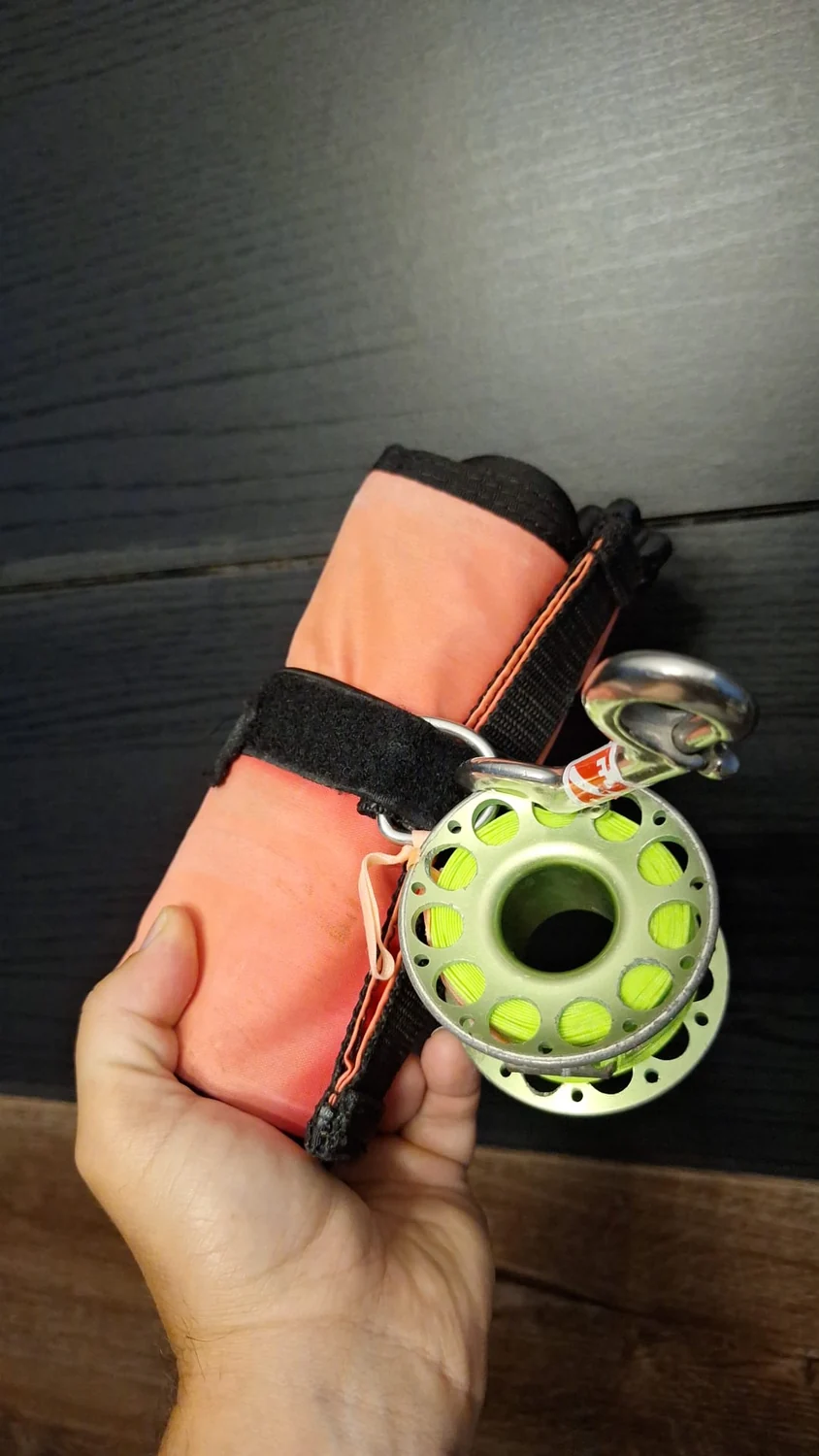
The accessories I respect are usually unglamorous
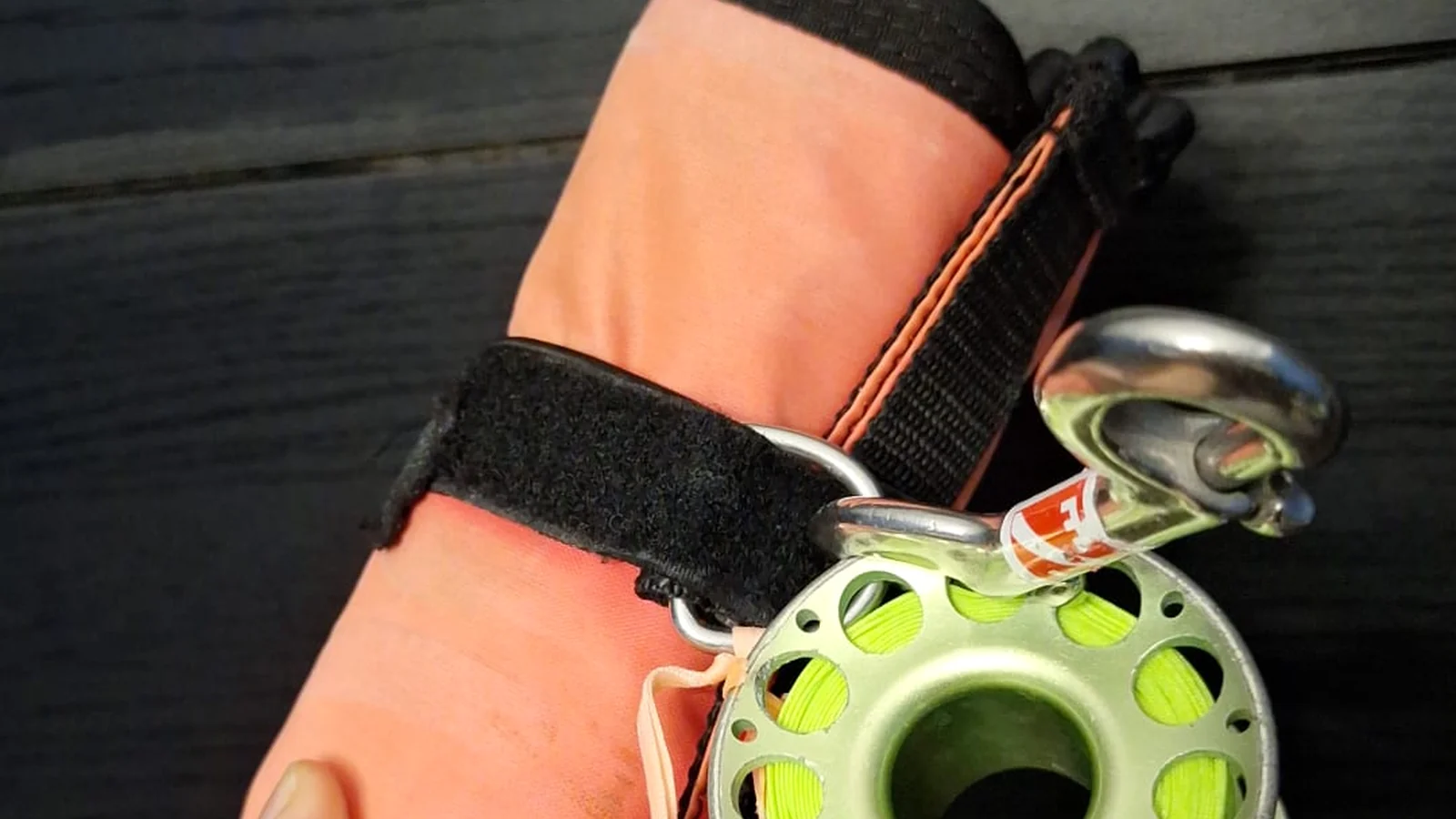
Wetnotes, a spool/SMB, writable tape, a marker, rubber retainers, bolt snaps, small pressure gauges and a waterproof key container can solve very real problems. They rarely sell the dream of diving, but they make a working setup smoother.
My rule is accessibility and purpose. A spool should deploy cleanly, a wetnote page should show the information I need, a backup gauge should be readable, and an Aquatec key case should keep the car key protected without becoming something I have to manage during the dive.
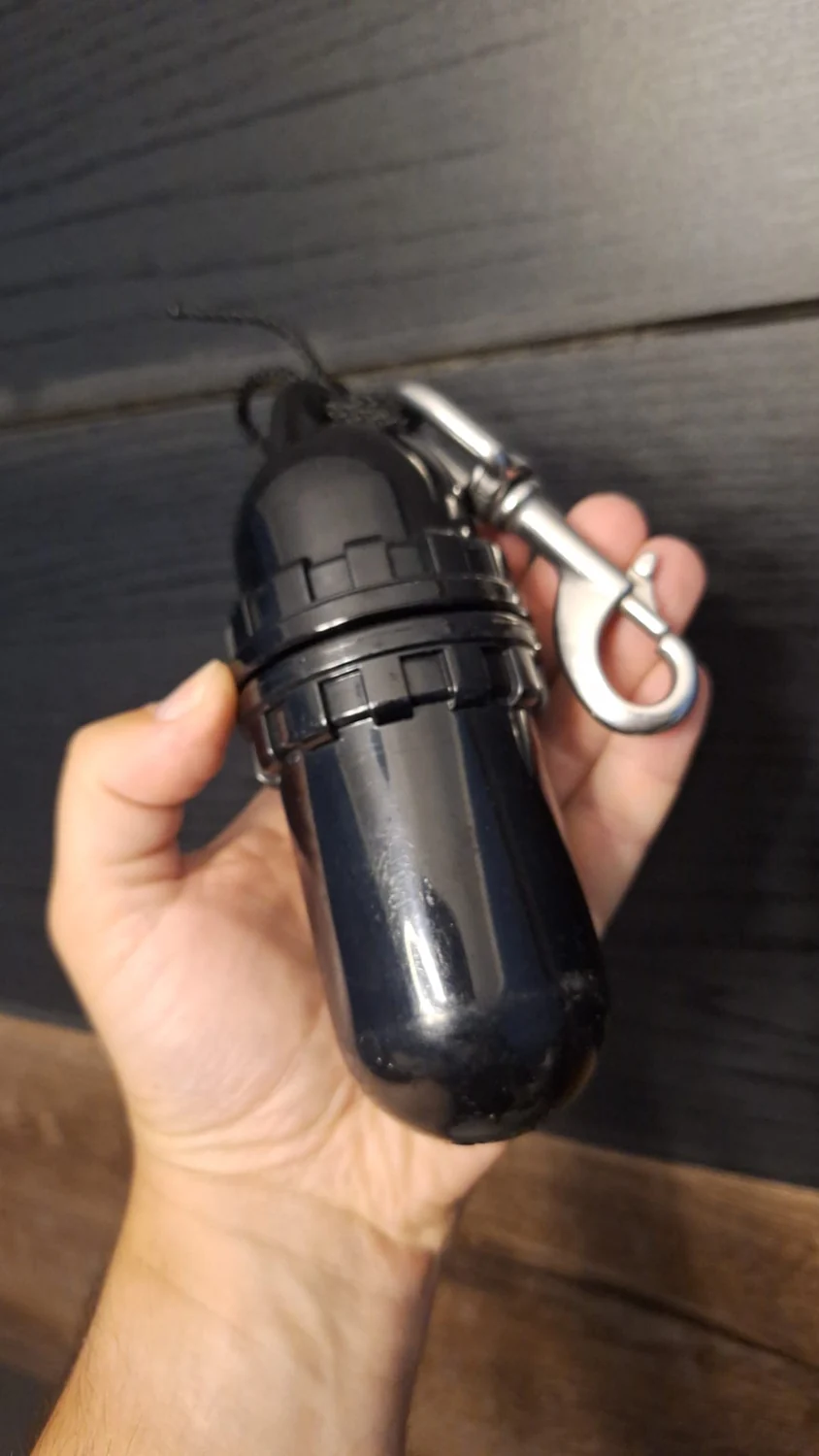
Small equipment has to earn its place
Accessories are where “Christmas-tree diving” happens fastest. A spool, wetnotes, compass, key case, clip, retainer or tiny backup gauge can be extremely useful, but only if I know why it is coming with me. I prefer to assign each item a job before the dive rather than discover a justification after I have already clipped it on.
A compass is a good example. underwater navigation is a fundamental skill, but not every site requires me to carry a compass on every dive. If a route has unmistakable natural references and the plan does not need compass work, the instrument may stay out. On a featureless route, low visibility or a navigation exercise, it becomes essential. The skill and the tool are related, but they are not the same thing.
Accessibility beats ownership
If an item is needed in an emergency but buried, tangled or impossible to manipulate with gloves, technically owning it is not enough. Clips should be reachable, wetnotes should be readable, an SMB spool should deploy without becoming a knot, and a key container should solve the real shore problem without becoming another object dangling from the harness.
My accessory rule
If I cannot explain when I expect to use an item, where it will live and how I will reach it with the rest of the configuration in place, it stays in the box. This single rule prevents a surprising amount of clutter while leaving the genuinely useful small tools easy to find.
Explore related topics
This article stands on its own, but these pages go deeper into the parts that connect directly with it: