The small kit that prevents small problems from ending a dive day.
The small kit that prevents small problems from ending a dive day. Technical diving rewards preparation because underwater is the worst place to discover that a small detail was never organised.
Preparation before complexity
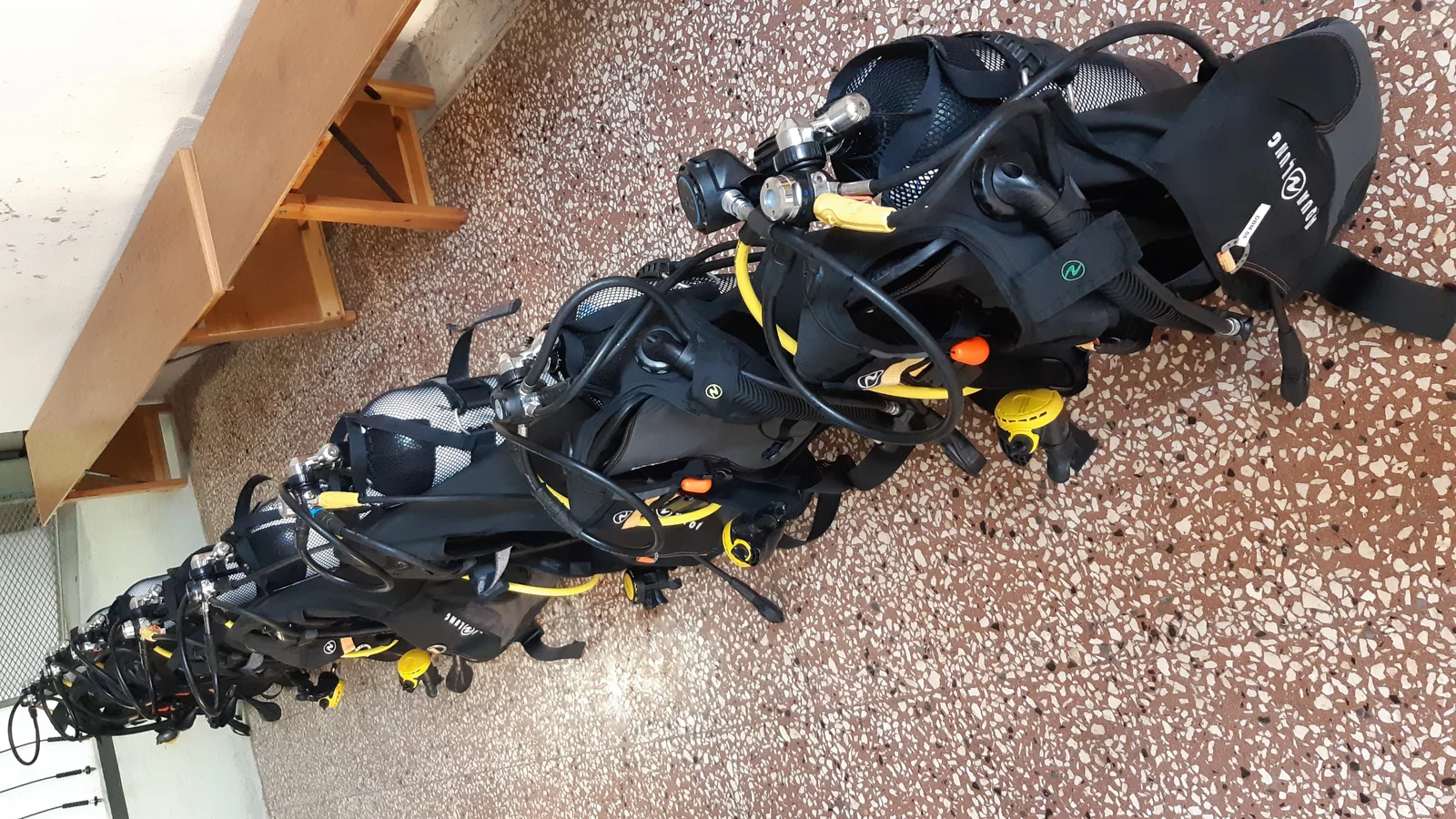
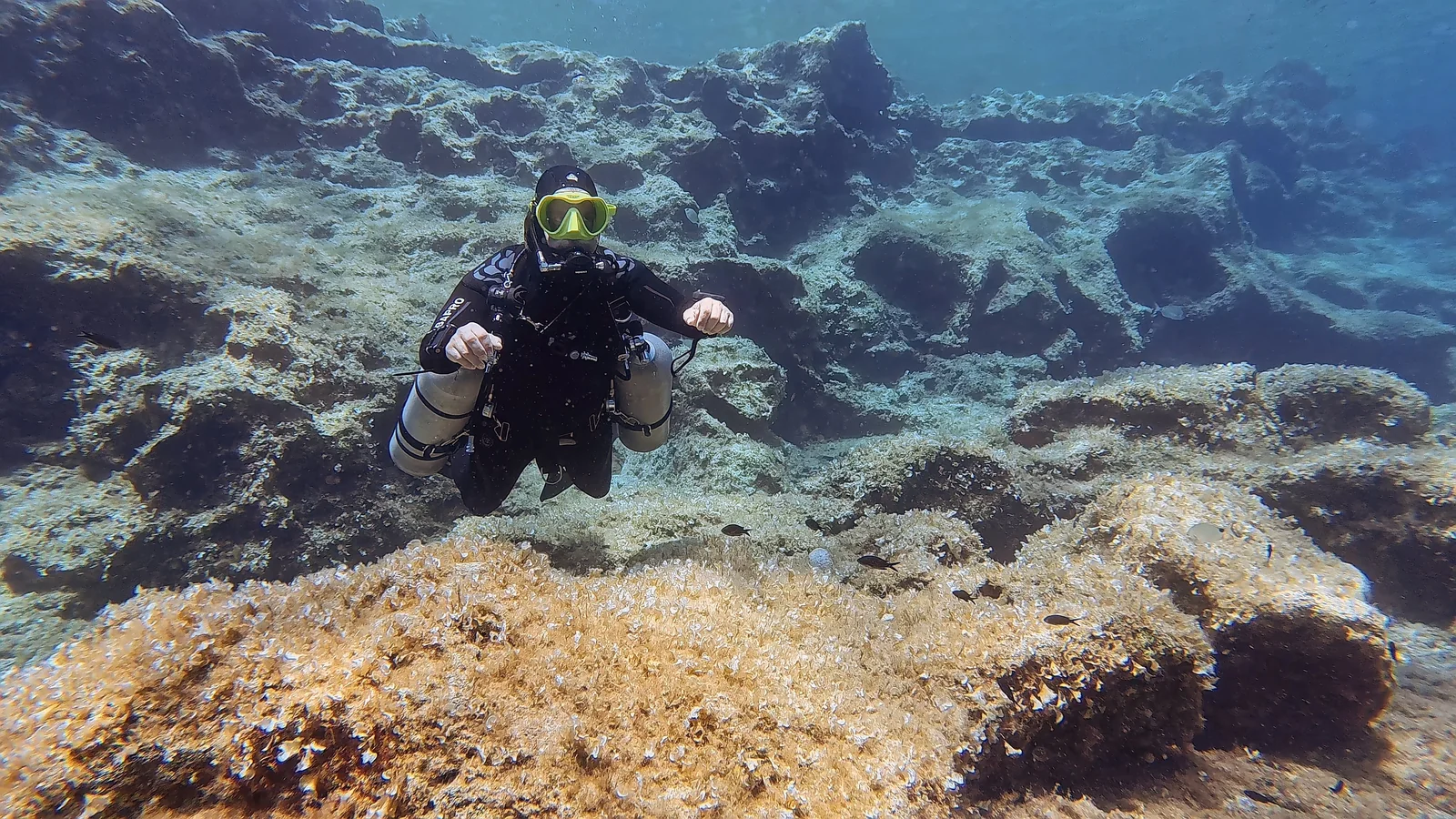
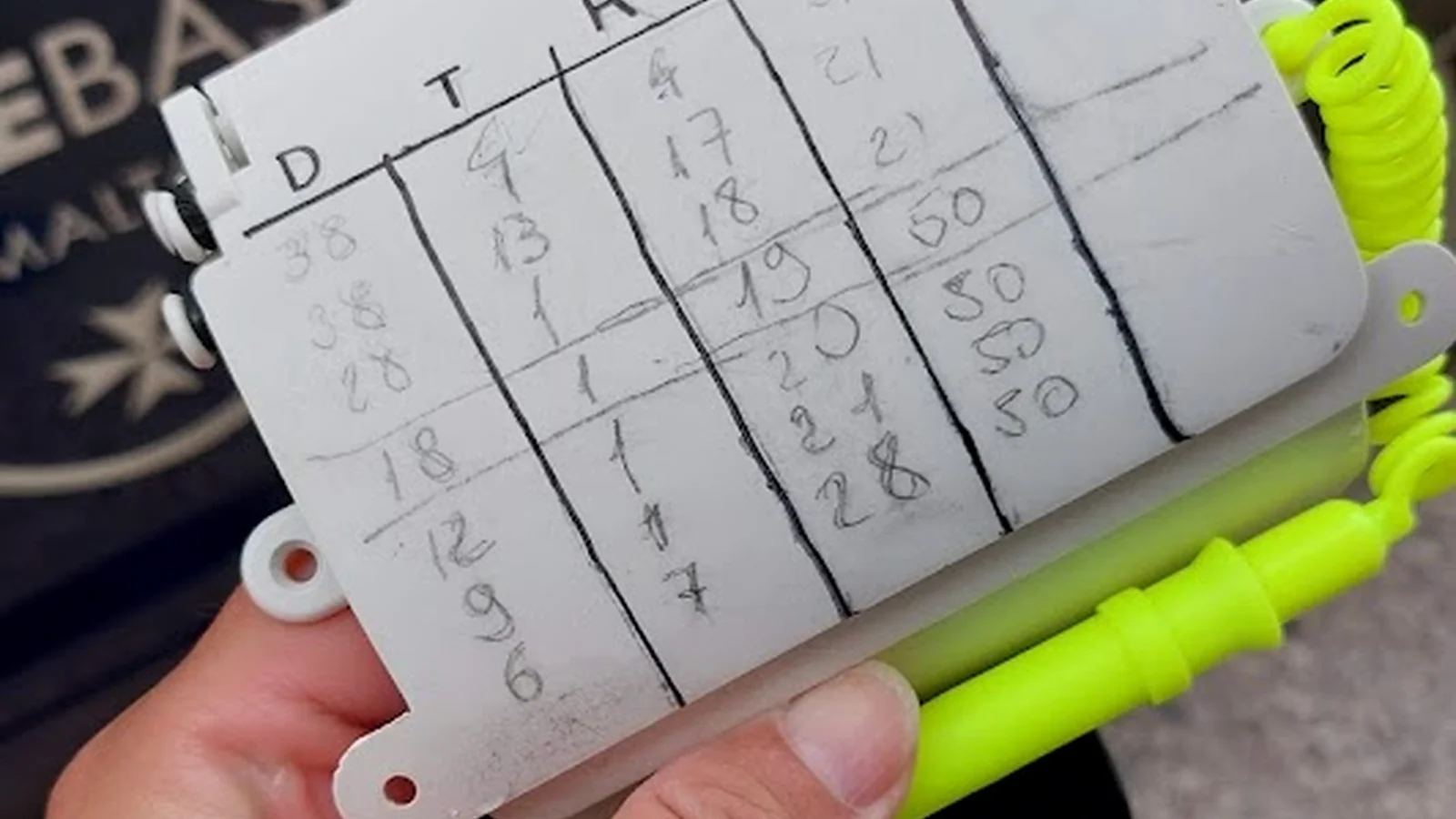
My technical box contains the small items that are useful during preparation rather than permanently attached to me. That includes writable tape for gas marking, a compact wrist slate, spare clips, sidemount hardware and other mission-specific pieces.
The box is deliberately different from the diver: it can contain 'maybe' items because it stays on the surface until one of them has a job. That distinction is one of the easiest ways to stay prepared without becoming an underwater Christmas tree.
The practical point
The objective is not to look technical. It is to make the dive understandable before it becomes demanding.
My spares box is a prevention box
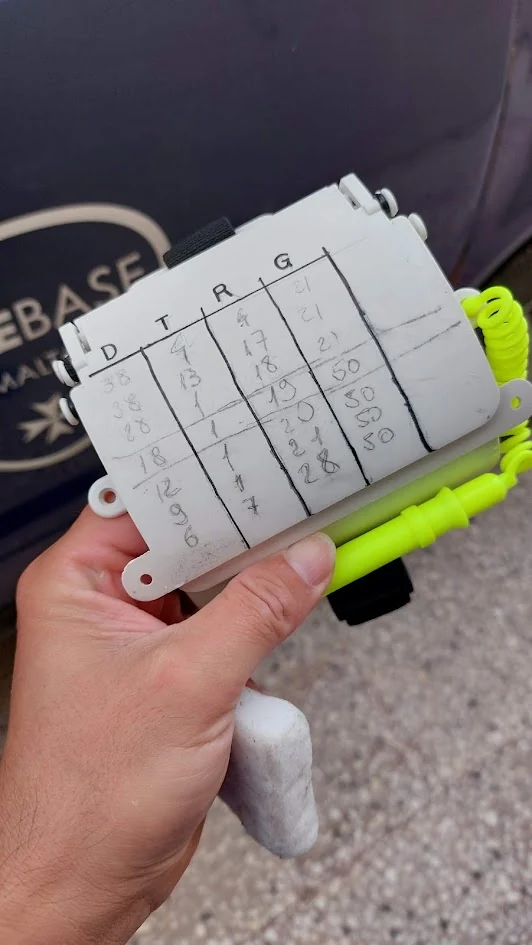
I keep mission-specific small items together so I do not have to improvise them beside the sea. The confirmed contents from my current discussion include writable tape and marker for gas information, and a multi-page wrist slate/wetnotes for planned decompression information and contingencies. Other small spares can vary with the dive, so I would rather leave the list open than invent a universal kit.
The box is deliberately small. If it grows into every spare part I own, it has failed the same minimalism test as the underwater configuration.
Technical diving punishes forgotten small things
A technical configuration can involve gas analysis, labels, stages, wetnotes, backup plans, lights, regulators and exposure equipment that all have to agree with the plan. That is why I keep a small technical box rather than rediscovering the same checklist at the dive site. Writable tape and a marker for gas identification, a multi-page wrist slate/wetnotes and mission-specific small spares are part of that organisation.
The purpose is not to carry a miniature dive shop. It is to make predictable preparation repeatable. Gas-analysis information should be recorded clearly; planned stops or contingency notes should be available in a form I can actually read; and the equipment that supports the plan should be checked before the car leaves home.
Preparation reduces task loading later
The more complex the dive, the less I want to improvise basic equipment decisions at the water. A disciplined pre-dive process catches configuration errors while they are still cheap to fix. That connects directly with the problems that often begin before a diver enters the water: many underwater problems were already created on land.
Written backup still has value
Modern computers are extraordinarily capable, but a slate with planned information is independent of a battery, display or menu. In my technical strategy the Perdix 2 can be the primary computer while another instrument in gauge mode and written tables provide a different form of backup. The point is not nostalgia for paper; it is independence between failure modes.
The checklist exists to protect attention
Technical dives already contain enough decisions. If a marker, slate, battery or label can be prepared earlier, I do not want it competing for attention at the entry point. Preparation is therefore a form of task-loading management: move predictable work to the quietest possible moment.
Explore related topics
This article stands on its own, but these pages go deeper into the parts that connect directly with it: